Key Laboratory of Conservation Biology for Endangered Wildlife of Ministry of Education, Zhejiang University, Hangzhou, China.
PLoS One. 2012;7(11):e50581. doi: 10.1371/journal.pone.0050581. Epub 2012 Nov 29.
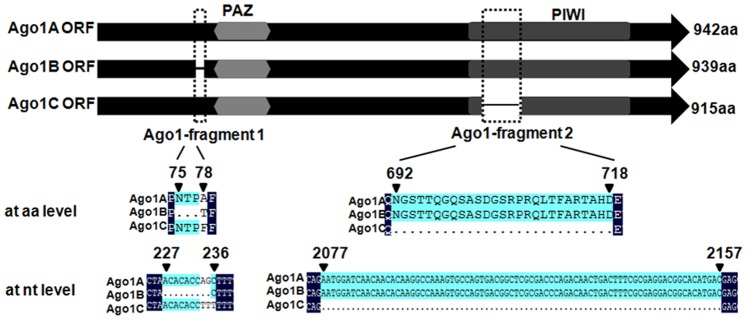
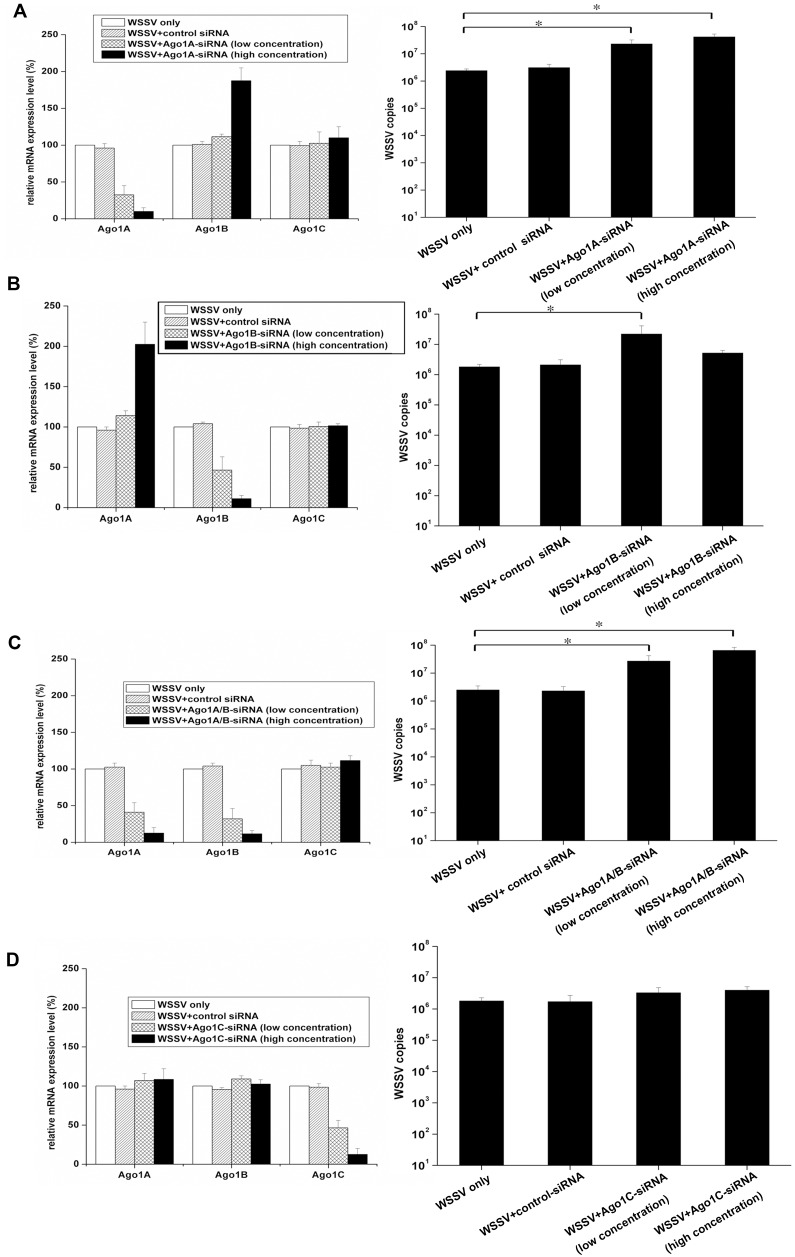
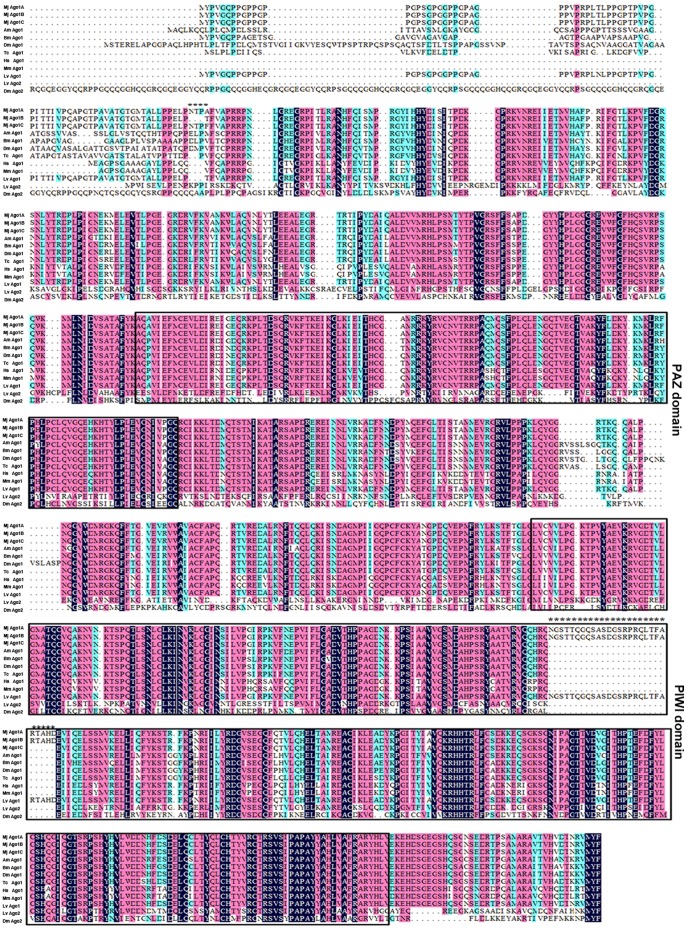
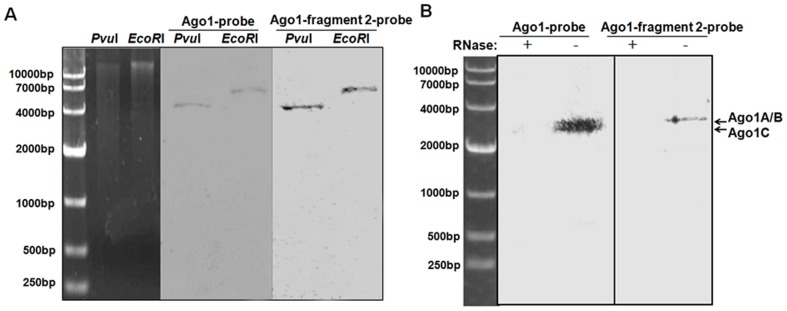
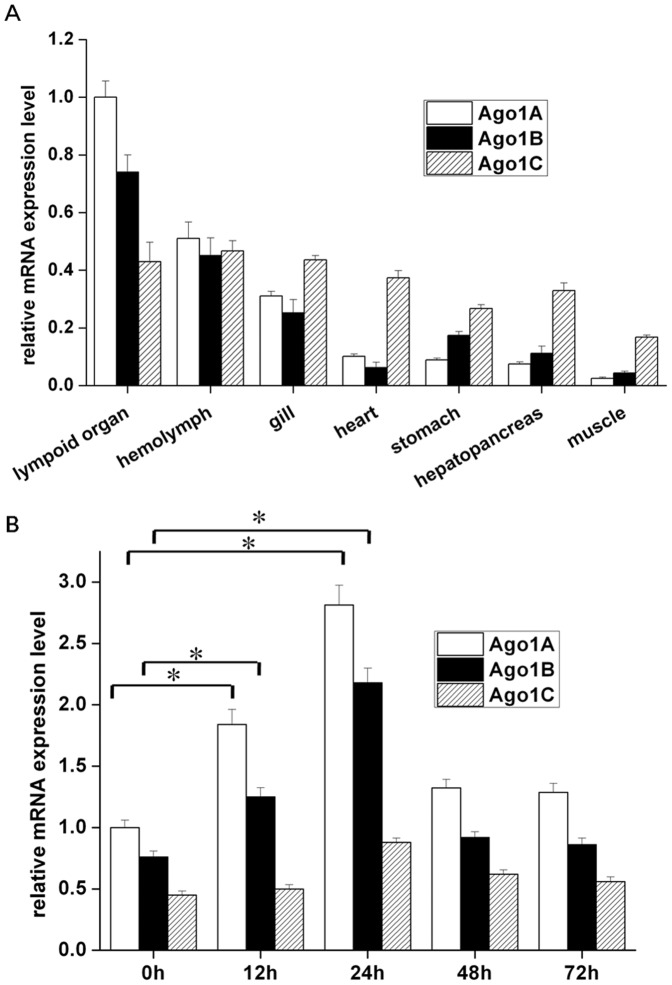
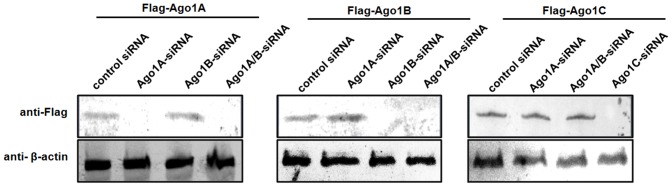
Argonaute (Ago) protein, the central component of the RNA interference (RNAi) pathway, plays important roles in host innate antiviral immunity. Most organisms harbor a large number of different Ago proteins and isoforms; however, the roles of Ago isoforms in immune defense against pathogens remain unclear. In the present study, three Argonaute-1 (Ago1) isoforms, termed Ago1A, Ago1B, and Ago1C, were found in Marsupenaeus japonicus shrimp. Quantitative real-time PCR (polymerase chain reaction) revealed that isoforms Ago1A and Ago1B containing an insertion sequence in the PIWI domain, were significantly up-regulated in lymphoid organ and hemolymph, and also upon white spot syndrome virus (WSSV) challenge, indicating the involvement of Ago1A and Ago1B in antiviral immunity. The results showed that silencing of Ago1A with a sequence-specific siRNA led to a significant increase of WSSV loads. It was revealed that knockdown of Ago1B mRNA by 37-70% resulted in higher virus loads in shrimp. However, upon silencing Ago1B by more than 85%, a two-fold increase in Ago1A mRNA was observed but viral load was the same as untreated controls challenged with WSSV, suggesting that the simultaneous up-regulation of Ago1A might compensate for the loss of Ago1B. These data indicated that Ago1A played more important roles in the antiviral immune response than Ago1B. The simultaneous inhibition of Ago1A and Ago1B resulted in a greater increase in viral loads than Ago1A or Ago1B alone, indicating that Ago1A and Ago1B isoforms were involved in shrimp antiviral immunity. It was revealed that Ago1C had no effect on virus infection. Therefore, the current study presented the first report on the contribution of Ago isoforms in the invertebrate defense against virus infection.
Argonaute (Ago) 蛋白是 RNA 干扰 (RNAi) 途径的核心组成部分,在宿主先天抗病毒免疫中发挥重要作用。大多数生物体都含有大量不同的 Ago 蛋白和同工型;然而,Ago 同工型在免疫防御病原体方面的作用尚不清楚。在本研究中,在日本沼虾中发现了三种 Argonaute-1 (Ago1) 同工型,分别命名为 Ago1A、Ago1B 和 Ago1C。定量实时 PCR (聚合酶链反应) 显示,PIWI 结构域中含有插入序列的同工型 Ago1A 和 Ago1B 在淋巴器官和血淋巴中显著上调,并且在白斑综合征病毒 (WSSV) 攻击后也显著上调,表明 Ago1A 和 Ago1B 参与抗病毒免疫。结果表明,用序列特异性 siRNA 沉默 Ago1A 会导致 WSSV 载量显著增加。结果表明,Ago1B mRNA 的敲低率为 37-70%,会导致虾中病毒载量增加。然而,当 Ago1B 的沉默率超过 85%时,Ago1A mRNA 的表达增加了两倍,但病毒载量与未用 WSSV 处理的对照相同,表明 Ago1A 的同时上调可能弥补了 Ago1B 的缺失。这些数据表明,Ago1A 在抗病毒免疫反应中比 Ago1B 发挥更重要的作用。同时抑制 Ago1A 和 Ago1B 会导致病毒载量增加幅度大于单独抑制 Ago1A 或 Ago1B,表明 Ago1A 和 Ago1B 同工型参与了虾抗病毒免疫。结果表明 Ago1C 对病毒感染没有影响。因此,本研究首次报道了 Ago 同工型在无脊椎动物抵抗病毒感染中的作用。