Department of Life Science and Center for Nano Bio-Detection, National Chung-Cheng University, Chia-Yi 62102, Taiwan.
Sensors (Basel). 2012 Dec 4;12(12):16660-72. doi: 10.3390/s121216660.
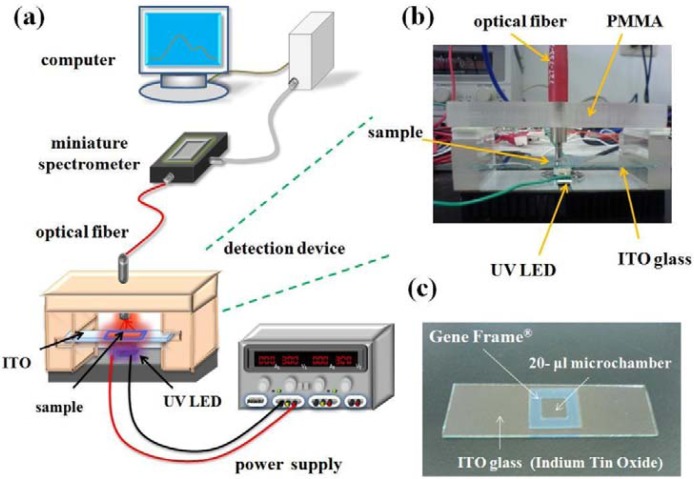
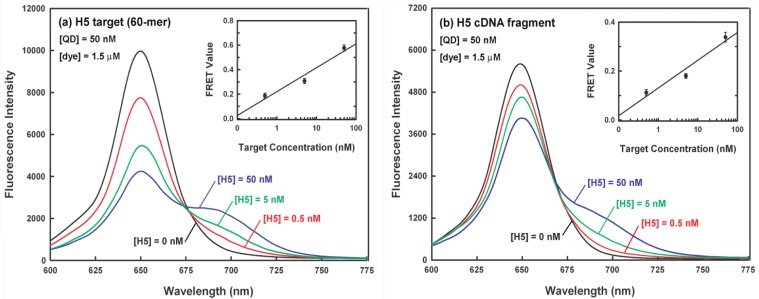
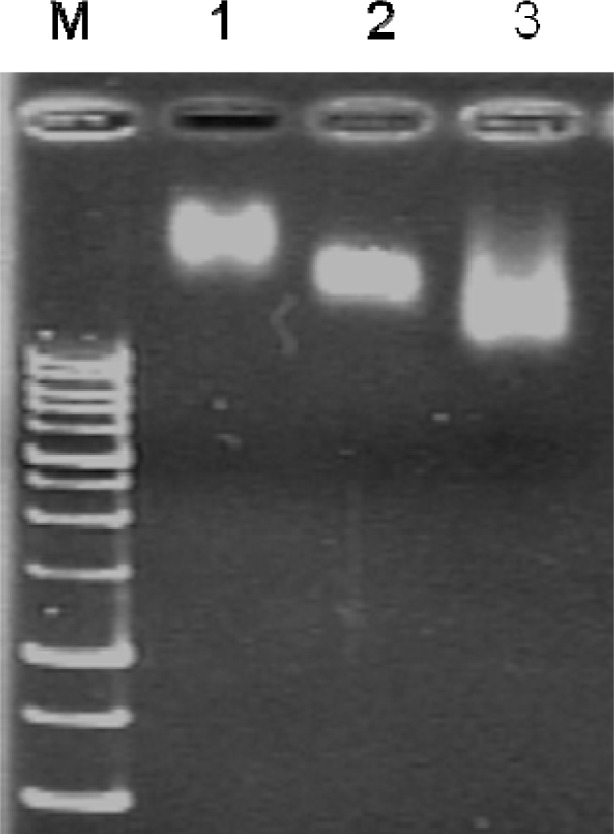
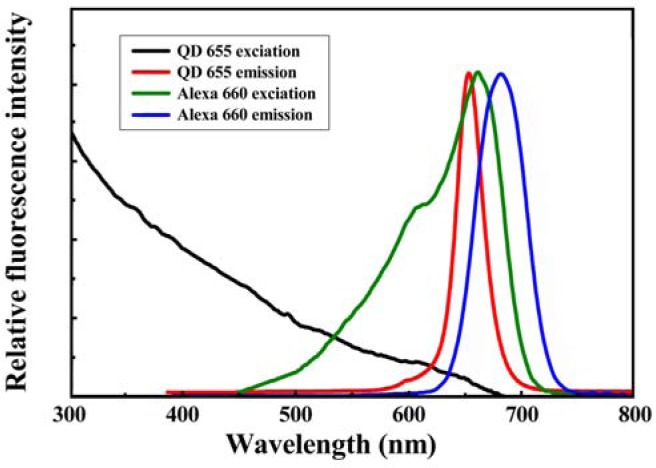
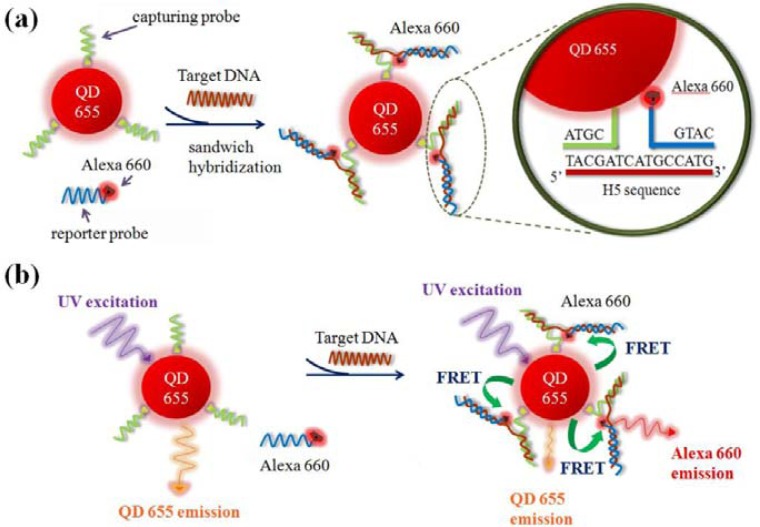
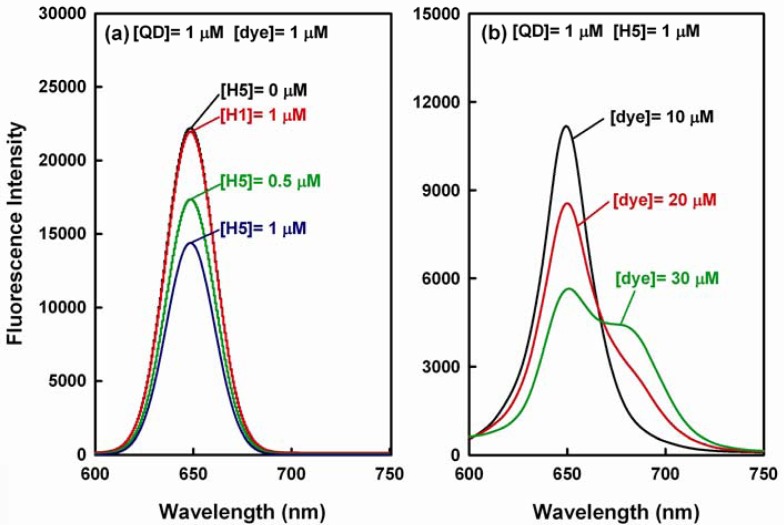
This paper reports a nucleic acid sandwich hybridization assay with a quantum dot (QD)-induced fluorescence resonance energy transfer (FRET) reporter system. Two label-free hemagglutinin H5 sequences (60-mer DNA and 630-nt cDNA fragment) of avian influenza viruses were used as the targets in this work. Two oligonucleotides (16 mers and 18 mers) that specifically recognize two separate but neighboring regions of the H5 sequences were served as the capturing and reporter probes, respectively. The capturing probe was conjugated to QD655 (donor) in a molar ratio of 10:1 (probe-to-QD), and the reporter probe was labeled with Alexa Fluor 660 dye (acceptor) during synthesis. The sandwich hybridization assay was done in a 20 μL transparent, adhesive frame-confined microchamber on a disposable, temperature-adjustable indium tin oxide (ITO) glass slide. The FRET signal in response to the sandwich hybridization was monitored by a homemade optical sensor comprising a single 400 nm UV light-emitting diode (LED), optical fibers, and a miniature 16-bit spectrophotometer. The target with a concentration ranging from 0.5 nM to 1 μM was successfully correlated with both QD emission decrease at 653 nm and dye emission increase at 690 nm. To sum up, this work is beneficial for developing a portable QD-based nucleic acid sensor for on-site pathogen detection.
本文报道了一种基于核酸夹心杂交的量子点(QD)诱导荧光共振能量转移(FRET)报告系统。该工作以禽流感病毒的两个无标记血凝素 H5 序列(60 -mer DNA 和 630-nt cDNA 片段)为靶标。两条分别识别 H5 序列两个独立但相邻区域的寡核苷酸(16 -mer 和 18-mer)分别作为捕获探针和报告探针。捕获探针与 QD655(供体)以摩尔比 10:1(探针与 QD)偶联,而报告探针在合成过程中用 Alexa Fluor 660 染料(受体)标记。夹心杂交反应在一次性、可调节温度的铟锡氧化物(ITO)玻璃载玻片上的 20 μL 透明、粘性框架限制微腔中进行。通过自制的光学传感器监测夹心杂交的 FRET 信号,该传感器包括单个 400nm UV 发光二极管(LED)、光纤和微型 16 位分光光度计。目标物浓度范围从 0.5 nM 到 1 μM 时,与 QD 在 653nm 处的发射减少和染料在 690nm 处的发射增加都有很好的相关性。总之,这项工作有助于开发一种用于现场病原体检测的基于 QD 的便携式核酸传感器。