Department of Oncological Sciences, Huntsman Cancer Institute, University of Utah, Salt Lake City, Utah 84112, USA.
J Biol Chem. 2013 Jan 25;288(4):2261-70. doi: 10.1074/jbc.M112.411033. Epub 2012 Dec 3.
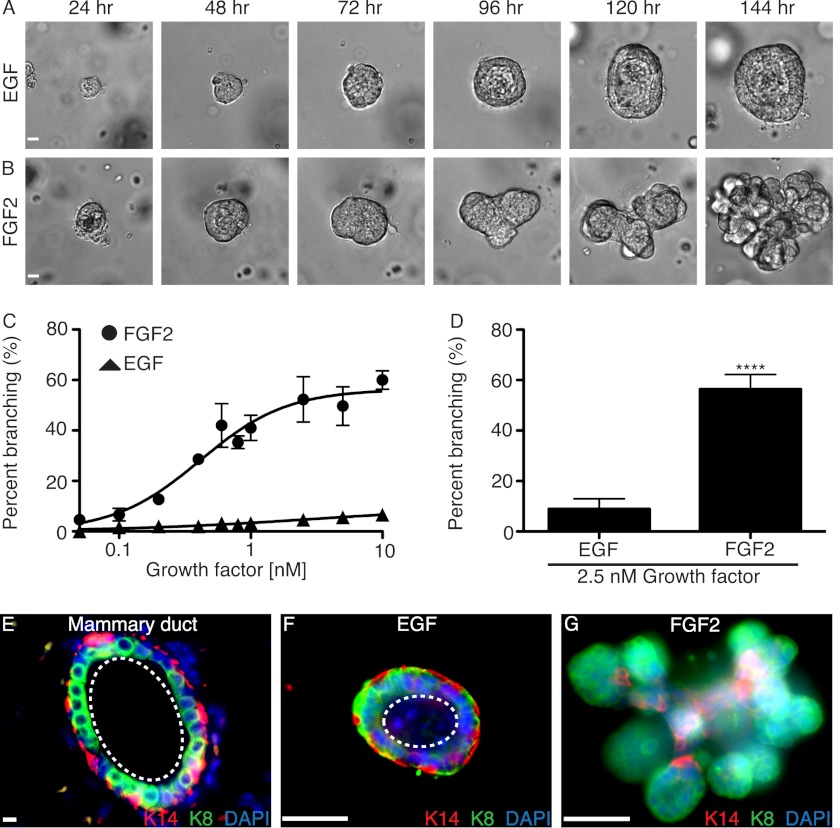
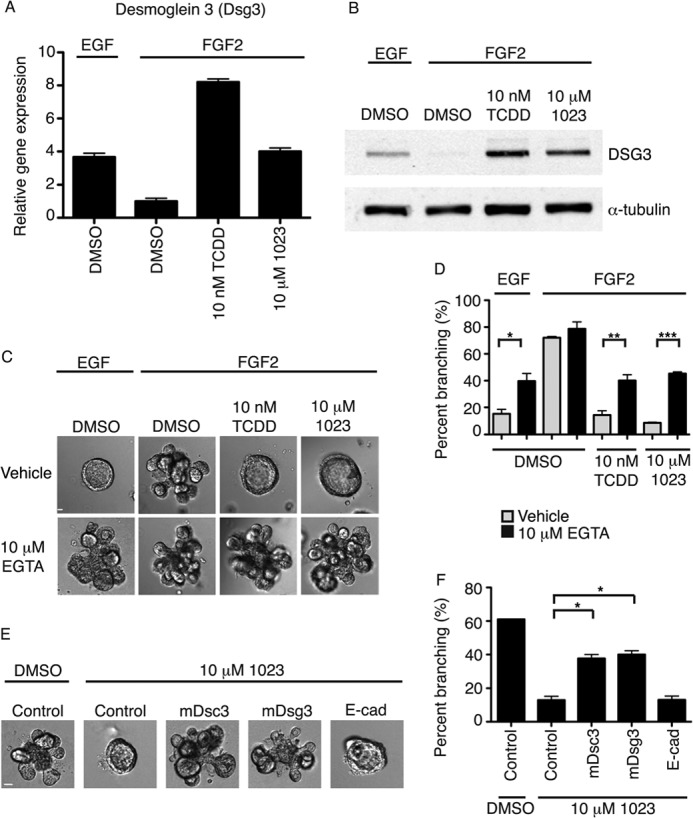
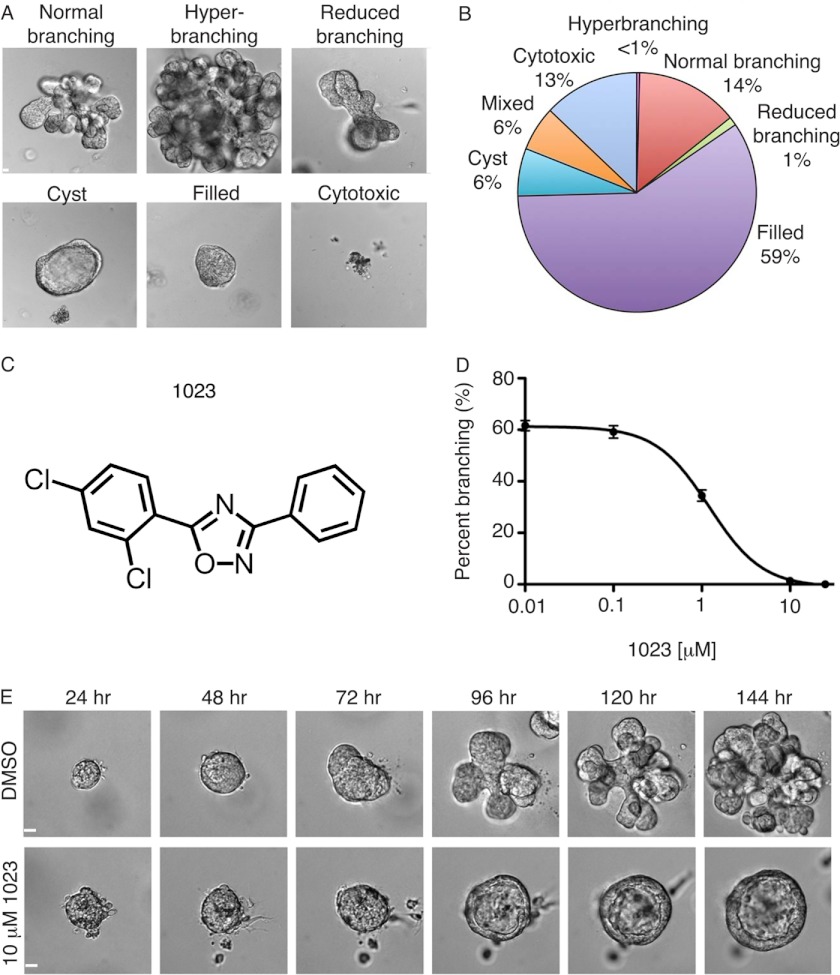
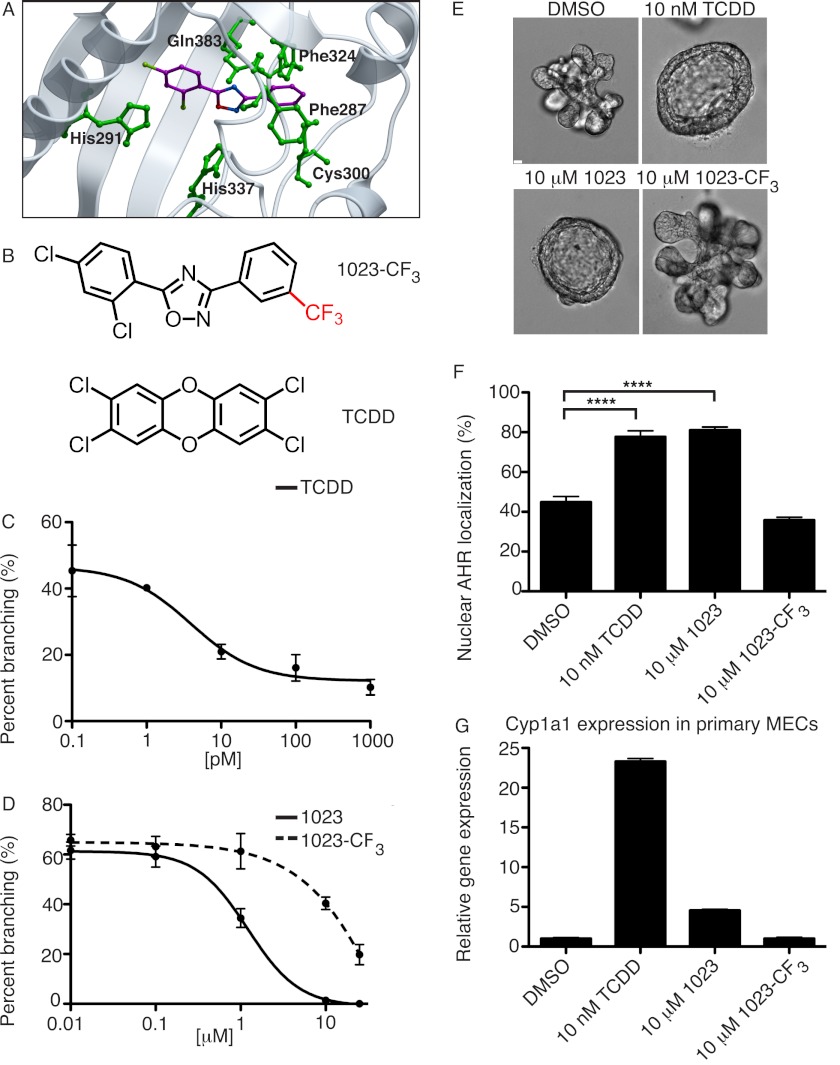
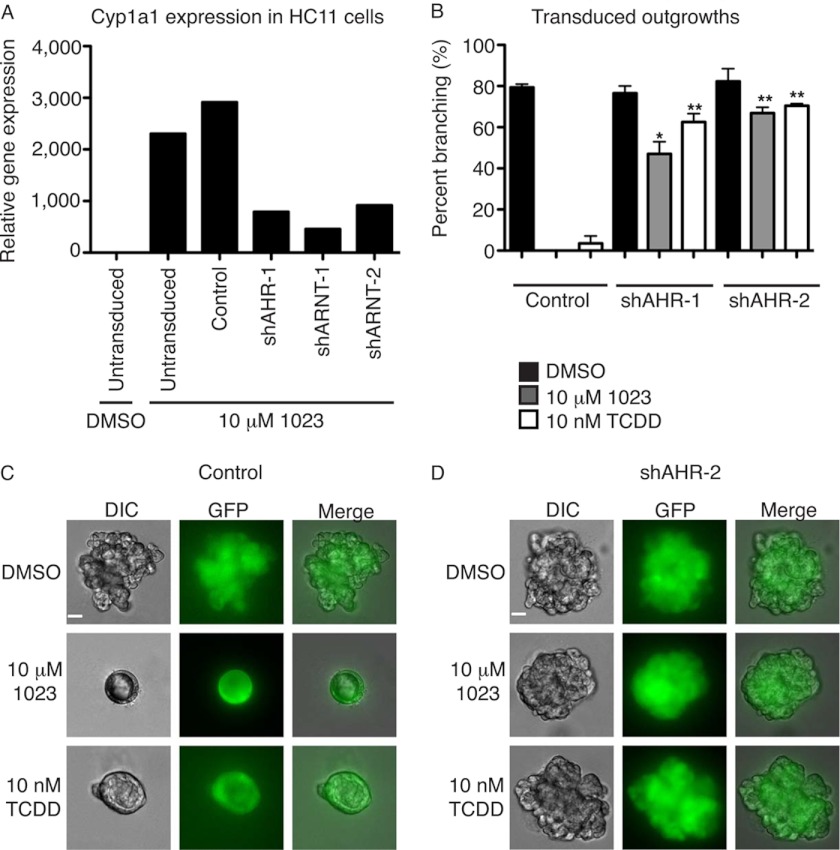
During the process of branching morphogenesis, the mammary gland undergoes distinct phases of remodeling to form an elaborate ductal network that ultimately produces and delivers milk to newborn animals. These developmental events rely on tight regulation of critical cellular pathways, many of which are probably disrupted during initiation and progression of breast cancer. Transgenic mouse and in vitro organoid models previously identified growth factor signaling as a key regulator of mammary branching, but the functional downstream targets of these pathways remain unclear. Here, we used purified primary mammary epithelial cells stimulated with fibroblast growth factor-2 (FGF2) to model mammary branching morphogenesis in vitro. We employed a forward chemical genetic approach to identify modulators of this process and describe a potent compound, 1023, that blocks FGF2-induced branching. In primary mammary epithelial cells, we used lentivirus-mediated knockdown of the aryl hydrocarbon receptor (AHR) to demonstrate that 1023 acts through AHR to block branching. Using 1023 as a tool, we identified desmosomal adhesion as a novel target of AHR signaling and show that desmosomes are critical for AHR agonists to block branching. Our findings support a functional role for desmosomes during mammary morphogenesis and also in blocking FGF-induced invasion.
在分支形态发生过程中,乳腺经历了独特的重塑阶段,形成了精细的导管网络,最终产生并向新生动物输送乳汁。这些发育事件依赖于关键细胞途径的紧密调控,其中许多途径可能在乳腺癌的发生和进展中被破坏。先前的转基因小鼠和体外类器官模型已经确定生长因子信号是乳腺分支的关键调节因子,但这些途径的功能下游靶标仍不清楚。在这里,我们使用纯化的原代乳腺上皮细胞,用成纤维细胞生长因子-2 (FGF2) 刺激,在体外模拟乳腺分支形态发生。我们采用正向化学遗传学方法来鉴定该过程的调节剂,并描述了一种有效的化合物 1023,它可以阻断 FGF2 诱导的分支。在原代乳腺上皮细胞中,我们使用慢病毒介导的芳香烃受体 (AHR) 敲低来证明 1023 通过 AHR 发挥作用来阻断分支。我们使用 1023 作为工具,鉴定了桥粒粘附作为 AHR 信号的一个新靶点,并表明桥粒对于 AHR 激动剂阻断分支是至关重要的。我们的研究结果支持桥粒在乳腺形态发生过程中以及阻断 FGF 诱导的侵袭中的功能作用。