Stem Cell Research Unit, BioMedical Center, Faculty of Medicine, University of Iceland, Reykjavik, Iceland.
PLoS One. 2013;8(4):e60798. doi: 10.1371/journal.pone.0060798. Epub 2013 Apr 3.
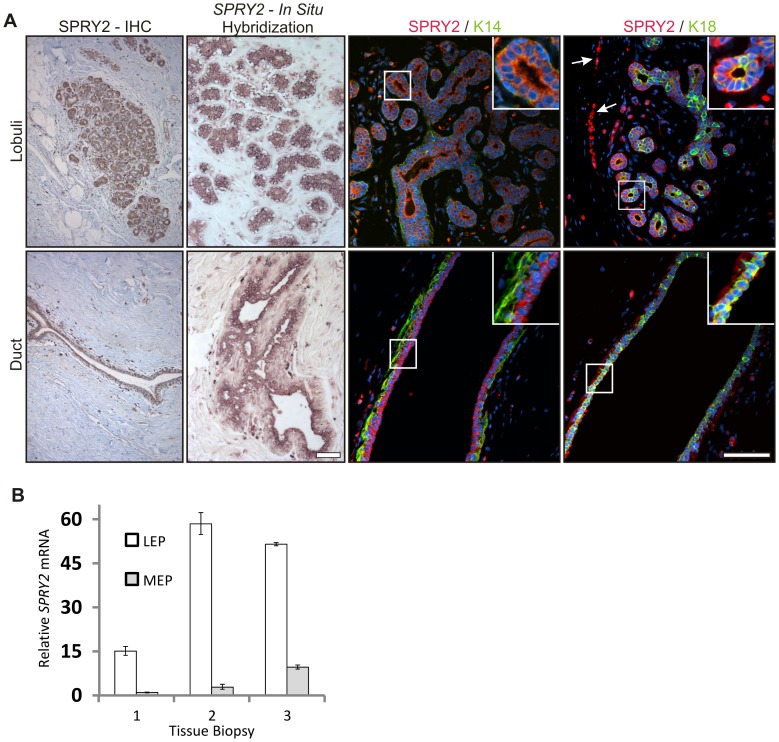
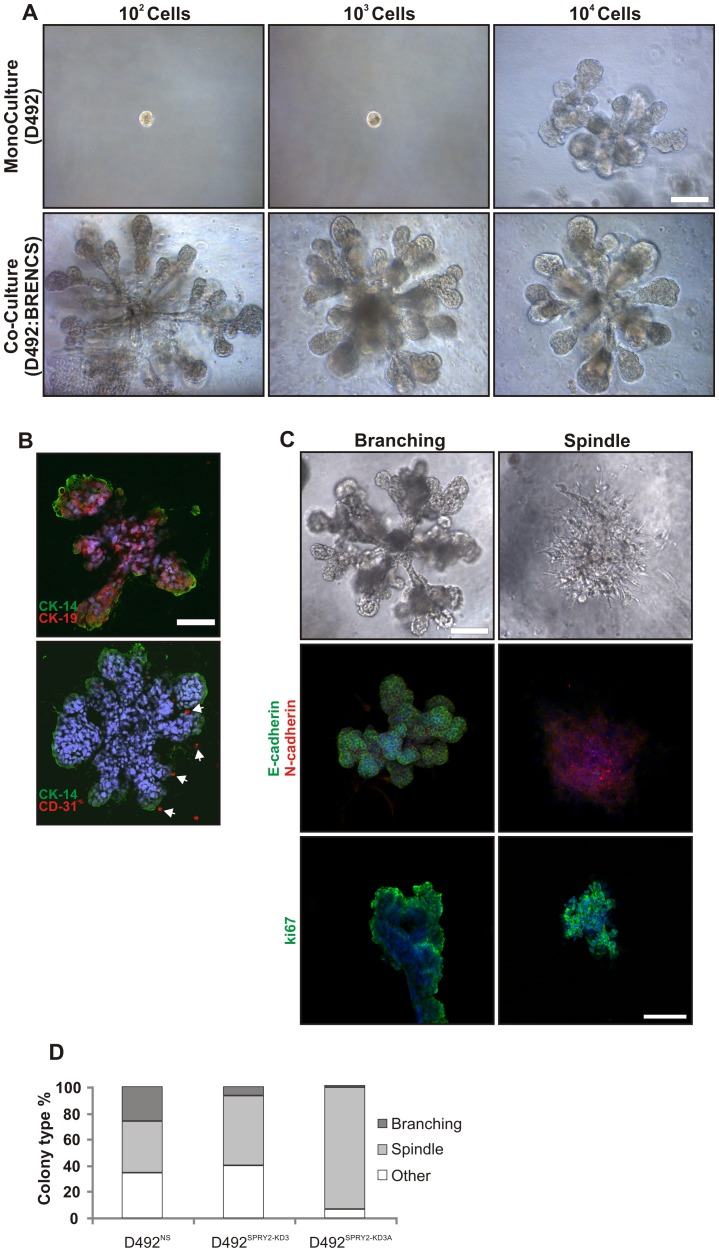
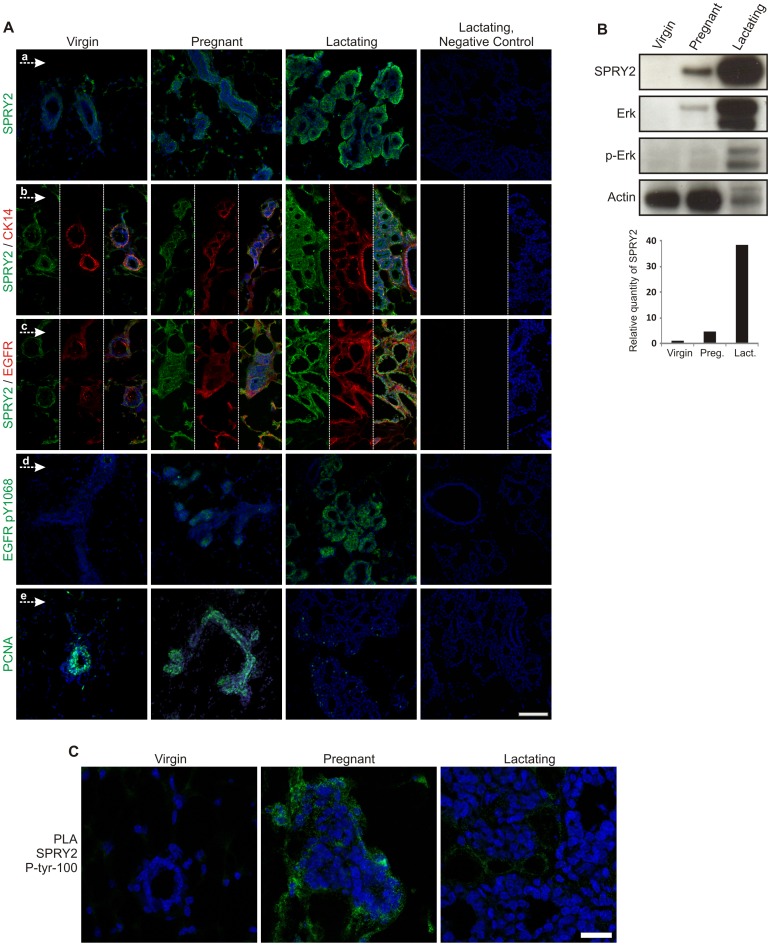
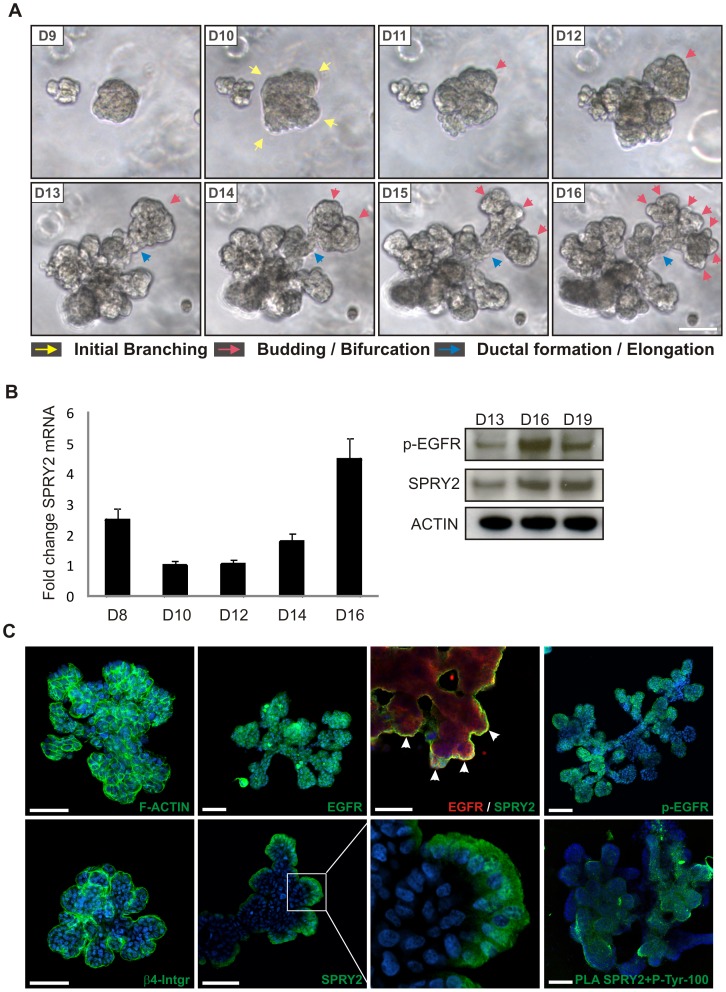
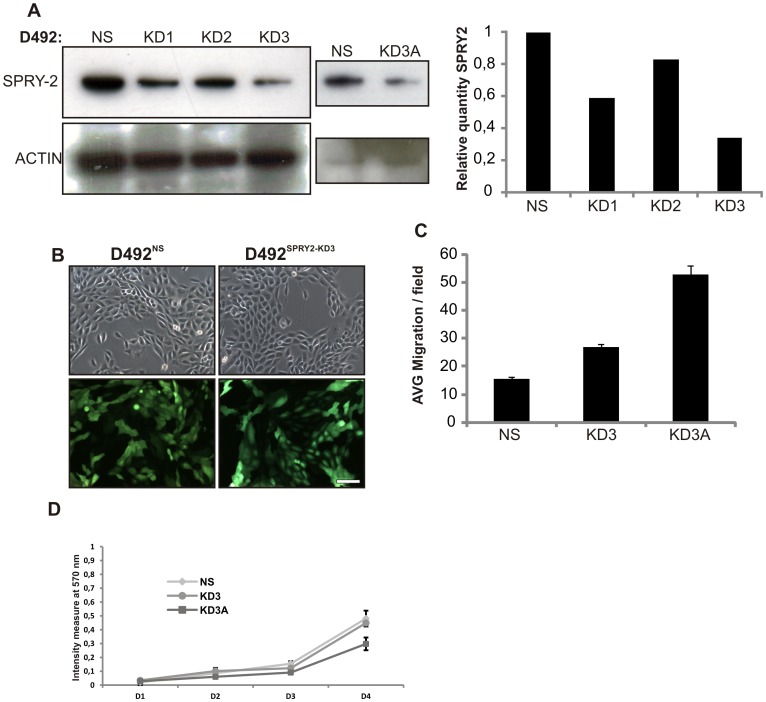
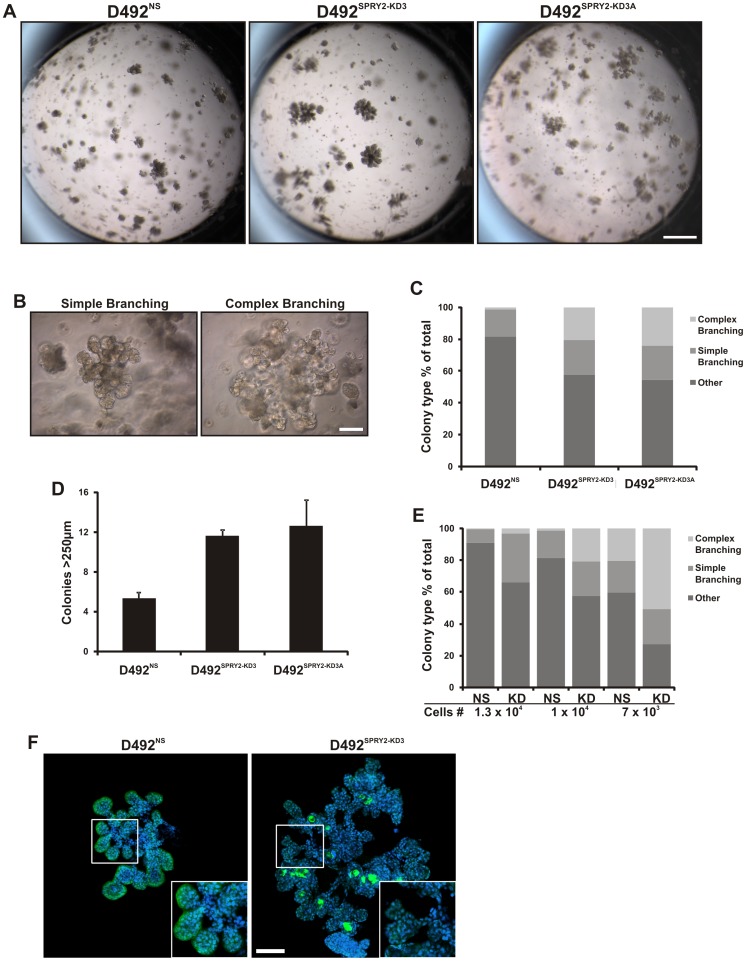
Branching morphogenesis is a mechanism used by many species for organogenesis and tissue maintenance. Receptor tyrosine kinases (RTKs), including epidermal growth factor receptor (EGFR) and the sprouty protein family are believed to be critical regulators of branching morphogenesis. The aim of this study was to analyze the expression of Sprouty-2 (SPRY2) in the mammary gland and study its role in branching morphogenesis. Human breast epithelial cells, breast tissue and mouse mammary glands were used for expression studies using immunoblotting, real rime PCR and immunohistochemistry. Knockdown of SPRY2 in the breast epithelial stem cell line D492 was done by lentiviral transduction of shRNA constructs targeting SPRY2. Three dimensional culture of D492 with or without endothelial cells was done in reconstituted basement membrane matrix. We show that in the human breast, SPRY2 is predominantly expressed in the luminal epithelial cells of both ducts and lobuli. In the mouse mammary gland, SPRY2 expression is low or absent in the virgin state, while in the pregnant mammary gland SPRY2 is expressed at branching epithelial buds with increased expression during lactation. This expression pattern is closely associated with the activation of the EGFR pathway. Using D492 which generates branching structures in three-dimensional (3D) culture, we show that SPRY2 expression is low during initiation of branching with subsequent increase throughout the branching process. Immunostaining locates expression of phosphorylated SPRY2 and EGFR at the tip of lobular-like, branching ends. SPRY2 knockdown (KD) resulted in increased migration, increased pERK and larger and more complex branching structures indicating a loss of negative feedback control during branching morphogenesis. In D492 co-cultures with endothelial cells, D492 SPRY2 KD generates spindle-like colonies that bear hallmarks of epithelial to mesenchymal transition. These data indicate that SPRY2 is an important regulator of branching morphogenesis and epithelial to mesenchymal transition in the mammary gland.
分支形态发生是许多物种用于器官发生和组织维持的一种机制。受体酪氨酸激酶(RTKs),包括表皮生长因子受体(EGFR)和芽生蛋白家族,被认为是分支形态发生的关键调节因子。本研究旨在分析 Sprouty-2(SPRY2)在乳腺中的表达,并研究其在分支形态发生中的作用。使用免疫印迹、实时 PCR 和免疫组织化学方法对乳腺上皮细胞、乳腺组织和小鼠乳腺进行表达研究。通过针对 SPRY2 的 shRNA 构建体的慢病毒转导对乳腺上皮干细胞系 D492 中的 SPRY2 进行敲低。在重构基底膜基质中进行有或没有内皮细胞的 D492 的三维培养。我们表明,在人乳腺中,SPRY2 主要在导管和小叶的腔上皮细胞中表达。在小鼠乳腺中,SPRY2 在处女状态下表达水平低或不存在,而在怀孕乳腺中,SPRY2 在分支上皮芽中表达,并在哺乳期表达增加。这种表达模式与 EGFR 途径的激活密切相关。使用在三维(3D)培养中产生分支结构的 D492,我们表明 SPRY2 在分支起始时表达水平较低,随后在整个分支过程中增加。免疫染色将磷酸化的 SPRY2 和 EGFR 的表达定位在小叶状分支末端。SPRY2 敲低(KD)导致迁移增加、pERK 增加以及分支结构更大且更复杂,表明分支形态发生过程中负反馈控制的丧失。在与内皮细胞共培养的 D492 中,D492 SPRY2 KD 产生具有上皮间质转化特征的梭形集落。这些数据表明,SPRY2 是乳腺分支形态发生和上皮间质转化的重要调节因子。