Laboratory of Receptor Biology and Gene Expression, National Cancer Institute, National Institutes of Health, Bethesda, MD 20892, USA.
Genome Res. 2013 Mar;23(3):462-72. doi: 10.1101/gr.147652.112. Epub 2012 Dec 3.
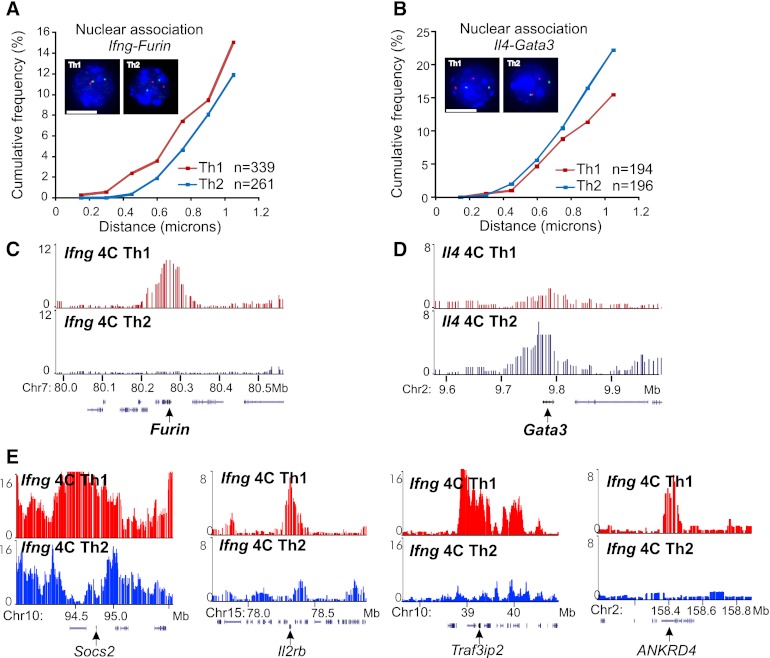
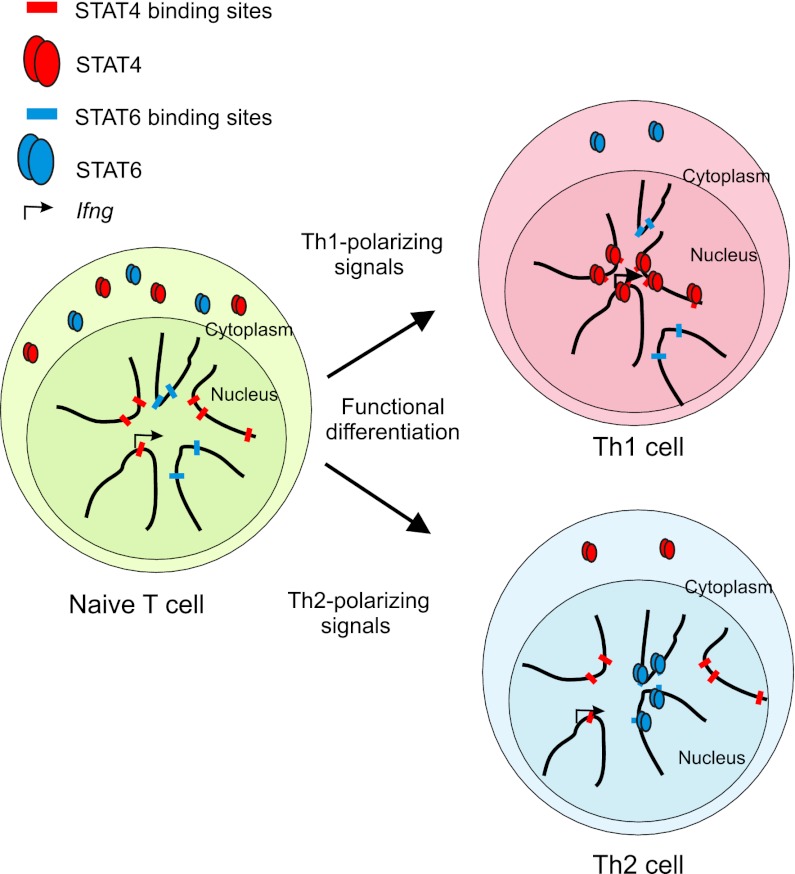
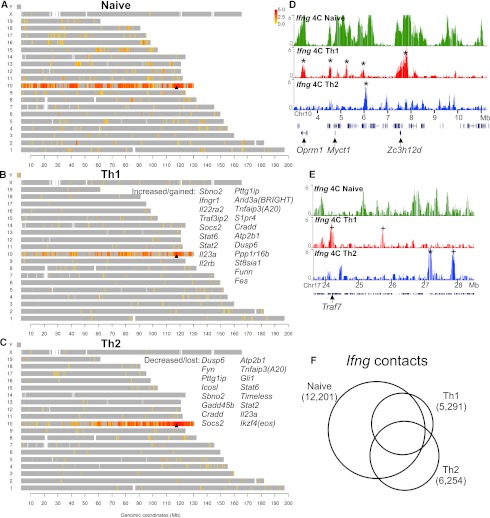
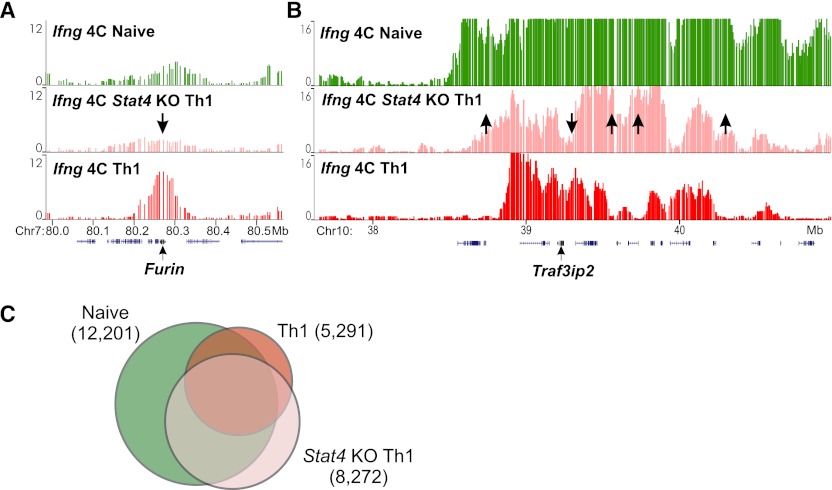
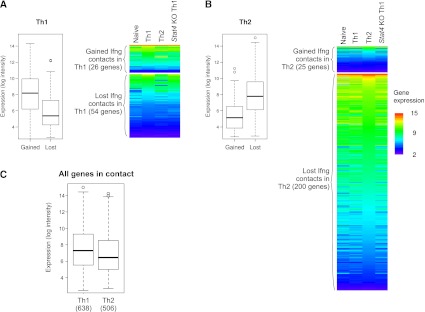
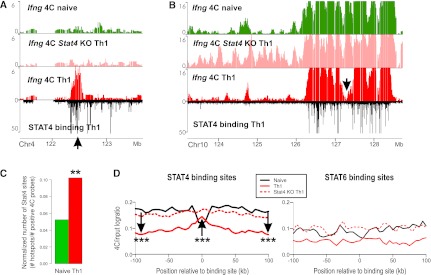
Higher-order genome organization shows tissue-specific patterns. However, functional relevance and the mechanisms shaping the genome architecture are poorly understood. Here we report a profound shift from promiscuous to highly selective genome organization that accompanies the effector lineage choice of differentiating T cells. As multipotent naive cells receive antigenic signals and commit to a T helper (Th) pathway, the genome-wide contacts of a lineage-specific cytokine locus are preferentially enriched for functionally relevant genes. Despite the establishment of divergent interactomes and global reprogramming of transcription in Th1 versus Th2, the overall expression status of the contact genes is surprisingly similar between the two lineages. Importantly, during differentiation, the genomic contacts are retained and strengthened precisely at DNA binding sites of the specific lineage-determining STAT transcription factor. In cells from the specific STAT knock-out mouse, the signature cytokine locus is unable to shed the promiscuous contacts established in the naive T cells, indicating the importance of genomic STAT binding. Altogether, the global aggregation of STAT binding loci from genic and nongenic regions highlights a new role for differentiation-promoting transcription factors in direct specification of higher-order nuclear architecture through interacting with regulatory regions. Such subnuclear environments have significant implications for efficient functioning of the mature effector lymphocytes.
高级基因组组织显示出组织特异性模式。然而,其功能相关性和塑造基因组结构的机制还知之甚少。在这里,我们报告了一种深刻的转变,即从杂乱无章到高度选择性的基因组组织,伴随着分化 T 细胞的效应谱系选择。随着多能性幼稚细胞接受抗原信号并承诺选择 T 辅助(Th)途径,谱系特异性细胞因子基因座的全基因组接触优先富集功能相关基因。尽管 Th1 与 Th2 之间建立了不同的相互作用网络和转录的全局重编程,但两种谱系之间接触基因的总体表达状态惊人地相似。重要的是,在分化过程中,基因组接触被保留并在特定谱系决定 STAT 转录因子的 DNA 结合位点上得到加强。在特定 STAT 敲除小鼠的细胞中,特征性细胞因子基因座无法摆脱在幼稚 T 细胞中建立的杂乱无章的接触,表明基因组 STAT 结合的重要性。总之,来自基因和非基因区域的 STAT 结合位点的全局聚集强调了分化促进转录因子通过与调节区域相互作用直接指定高级核结构的新作用。这种亚核环境对成熟效应淋巴细胞的有效功能具有重要意义。