Pimenta Luiz, Turner Alexander W L, Dooley Zachary A, Parikh Rachit D, Peterson Mark D
Instituto de Patologia da Coluna, 04101-000 São Paulo, SP, Brazil.
ScientificWorldJournal. 2012;2012:381814. doi: 10.1100/2012/381814. Epub 2012 Nov 13.
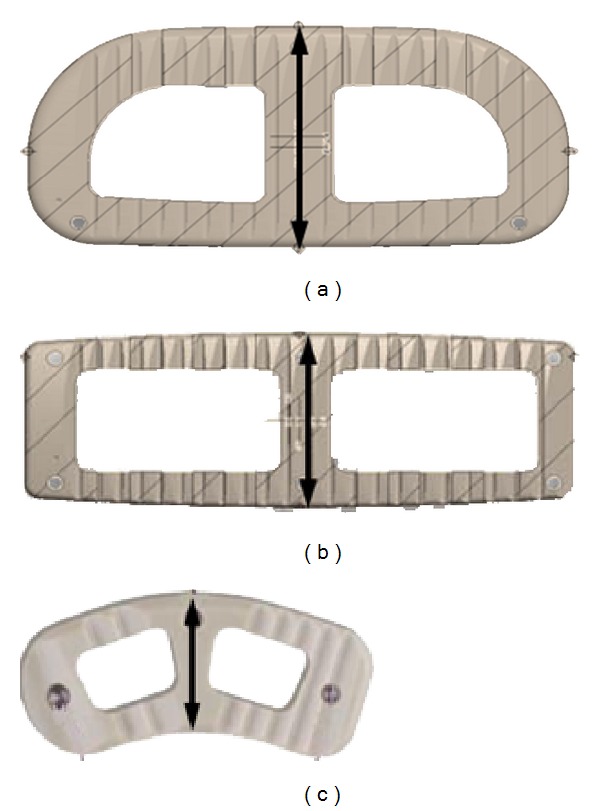
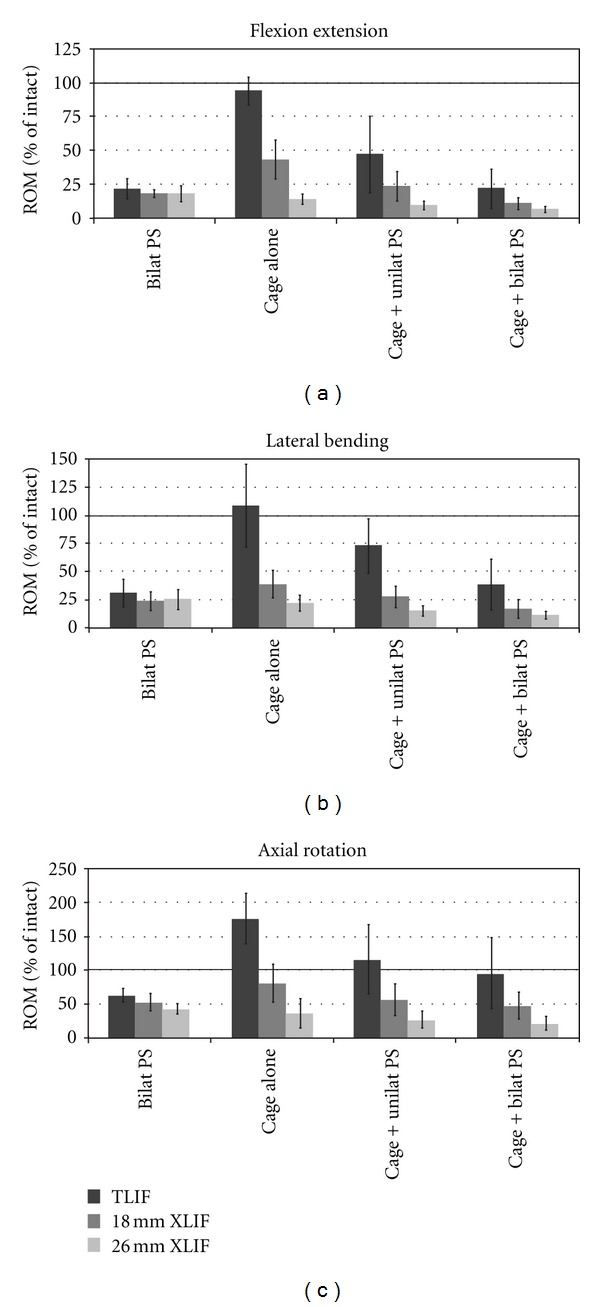
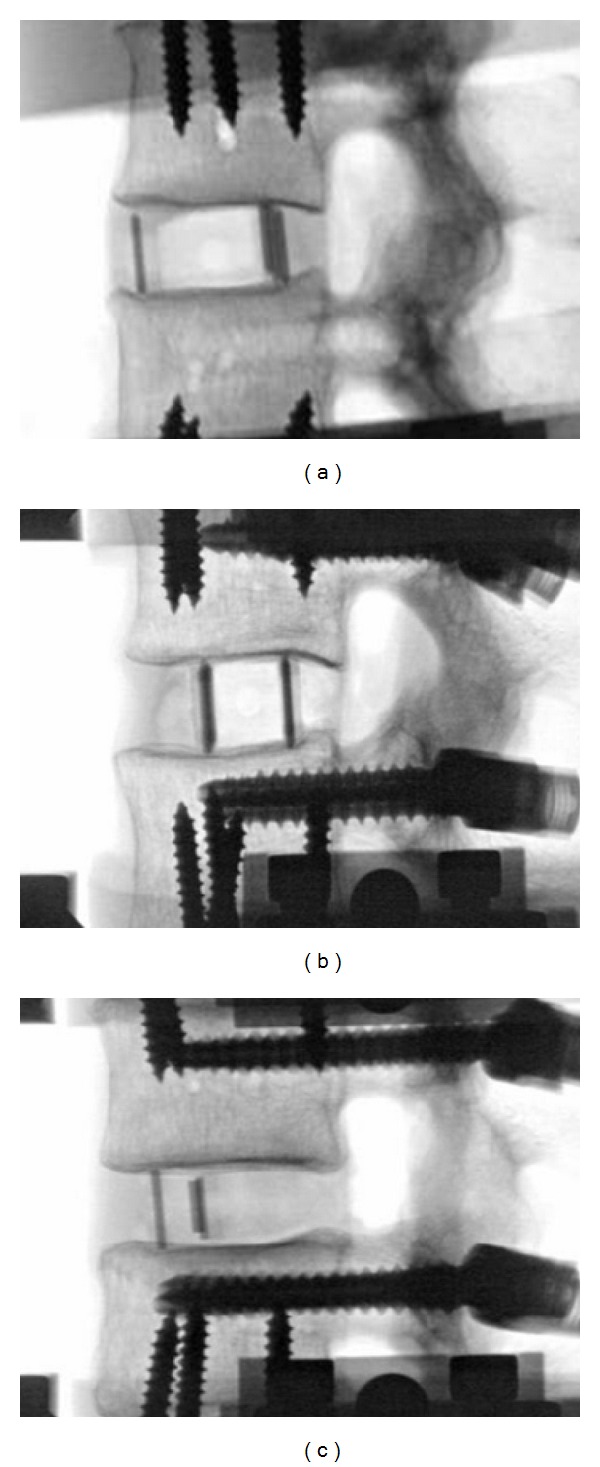
This study investigates the biomechanical stability of a large interbody spacer inserted by a lateral approach and compares the biomechanical differences with the more conventional transforaminal interbody fusion (TLIF), with and without supplemental pedicle screw (PS) fixation. Twenty-four L2-L3 functional spinal units (FSUs) were tested with three interbody cage options: (i) 18 mm XLIF cage, (ii) 26 mm XLIF cage, and (iii) 11 mm TLIF cage. Each spacer was tested without supplemental fixation, and with unilateral and bilateral PS fixation. Specimens were subjected to multidirectional nondestructive flexibility tests to 7.5 N·m. The range of motion (ROM) differences were first examined within the same group (per cage) using repeated-measures ANOVA, and then compared between cage groups. The 26 mm XLIF cage provided greater stability than the 18 mm XLIF cage with unilateral PS and 11 mm TLIF cage with bilateral PS. The 18 mm XLIF cage with unilateral PS provided greater stability than the 11 mm TLIF cage with bilateral PS. This study suggests that wider lateral spacers are biomechanically stable and offer the option to be used with less or even no supplemental fixation for interbody lumbar fusion.
本研究调查了经外侧入路植入的大型椎间融合器的生物力学稳定性,并比较了其与更传统的经椎间孔椎间融合术(TLIF)在有无辅助椎弓根螺钉(PS)固定情况下的生物力学差异。对24个L2-L3功能性脊柱单元(FSU)采用三种椎间融合器进行测试:(i)18 mm XLIF融合器,(ii)26 mm XLIF融合器,以及(iii)11 mm TLIF融合器。每个融合器分别在无辅助固定、单侧PS固定和双侧PS固定的情况下进行测试。对标本进行多方向非破坏性灵活性测试,施加7.5 N·m的力。首先使用重复测量方差分析在同一组内(每个融合器)检查运动范围(ROM)差异,然后在融合器组之间进行比较。26 mm XLIF融合器在单侧PS固定时比18 mm XLIF融合器以及在双侧PS固定时比11 mm TLIF融合器提供了更高的稳定性。18 mm XLIF融合器在单侧PS固定时比11 mm TLIF融合器在双侧PS固定时提供了更高的稳定性。本研究表明,更宽的外侧融合器在生物力学上是稳定的,并且为腰椎椎间融合提供了使用较少甚至不使用辅助固定的选择。