Microbiology Department, Faculty of Biochemistry Biophysics and Biotechnology, Jagiellonian University, Gronostajowa 7, 30-387 Krakow, Poland.
J Virol Methods. 2013 Mar;188(1-2):29-36. doi: 10.1016/j.jviromet.2012.11.039. Epub 2012 Dec 7.
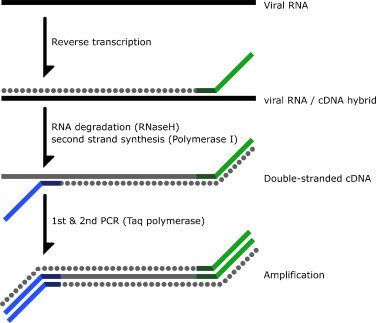
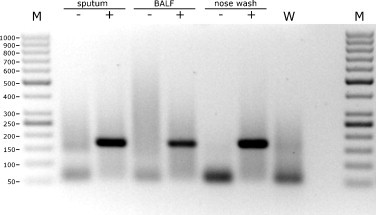
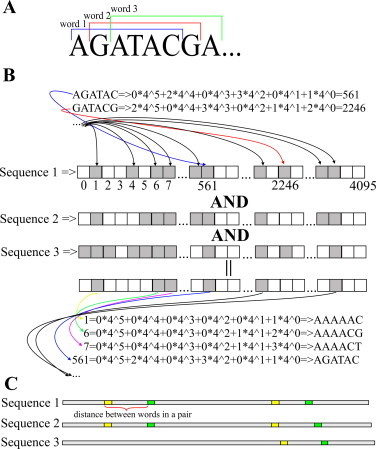
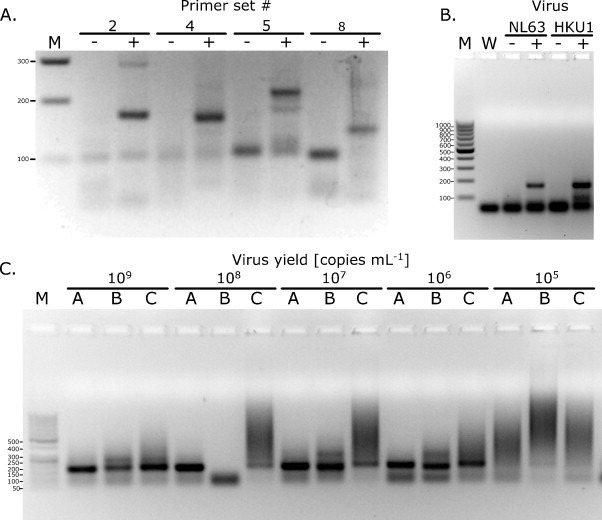
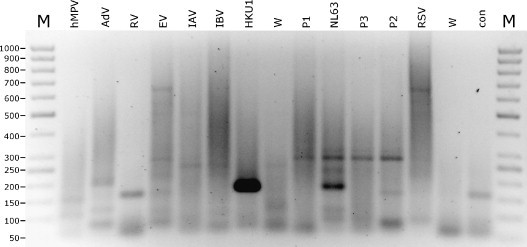
Despite intense efforts to develop novel and better tools to identify known viruses and to discover new viruses, establishing etiological roles for viruses in human disease is challenging. In large part, this may be attributed to the high variability of viral species and the difficulties in developing broad-spectrum, yet specific, diagnostic assays. To overcome this problem, a novel method for the detection of viruses is described in the current manuscript. The technique relies on the addition of synthetic oligonucleotides to both termini of RNA fragments in a sequence-dependent manner during first- and second-strand DNA synthesis; these oligonucleotides are used subsequently for amplification of the viral nucleic acids of interest. The recognition of the target sequence by the oligonucleotides is mediated by short (6-8 nt) conserved regions, which facilitates development of broad-spectrum assays. The method has been tested for coronaviruses, although it may be also adopted for other RNA viruses.
尽管人们努力开发新的更好的工具来识别已知病毒和发现新病毒,但确定病毒在人类疾病中的病因仍然具有挑战性。在很大程度上,这可能归因于病毒物种的高度变异性以及开发广谱但特异性诊断检测的困难。为了克服这个问题,本文描述了一种新的病毒检测方法。该技术依赖于在第一和第二链 DNA 合成过程中以序列依赖性方式在 RNA 片段的两端添加合成寡核苷酸; 随后这些寡核苷酸用于扩增感兴趣的病毒核酸。寡核苷酸对靶序列的识别是由短(6-8nt)保守区介导的,这有助于开发广谱检测。该方法已在冠状病毒中进行了测试,尽管它也可能适用于其他 RNA 病毒。