Institute of Molecular Psychiatry, University of Bonn Bonn, Germany.
Front Aging Neurosci. 2012 Dec 5;4:34. doi: 10.3389/fnagi.2012.00034. eCollection 2012.
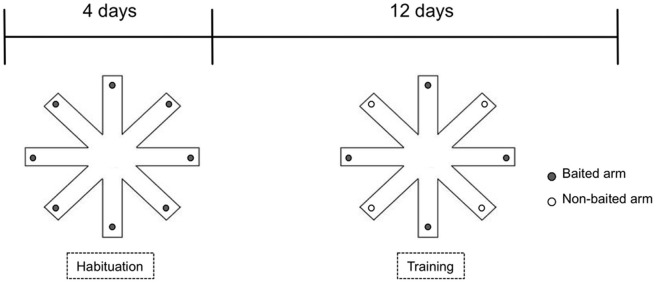
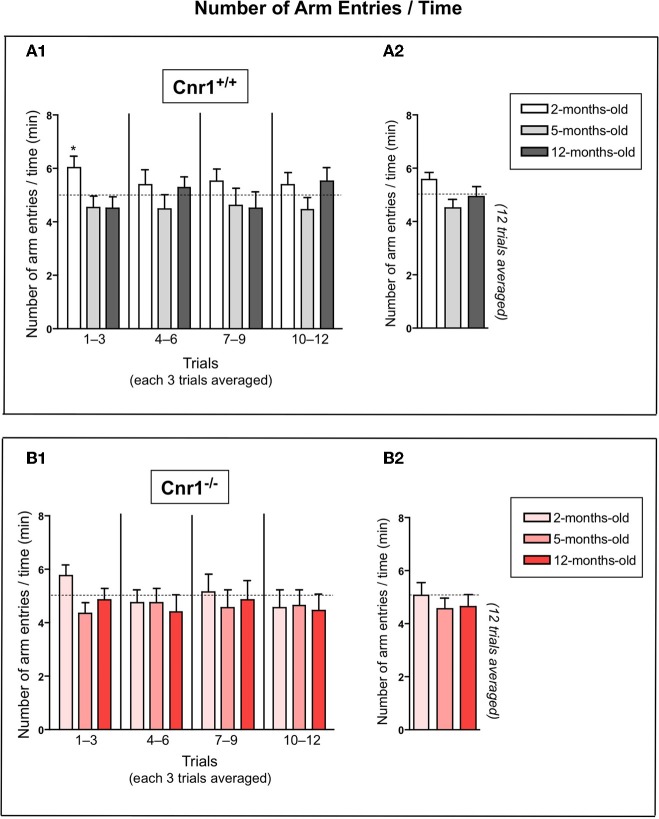
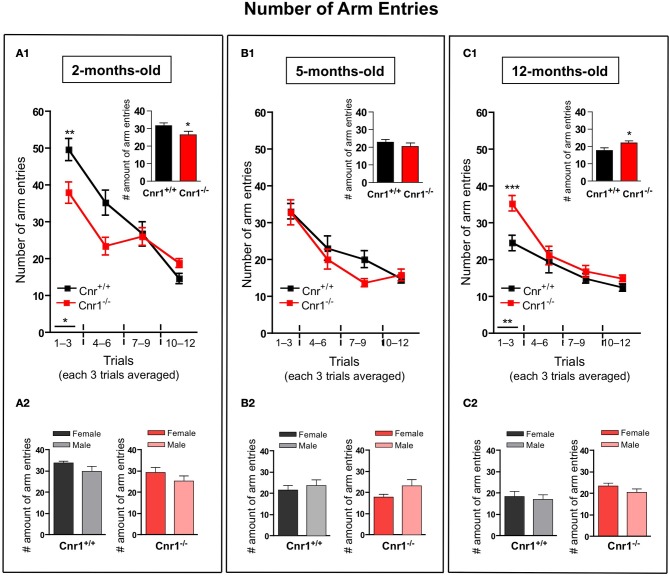
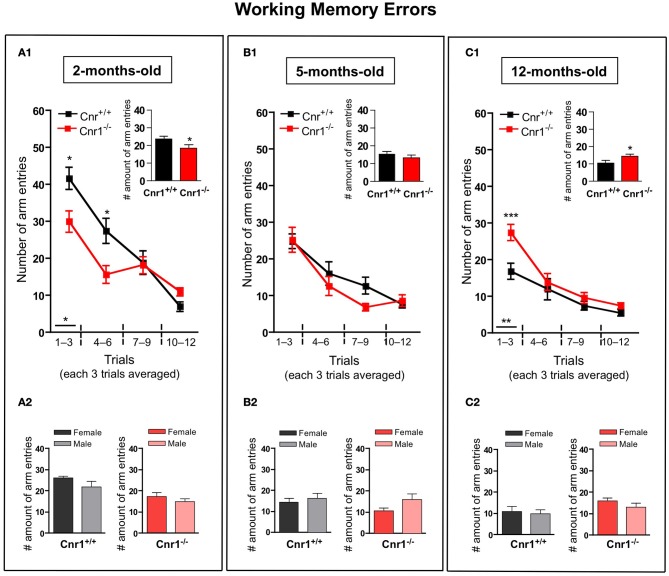
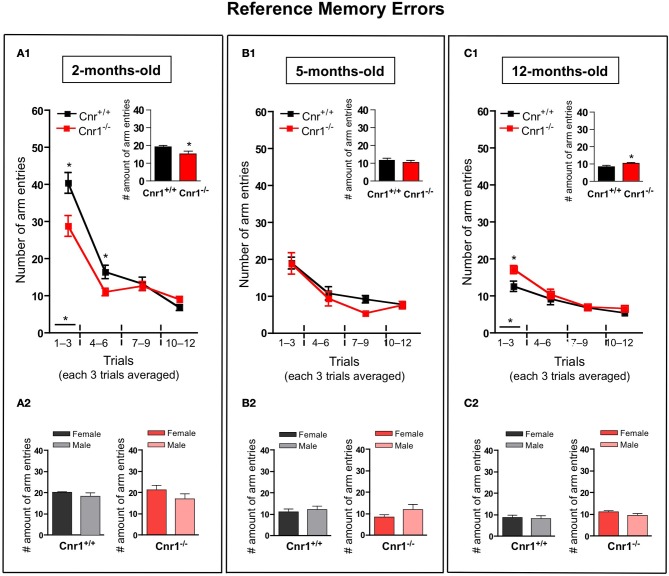
Previous studies have shown that cannabinoid 1 (CB1) receptor signaling dissociates between reward-associated and aversive memories. The influence of CB1 receptors on the aversion-driven spatial learning in the Morris water maze test is strongly age-dependent: mice with genetic deletion of CB1 receptors (Cnr1(-/-)) show superior learning when young but inferior learning when old compared to age-matched wild-type mice. Whether the reward-driven spatial learning is influenced in the same way by CB1 receptor signaling as the aversion-driven learning remains unclear. Thus, we examined the performance of Cn1(-/-) and their wild-type littermates at ages of 2-, 5-, and 12-months-old in the eight-arm radial maze test-a reward-motivated model of spatial learning. Interestingly, 2-months-old Cnr1(-/-) mice had a superior learning ability to wild-type mice. At the age of 5-months, Cnr1(-/-) mice showed the same performance as the wild-type littermates. However, 12-months-old Cnr1(-/-) mice showed significantly impaired performances in each parameter of the test. Accordingly, this study provides compelling support for our previous result that genetic deletion of CB1 receptor leads to early onset of age-related memory decline, similarly affecting both reward and aversion-driven learning.
先前的研究表明,大麻素 1(CB1)受体信号在奖励相关记忆和厌恶记忆之间分离。CB1 受体对 Morris 水迷宫测试中厌恶驱动的空间学习的影响强烈依赖于年龄:与年龄匹配的野生型小鼠相比,CB1 受体基因缺失(Cnr1(-/-))的小鼠在年轻时表现出更好的学习能力,但在年老时表现出较差的学习能力。CB1 受体信号是否以与厌恶驱动学习相同的方式影响奖励驱动的空间学习尚不清楚。因此,我们在 2、5 和 12 月龄时检查了 Cn1(-/-)及其野生型同窝仔鼠在八臂放射迷宫测试中的表现-一种奖励驱动的空间学习模型。有趣的是,2 月龄的 Cnr1(-/-)小鼠比野生型小鼠具有更好的学习能力。在 5 月龄时,Cnr1(-/-)小鼠的表现与野生型同窝仔鼠相同。然而,12 月龄的 Cnr1(-/-)小鼠在测试的每个参数中表现出明显的受损。因此,这项研究为我们之前的结果提供了有力的支持,即 CB1 受体的基因缺失导致与年龄相关的记忆衰退的早期发作,同样影响奖励和厌恶驱动的学习。