Bednarik D P, Cook J A, Pitha P M
Johns Hopkins University, School of Medicine Oncology Center, Baltimore, MD 21205.
EMBO J. 1990 Apr;9(4):1157-64. doi: 10.1002/j.1460-2075.1990.tb08222.x.
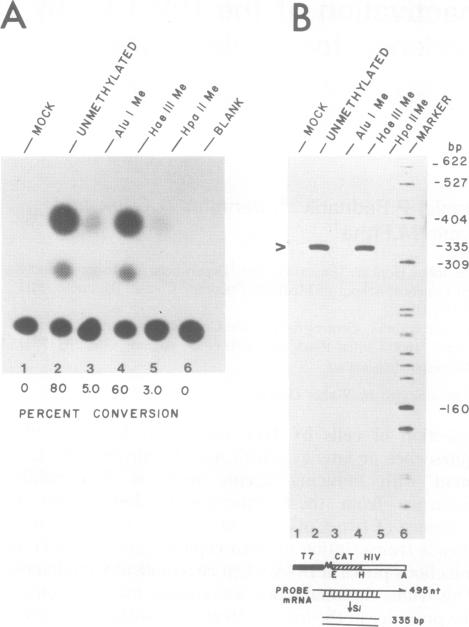
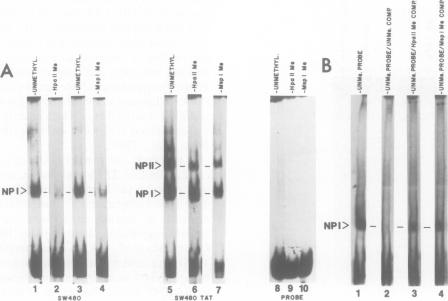
Infection of cells by HIV can result in a period of quiescence or latency which may be obviated by treatment with inducing agents such as 5-azacytidine. Evidence from these experiments demonstrate the existence of two CpG sites in the HIV LTR which can silence transcription of both reporter genes (CAT) and infectious proviral DNA when enzymatically methylated. This transcriptional block was consistently overcome by the presence of the trans-activator tat without significant demethylation of the HIV LTR. These results suggest that DNA hypermethylation of the HIV LTR may change the binding characteristics between LTR sequences and cellular proteins, thereby suppressing HIV LTR transcription and modulating viral expression.
HIV感染细胞可导致一段静止期或潜伏期,使用诱导剂如5-氮杂胞苷进行治疗可能会消除这种情况。这些实验的证据表明,HIV长末端重复序列(LTR)中存在两个CpG位点,当它们被酶促甲基化时,可使报告基因(氯霉素乙酰转移酶,CAT)和感染性前病毒DNA的转录沉默。反式激活因子tat的存在始终能克服这种转录阻滞,而HIV LTR并没有明显的去甲基化。这些结果表明,HIV LTR的DNA高甲基化可能会改变LTR序列与细胞蛋白之间的结合特性,从而抑制HIV LTR转录并调节病毒表达。