Wang Jianru, Tian Ye, Phillips Kate L E, Chiverton Neil, Haddock Gail, Bunning Rowena A, Cross Alison K, Shapiro Irving M, Le Maitre Christine L, Risbud Makarand V
Thomas Jefferson University, Philadelphia, Pennsylvania 19107, USA.
Arthritis Rheum. 2013 Mar;65(3):832-42. doi: 10.1002/art.37819.
To investigate tumor necrosis factor α (TNFα) and interleukin-1β (IL-1β) regulation of CCL3 expression in nucleus pulposus (NP) cells and in macrophage migration.
Quantitative reverse transcription-polymerase chain reaction and immunohistochemistry were used to measure CCL3 expression in NP cells. Transfections were used to determine the role of NF-κB, CCAAT/enhancer binding protein (C/EBPβ), and MAPK on cytokine-mediated CCL3 promoter activity. The effect of NP-conditioned medium on macrophage migration was measured using a Transwell system.
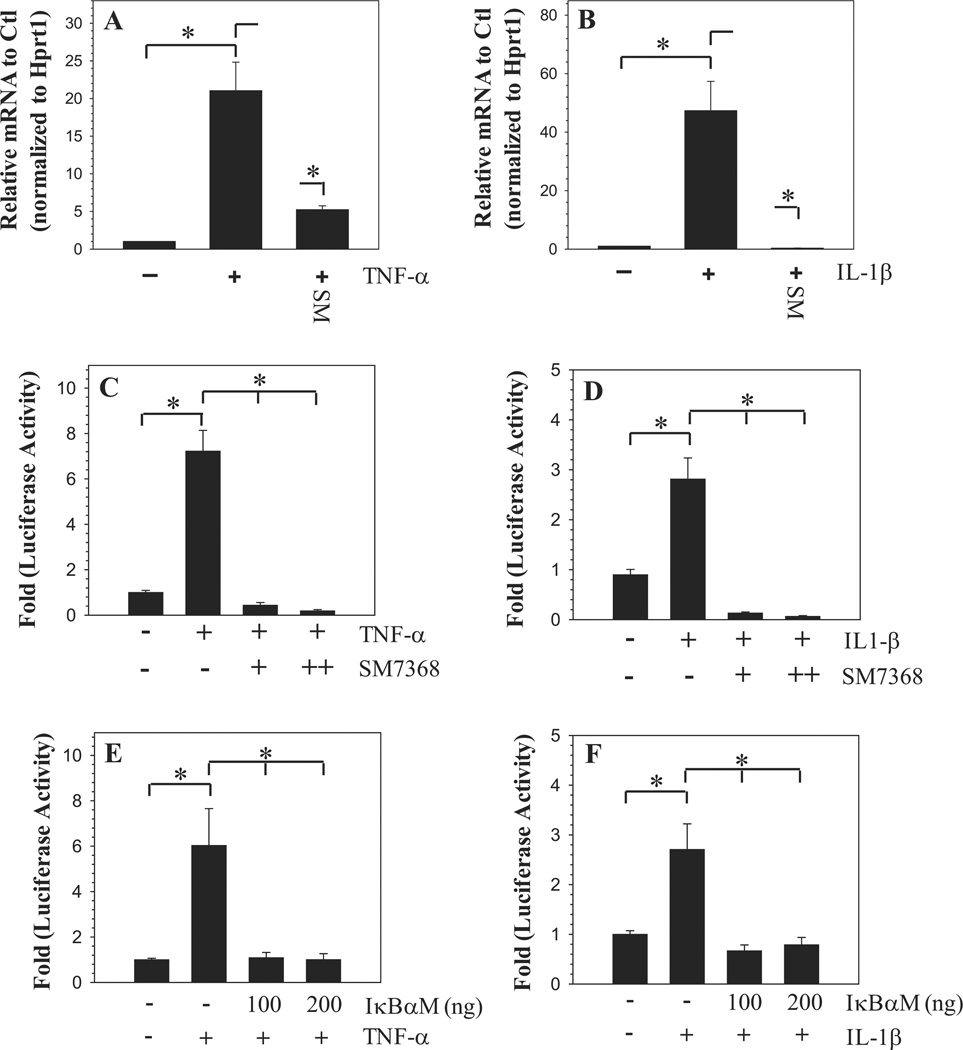
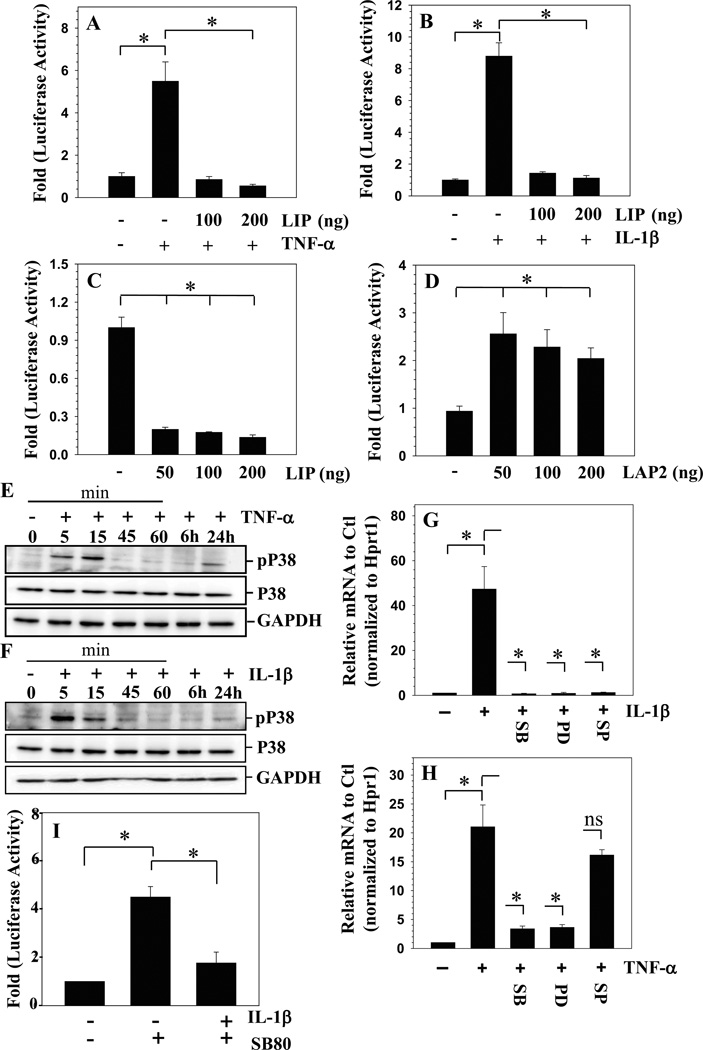
An increase in CCL3 expression and promoter activity was observed in NP cells after TNFα or IL-1β treatment. Treatment of cells with NF-κB and MAPK inhibitors abolished the effect of the cytokines on CCL3 expression. The inductive effect of p65 and C/EBPβ on the CCL3 promoter was confirmed through gain-of-function and loss-of-function studies. Notably, cotransfection with p50 completely blocked cytokine- and p65-dependent induction. In contrast, c-Rel and RelB had little effect on promoter activity. Lentiviral transduction with short hairpin RNA for p65 (shp65) and shIKKβ significantly decreased the TNFα-dependent increase in CCL3 expression. Analysis of degenerated human NP tissue samples showed that CCL3, but not CCL4, expression correlated positively with the grade of tissue degeneration. Importantly, treatment of macrophages with conditioned medium of NP cells treated with TNFα or IL-1β promoted their migration. Pretreatment of macrophages with an antagonist of CCR1, the primary receptor for CCL3 and CCL4, blocked cytokine-mediated migration.
Our findings indicate that TNFα and IL-1β modulate the expression of CCL3 in NP cells by controlling the activation of MAPK, NF-κB, and C/EBPβ signaling. The CCL3-CCR1 axis may play an important role in promoting macrophage infiltration in degenerated, herniated discs.
研究肿瘤坏死因子α(TNFα)和白细胞介素-1β(IL-1β)对髓核(NP)细胞中CCL3表达及巨噬细胞迁移的调控作用。
采用定量逆转录-聚合酶链反应和免疫组织化学法检测NP细胞中CCL3的表达。通过转染确定核因子κB(NF-κB)、CCAAT/增强子结合蛋白(C/EBPβ)和丝裂原活化蛋白激酶(MAPK)在细胞因子介导的CCL3启动子活性中的作用。使用Transwell系统检测NP条件培养基对巨噬细胞迁移的影响。
TNFα或IL-1β处理后,NP细胞中CCL3表达及启动子活性增加。用NF-κB和MAPK抑制剂处理细胞可消除细胞因子对CCL3表达的影响。通过功能获得和功能丧失研究证实了p65和C/EBPβ对CCL3启动子的诱导作用。值得注意的是,与p50共转染可完全阻断细胞因子和p65依赖性诱导。相反,c-Rel和RelB对启动子活性影响很小。用针对p65的短发夹RNA(shp65)和shIKKβ进行慢病毒转导可显著降低TNFα依赖性CCL3表达的增加。对退变的人NP组织样本分析表明,CCL3而非CCL4的表达与组织退变程度呈正相关。重要的是,用TNFα或IL-1β处理的NP细胞的条件培养基处理巨噬细胞可促进其迁移。用CCL3和CCL4的主要受体CCR1拮抗剂预处理巨噬细胞可阻断细胞因子介导的迁移。
我们的数据表明,TNFα和IL-1β通过控制MAPK、NF-κB和C/EBPβ信号通路的激活来调节NP细胞中CCL3的表达。CCL3-CCR1轴可能在促进退变、突出椎间盘内巨噬细胞浸润中起重要作用。