The Second Hospital Affiliated of Shanxi Medical University, Shanxi, China.
BMC Musculoskelet Disord. 2012 Dec 13;13:249. doi: 10.1186/1471-2474-13-249.
Previous in vivo studies have shown that mesenchymal stem cell (MSC) transplantation significantly improves the condition of a number of autoimmune diseases including autoimmune cerebrospinal meningitis, multiple sclerosis, glomerulonephritis and systemic lupus erythematosus.
To investigate the immunoregulatory effect of stem cell transplantation, human umbilical cord MSCs were co-cultured with peripheral blood mononuclear cells (PBMCs) from patients with rheumatoid arthritis (RA). Orphan nuclear receptor gamma (ROR-γ) mRNA and protein expression was detected with real-time PCR and Western blotting. Interleukin (IL)-17, IL-6 and tumor necrosis factor (TNF-α) in the cell culture supernatant were measured using a flow cytometric bead capture method.
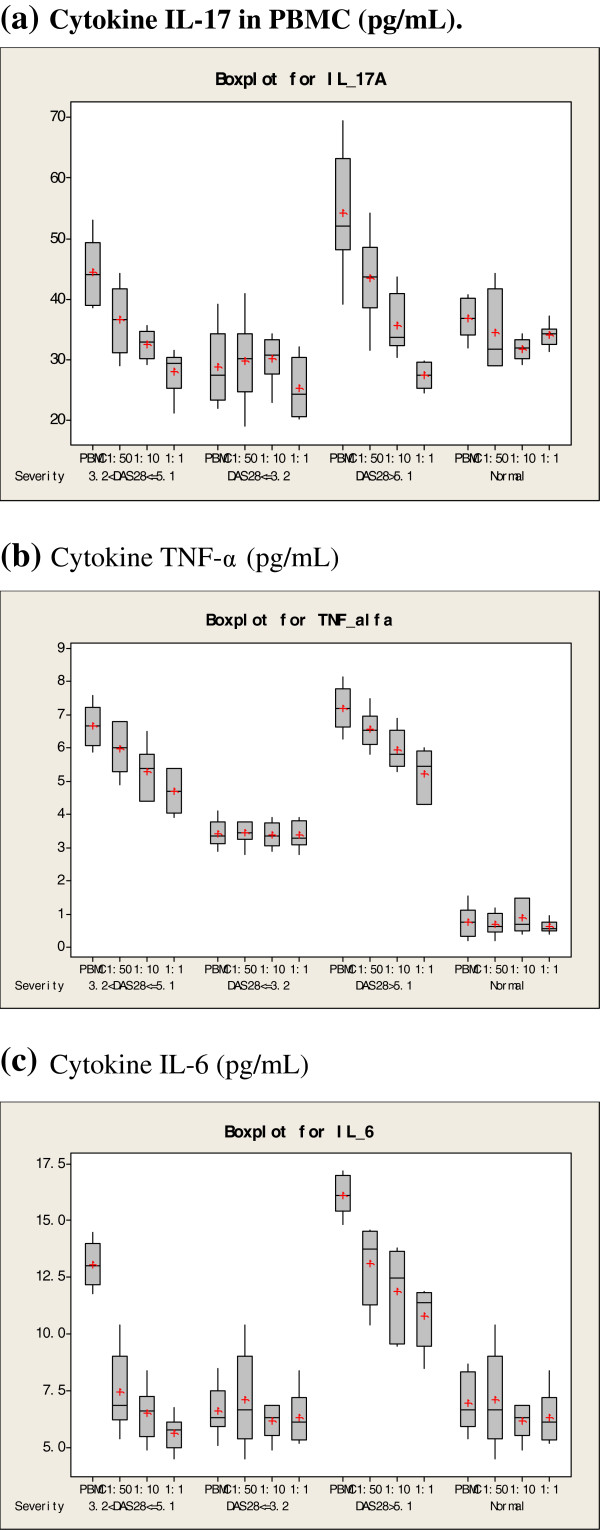
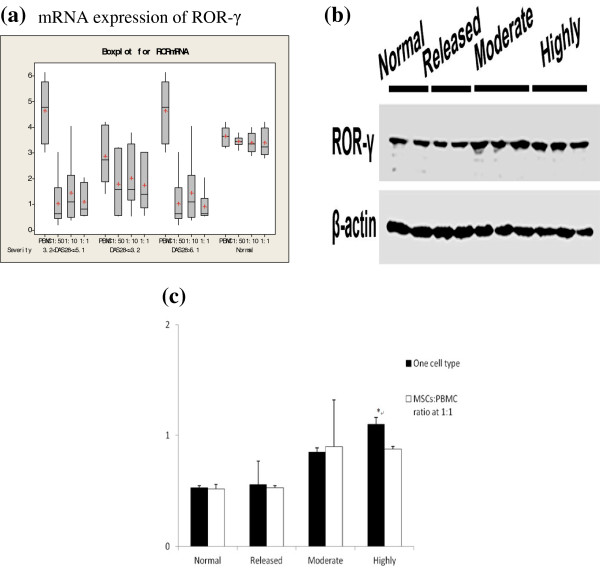
After 72 hours of co-culture, the mRNA and protein expression levels of ROR-γ in co-cultured PBMCs were decreased compared with that in PBMC of RA patients cultured alone (p < 0.05). Moreover, the decrement was positively related to the disease activity of RA (p < 0.05). Decreased secretion of IL-17, TNF-α and IL-6 were also found in co-culture supernatants of PBMCs from patients with severe and moderate disease activity, but not in supernatant from PBMCs cultured alone. The decreased cytokine expression levels were positively correlated to the concentrations of MSCs. In contrast, PBMCs from healthy controls or patients with mild RA did not show significant differences in ROR-γ expression or cytokine secretion following co-culture with MSCs as compared with those cultured alone.
In vitro co-culture with MSCs down-regulated the inflammatory response of PBMCs from RA patients with severe disease activity, but had no significant effect on PBMCs from healthy controls or patients with mild disease activity, suggesting that the immunoregulatory role of MSCs may associate with the occurrence of inflammatory mediators.
先前的体内研究表明,间充质干细胞(MSC)移植可显著改善多种自身免疫性疾病的病情,包括自身免疫性脑脊膜炎、多发性硬化症、肾小球肾炎和系统性红斑狼疮。
为了研究干细胞移植的免疫调节作用,将人脐带 MSC 与类风湿关节炎(RA)患者的外周血单个核细胞(PBMC)共培养。使用实时 PCR 和 Western blot 检测孤儿核受体γ(ROR-γ)mRNA 和蛋白表达。使用流式细胞术珠捕获法检测细胞培养上清液中的白细胞介素(IL)-17、IL-6 和肿瘤坏死因子(TNF-α)。
共培养 72 小时后,与单独培养的 RA 患者 PBMC 相比,共培养的 PBMC 中 ROR-γ 的 mRNA 和蛋白表达水平降低(p<0.05)。此外,这种降低与 RA 的疾病活动度呈正相关(p<0.05)。还发现严重和中度疾病活动患者 PBMC 的共培养上清液中 IL-17、TNF-α 和 IL-6 的分泌减少,但单独培养的 PBMC 上清液中则没有。减少的细胞因子表达水平与 MSC 的浓度呈正相关。相比之下,与单独培养相比,来自健康对照或轻度 RA 患者的 PBMC 在与 MSC 共培养后,ROR-γ 表达或细胞因子分泌均无明显差异。
与严重疾病活动的 RA 患者的 PBMC 体外共培养可下调 MSC 的炎症反应,但对健康对照或轻度疾病活动的 RA 患者的 PBMC 无明显影响,提示 MSC 的免疫调节作用可能与炎症介质的产生有关。