• 文献检索
  • 文档翻译
  • 深度研究
  • 学术资讯
  • Suppr Zotero 插件Zotero 插件
  • 邀请有礼
  • 套餐&价格
  • 历史记录
应用&插件
Suppr Zotero 插件Zotero 插件浏览器插件Mac 客户端Windows 客户端微信小程序
定价
高级版会员购买积分包购买API积分包
服务
文献检索文档翻译深度研究API 文档MCP 服务
关于我们
关于 Suppr公司介绍联系我们用户协议隐私条款
关注我们

Suppr 超能文献

核心技术专利:CN118964589B侵权必究
粤ICP备2023148730 号-1Suppr @ 2026

文献检索

告别复杂PubMed语法,用中文像聊天一样搜索,搜遍4000万医学文献。AI智能推荐,让科研检索更轻松。

立即免费搜索

文件翻译

保留排版,准确专业,支持PDF/Word/PPT等文件格式,支持 12+语言互译。

免费翻译文档

深度研究

AI帮你快速写综述,25分钟生成高质量综述,智能提取关键信息,辅助科研写作。

立即免费体验

在大鼠基因组数据库中探索遗传、基因组和表型数据。

Exploring genetic, genomic, and phenotypic data at the rat genome database.

作者信息

Laulederkind Stanley J F, Hayman G Thomas, Wang Shur-Jen, Lowry Timothy F, Nigam Rajni, Petri Victoria, Smith Jennifer R, Dwinell Melinda R, Jacob Howard J, Shimoyama Mary

机构信息

Human and Molecular Genetics Center, Medical College of Wisconsin, Milwaukee, Wisconsin.

出版信息

Curr Protoc Bioinformatics. 2012 Dec;Chapter 1:1.14.1-1.14.27. doi: 10.1002/0471250953.bi0114s40.

DOI:10.1002/0471250953.bi0114s40
PMID:23255149
原文链接:https://pmc.ncbi.nlm.nih.gov/articles/PMC3555435/
Abstract

The laboratory rat, Rattus norvegicus, is an important model of human health and disease, and experimental findings in the rat have relevance to human physiology and disease. The Rat Genome Database (RGD, http://rgd.mcw.edu) is a model organism database that provides access to a wide variety of curated rat data including disease associations, phenotypes, pathways, molecular functions, biological processes, and cellular components for genes, quantitative trait loci, and strains. We present an overview of the database followed by specific examples that can be used to gain experience in employing RGD to explore the wealth of functional data available for the rat.

摘要

实验大鼠褐家鼠是人类健康与疾病的重要模型,在大鼠身上的实验结果与人类生理学和疾病相关。大鼠基因组数据库(RGD,http://rgd.mcw.edu)是一个模式生物数据库,可提供广泛的经过整理的大鼠数据,包括疾病关联、表型、通路、分子功能、生物过程以及基因、数量性状基因座和品系的细胞成分等信息。我们先对该数据库进行概述,然后给出具体示例,这些示例可用于积累利用RGD探索大鼠可用功能数据的经验。
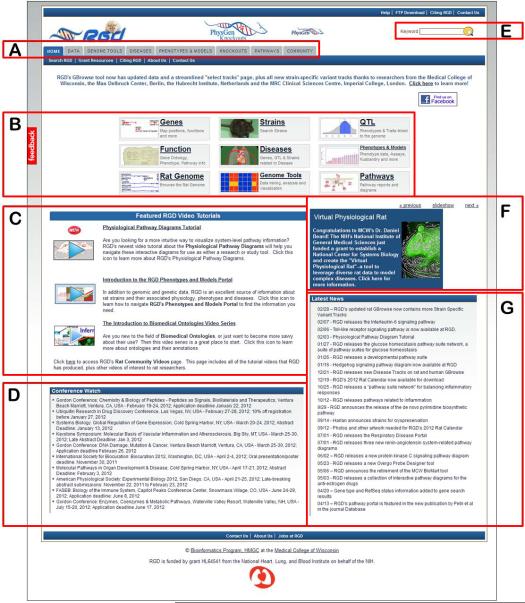
https://cdn.ncbi.nlm.nih.gov/pmc/blobs/1b13/3555435/ce6ae62675b6/nihms-431486-f0030.jpg
https://cdn.ncbi.nlm.nih.gov/pmc/blobs/1b13/3555435/e88aa6e83bda/nihms-431486-f0001.jpg
https://cdn.ncbi.nlm.nih.gov/pmc/blobs/1b13/3555435/600487939ff7/nihms-431486-f0002.jpg
https://cdn.ncbi.nlm.nih.gov/pmc/blobs/1b13/3555435/8c29c9f17cf3/nihms-431486-f0003.jpg
https://cdn.ncbi.nlm.nih.gov/pmc/blobs/1b13/3555435/a1d82479a91f/nihms-431486-f0004.jpg
https://cdn.ncbi.nlm.nih.gov/pmc/blobs/1b13/3555435/c16cbfbb0095/nihms-431486-f0005.jpg
https://cdn.ncbi.nlm.nih.gov/pmc/blobs/1b13/3555435/6d86944899df/nihms-431486-f0006.jpg
https://cdn.ncbi.nlm.nih.gov/pmc/blobs/1b13/3555435/65ef54c09b4d/nihms-431486-f0007.jpg
https://cdn.ncbi.nlm.nih.gov/pmc/blobs/1b13/3555435/a52f5e5498cf/nihms-431486-f0008.jpg
https://cdn.ncbi.nlm.nih.gov/pmc/blobs/1b13/3555435/7e769daafcdd/nihms-431486-f0009.jpg
https://cdn.ncbi.nlm.nih.gov/pmc/blobs/1b13/3555435/0c1005512132/nihms-431486-f0010.jpg
https://cdn.ncbi.nlm.nih.gov/pmc/blobs/1b13/3555435/34cfab8c298e/nihms-431486-f0011.jpg
https://cdn.ncbi.nlm.nih.gov/pmc/blobs/1b13/3555435/c7b9858b38e0/nihms-431486-f0012.jpg
https://cdn.ncbi.nlm.nih.gov/pmc/blobs/1b13/3555435/5022f1930c69/nihms-431486-f0013.jpg
https://cdn.ncbi.nlm.nih.gov/pmc/blobs/1b13/3555435/ebff3656cc40/nihms-431486-f0014.jpg
https://cdn.ncbi.nlm.nih.gov/pmc/blobs/1b13/3555435/a68a9d7cd26f/nihms-431486-f0015.jpg
https://cdn.ncbi.nlm.nih.gov/pmc/blobs/1b13/3555435/e9fae187cfc5/nihms-431486-f0016.jpg
https://cdn.ncbi.nlm.nih.gov/pmc/blobs/1b13/3555435/7ea3b1148b8d/nihms-431486-f0017.jpg
https://cdn.ncbi.nlm.nih.gov/pmc/blobs/1b13/3555435/94833a132ef9/nihms-431486-f0018.jpg
https://cdn.ncbi.nlm.nih.gov/pmc/blobs/1b13/3555435/73dc6f715f22/nihms-431486-f0019.jpg
https://cdn.ncbi.nlm.nih.gov/pmc/blobs/1b13/3555435/abc57ffa297d/nihms-431486-f0020.jpg
https://cdn.ncbi.nlm.nih.gov/pmc/blobs/1b13/3555435/3d6c4ab36c06/nihms-431486-f0021.jpg
https://cdn.ncbi.nlm.nih.gov/pmc/blobs/1b13/3555435/439d057d952c/nihms-431486-f0022.jpg
https://cdn.ncbi.nlm.nih.gov/pmc/blobs/1b13/3555435/391ab0c0639e/nihms-431486-f0023.jpg
https://cdn.ncbi.nlm.nih.gov/pmc/blobs/1b13/3555435/30ef9343df4d/nihms-431486-f0024.jpg
https://cdn.ncbi.nlm.nih.gov/pmc/blobs/1b13/3555435/7b9902b85bd1/nihms-431486-f0025.jpg
https://cdn.ncbi.nlm.nih.gov/pmc/blobs/1b13/3555435/3a116eb9dc78/nihms-431486-f0026.jpg
https://cdn.ncbi.nlm.nih.gov/pmc/blobs/1b13/3555435/b2a473e54b5a/nihms-431486-f0027.jpg
https://cdn.ncbi.nlm.nih.gov/pmc/blobs/1b13/3555435/bf2c7455f36f/nihms-431486-f0028.jpg
https://cdn.ncbi.nlm.nih.gov/pmc/blobs/1b13/3555435/6af8eb5b0357/nihms-431486-f0029.jpg
https://cdn.ncbi.nlm.nih.gov/pmc/blobs/1b13/3555435/ce6ae62675b6/nihms-431486-f0030.jpg
https://cdn.ncbi.nlm.nih.gov/pmc/blobs/1b13/3555435/e88aa6e83bda/nihms-431486-f0001.jpg
https://cdn.ncbi.nlm.nih.gov/pmc/blobs/1b13/3555435/600487939ff7/nihms-431486-f0002.jpg
https://cdn.ncbi.nlm.nih.gov/pmc/blobs/1b13/3555435/8c29c9f17cf3/nihms-431486-f0003.jpg
https://cdn.ncbi.nlm.nih.gov/pmc/blobs/1b13/3555435/a1d82479a91f/nihms-431486-f0004.jpg
https://cdn.ncbi.nlm.nih.gov/pmc/blobs/1b13/3555435/c16cbfbb0095/nihms-431486-f0005.jpg
https://cdn.ncbi.nlm.nih.gov/pmc/blobs/1b13/3555435/6d86944899df/nihms-431486-f0006.jpg
https://cdn.ncbi.nlm.nih.gov/pmc/blobs/1b13/3555435/65ef54c09b4d/nihms-431486-f0007.jpg
https://cdn.ncbi.nlm.nih.gov/pmc/blobs/1b13/3555435/a52f5e5498cf/nihms-431486-f0008.jpg
https://cdn.ncbi.nlm.nih.gov/pmc/blobs/1b13/3555435/7e769daafcdd/nihms-431486-f0009.jpg
https://cdn.ncbi.nlm.nih.gov/pmc/blobs/1b13/3555435/0c1005512132/nihms-431486-f0010.jpg
https://cdn.ncbi.nlm.nih.gov/pmc/blobs/1b13/3555435/34cfab8c298e/nihms-431486-f0011.jpg
https://cdn.ncbi.nlm.nih.gov/pmc/blobs/1b13/3555435/c7b9858b38e0/nihms-431486-f0012.jpg
https://cdn.ncbi.nlm.nih.gov/pmc/blobs/1b13/3555435/5022f1930c69/nihms-431486-f0013.jpg
https://cdn.ncbi.nlm.nih.gov/pmc/blobs/1b13/3555435/ebff3656cc40/nihms-431486-f0014.jpg
https://cdn.ncbi.nlm.nih.gov/pmc/blobs/1b13/3555435/a68a9d7cd26f/nihms-431486-f0015.jpg
https://cdn.ncbi.nlm.nih.gov/pmc/blobs/1b13/3555435/e9fae187cfc5/nihms-431486-f0016.jpg
https://cdn.ncbi.nlm.nih.gov/pmc/blobs/1b13/3555435/7ea3b1148b8d/nihms-431486-f0017.jpg
https://cdn.ncbi.nlm.nih.gov/pmc/blobs/1b13/3555435/94833a132ef9/nihms-431486-f0018.jpg
https://cdn.ncbi.nlm.nih.gov/pmc/blobs/1b13/3555435/73dc6f715f22/nihms-431486-f0019.jpg
https://cdn.ncbi.nlm.nih.gov/pmc/blobs/1b13/3555435/abc57ffa297d/nihms-431486-f0020.jpg
https://cdn.ncbi.nlm.nih.gov/pmc/blobs/1b13/3555435/3d6c4ab36c06/nihms-431486-f0021.jpg
https://cdn.ncbi.nlm.nih.gov/pmc/blobs/1b13/3555435/439d057d952c/nihms-431486-f0022.jpg
https://cdn.ncbi.nlm.nih.gov/pmc/blobs/1b13/3555435/391ab0c0639e/nihms-431486-f0023.jpg
https://cdn.ncbi.nlm.nih.gov/pmc/blobs/1b13/3555435/30ef9343df4d/nihms-431486-f0024.jpg
https://cdn.ncbi.nlm.nih.gov/pmc/blobs/1b13/3555435/7b9902b85bd1/nihms-431486-f0025.jpg
https://cdn.ncbi.nlm.nih.gov/pmc/blobs/1b13/3555435/3a116eb9dc78/nihms-431486-f0026.jpg
https://cdn.ncbi.nlm.nih.gov/pmc/blobs/1b13/3555435/b2a473e54b5a/nihms-431486-f0027.jpg
https://cdn.ncbi.nlm.nih.gov/pmc/blobs/1b13/3555435/bf2c7455f36f/nihms-431486-f0028.jpg
https://cdn.ncbi.nlm.nih.gov/pmc/blobs/1b13/3555435/6af8eb5b0357/nihms-431486-f0029.jpg
https://cdn.ncbi.nlm.nih.gov/pmc/blobs/1b13/3555435/ce6ae62675b6/nihms-431486-f0030.jpg

相似文献

1
Exploring genetic, genomic, and phenotypic data at the rat genome database.在大鼠基因组数据库中探索遗传、基因组和表型数据。
Curr Protoc Bioinformatics. 2012 Dec;Chapter 1:1.14.1-1.14.27. doi: 10.1002/0471250953.bi0114s40.
2
A Primer for the Rat Genome Database (RGD).大鼠基因组数据库(RGD)入门指南。
Methods Mol Biol. 2018;1757:163-209. doi: 10.1007/978-1-4939-7737-6_8.
3
The Rat Genome Database: Genetic, Genomic, and Phenotypic Data Across Multiple Species.大鼠基因组数据库:多种物种的遗传、基因组和表型数据。
Curr Protoc. 2023 Jun;3(6):e804. doi: 10.1002/cpz1.804.
4
Exploring phenotypic data at the rat genome database.在大鼠基因组数据库中探索表型数据。
Curr Protoc Bioinformatics. 2006 Jul;Chapter 1:Unit 1.14. doi: 10.1002/0471250953.bi0114s14.
5
The Rat Genome Database 2009: variation, ontologies and pathways.《大鼠基因组数据库2009:变异、本体论与通路》
Nucleic Acids Res. 2009 Jan;37(Database issue):D744-9. doi: 10.1093/nar/gkn842. Epub 2008 Nov 7.
6
Exploring human disease using the Rat Genome Database.利用大鼠基因组数据库探索人类疾病。
Dis Model Mech. 2016 Oct 1;9(10):1089-1095. doi: 10.1242/dmm.026021.
7
Rat Genome Database (RGD): mapping disease onto the genome.大鼠基因组数据库(RGD):将疾病映射到基因组上。
Nucleic Acids Res. 2002 Jan 1;30(1):125-8. doi: 10.1093/nar/30.1.125.
8
Rat Genome Database: a unique resource for rat, human, and mouse quantitative trait locus data.大鼠基因组数据库:大鼠、人类和小鼠数量性状基因座数据的独特资源。
Physiol Genomics. 2013 Sep 16;45(18):809-16. doi: 10.1152/physiolgenomics.00065.2013. Epub 2013 Jul 23.
9
Ontology searching and browsing at the Rat Genome Database.大鼠基因组数据库中的本体搜索和浏览。
Database (Oxford). 2012 Mar 20;2012:bas016. doi: 10.1093/database/bas016. Print 2012.
10
The Rat Genome Database 2015: genomic, phenotypic and environmental variations and disease.《大鼠基因组数据库2015:基因组、表型和环境变异与疾病》
Nucleic Acids Res. 2015 Jan;43(Database issue):D743-50. doi: 10.1093/nar/gku1026. Epub 2014 Oct 29.

引用本文的文献

1
The Disease Portals, disease-gene annotation and the RGD disease ontology at the Rat Genome Database.大鼠基因组数据库中的疾病门户、疾病-基因注释和RGD疾病本体论。
Database (Oxford). 2016 Mar 23;2016. doi: 10.1093/database/baw034. Print 2016.
2
2015 Guidelines for Establishing Genetically Modified Rat Models for Cardiovascular Research.2015年心血管研究转基因大鼠模型建立指南。
J Cardiovasc Transl Res. 2015 Jun;8(4):269-77. doi: 10.1007/s12265-015-9626-4. Epub 2015 Apr 29.
3
PhenoMiner: a quantitative phenotype database for the laboratory rat, Rattus norvegicus. Application in hypertension and renal disease.
PhenoMiner:一种用于实验大鼠褐家鼠的定量表型数据库。在高血压和肾脏疾病中的应用。
Database (Oxford). 2015 Jan 28;2015. doi: 10.1093/database/bau128. Print 2015.
4
Rat Strain Ontology: structured controlled vocabulary designed to facilitate access to strain data at RGD.大鼠品系本体论:旨在促进在大鼠基因组数据库(RGD)中获取品系数据而设计的结构化控制词汇表。
J Biomed Semantics. 2013 Nov 22;4(1):36. doi: 10.1186/2041-1480-4-36.
5
Effect of P2X4 and P2X7 receptor antagonism on the pressure diuresis relationship in rats.P2X4 和 P2X7 受体拮抗剂对大鼠压力利尿关系的影响。
Front Physiol. 2013 Oct 25;4:305. doi: 10.3389/fphys.2013.00305. eCollection 2013.
6
The clinical measurement, measurement method and experimental condition ontologies: expansion, improvements and new applications.临床测量、测量方法和实验条件本体:扩展、改进及新应用。
J Biomed Semantics. 2013 Oct 8;4(1):26. doi: 10.1186/2041-1480-4-26.
7
Rat Genome Database: a unique resource for rat, human, and mouse quantitative trait locus data.大鼠基因组数据库:大鼠、人类和小鼠数量性状基因座数据的独特资源。
Physiol Genomics. 2013 Sep 16;45(18):809-16. doi: 10.1152/physiolgenomics.00065.2013. Epub 2013 Jul 23.
8
Rats are the smart choice: Rationale for a renewed focus on rats in behavioral genetics.老鼠是明智的选择:重新关注行为遗传学中老鼠的理由。
Neuropharmacology. 2014 Jan;76 Pt B(0 0):250-8. doi: 10.1016/j.neuropharm.2013.05.047. Epub 2013 Jun 18.
9
PhenoMiner: quantitative phenotype curation at the rat genome database.PhenoMiner:在大鼠基因组数据库中进行定量表型整理。
Database (Oxford). 2013 Apr 19;2013:bat015. doi: 10.1093/database/bat015. Print 2013.
10
The Rat Genome Database 2013--data, tools and users.《大鼠基因组数据库 2013——数据、工具和用户》
Brief Bioinform. 2013 Jul;14(4):520-6. doi: 10.1093/bib/bbt007. Epub 2013 Feb 22.