Department of Chemical Physiology, The Scripps Research Institute La Jolla, CA, USA.
Front Immunol. 2012 Nov 29;3:360. doi: 10.3389/fimmu.2012.00360. eCollection 2012.
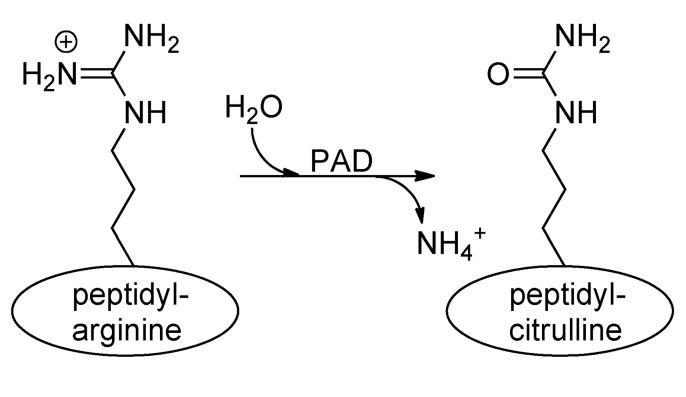
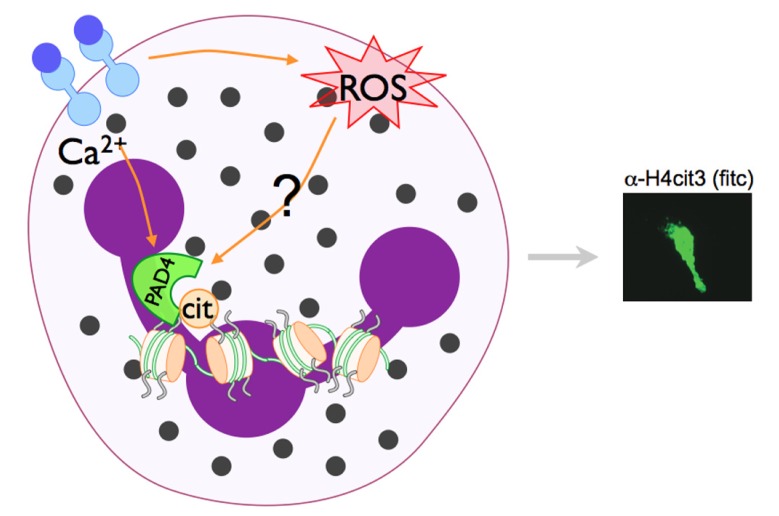
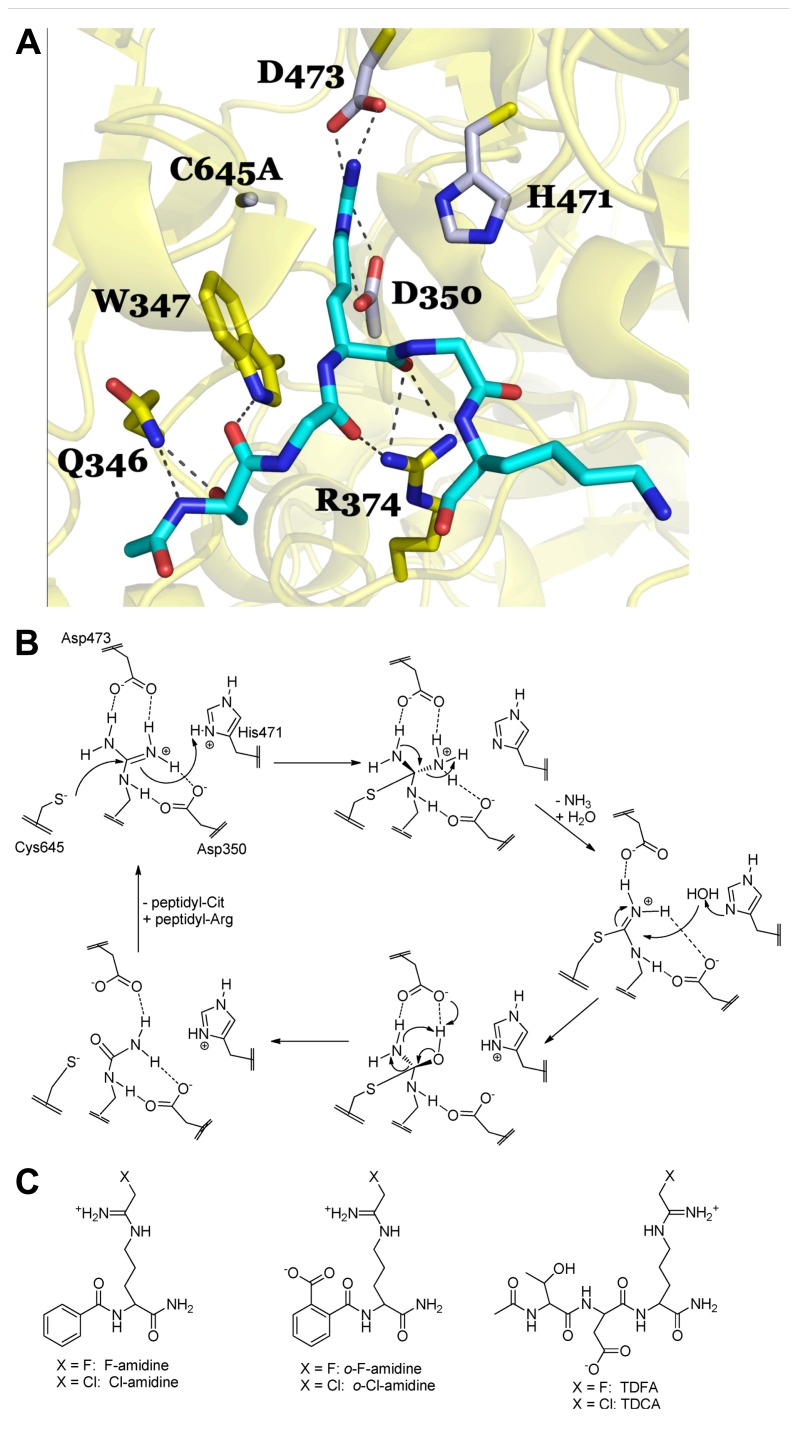
Peptidylarginine deiminases, or PADs, convert arginine residues to the non-ribosomally encoded amino acid citrulline in a variety of protein substrates. PAD4 is expressed in granulocytes and is essential for the formation of neutrophil extracellular traps (NETs) via PAD4-mediated histone citrullination. Citrullination of histones is thought to promote NET formation by inducing chromatin decondensation and facilitating the expulsion of chromosomal DNA that is coated with antimicrobial molecules. Numerous stimuli have been reported to lead to PAD4 activation and NET formation. However, how this signaling process proceeds and how PAD4 becomes activated in cells is largely unknown. Herein, we describe the various stimuli and signaling pathways that have been implicated in PAD4 activation and NET formation, including the role of reactive oxygen species generation. To provide a foundation for the above discussion, we first describe PAD4 structure and function, and how these studies led to the development of PAD-specific inhibitors. A comprehensive survey of the receptors and signaling pathways that regulate PAD4 activation will be important for our understanding of innate immunity, and the identification of signaling intermediates in PAD4 activation may also lead to the generation of pharmaceuticals to target NET-related pathogenesis.
肽基精氨酸脱亚氨酶,或 PADs,可将精氨酸残基转化为多种蛋白质底物中的非核糖体编码氨基酸瓜氨酸。PAD4 在粒细胞中表达,是通过 PAD4 介导的组蛋白瓜氨酸化形成中性粒细胞胞外诱捕网(NETs)所必需的。组蛋白的瓜氨酸化被认为通过诱导染色质去凝聚并促进带有抗菌分子的染色体 DNA 的排出,从而促进 NET 的形成。已经报道了许多刺激物可导致 PAD4 激活和 NET 的形成。然而,这个信号过程是如何进行的,以及 PAD4 在细胞中是如何被激活的,在很大程度上还不清楚。在此,我们描述了各种被认为与 PAD4 激活和 NET 形成有关的刺激物和信号通路,包括活性氧生成的作用。为了为上述讨论提供基础,我们首先描述了 PAD4 的结构和功能,以及这些研究如何导致 PAD 特异性抑制剂的开发。全面调查调节 PAD4 激活的受体和信号通路对于我们理解先天免疫非常重要,而鉴定 PAD4 激活中的信号中间体也可能导致针对 NET 相关发病机制的药物的产生。