Department of Medicine, College of Medicine, University of Saskatchewan, Royal University Hospital, 103 Hospital Drive, Saskatoon, Saskatchewan S7N 0W0, Canada.
BMC Public Health. 2013 Jan 5;13:7. doi: 10.1186/1471-2458-13-7.
Although rural Canadians are reported to have higher rates of diabetes than others, little is known about the relative influence of known versus agriculture-related risk factors. The purpose of this research was to carry out a comprehensive study of prevalence, risk factors and co-morbidities of diabetes among adults in rural Saskatchewan and to determine possible differences between those living on and off farms.
In 2010, we conducted a baseline mail-out survey (Saskatchewan Rural Health Study) of 11,982 households located in the province's four agricultural quadrants. In addition to self-reported physician-diagnosed diabetes, the questionnaire collected information from farm and small town cohorts on possible diabetes determinants including lifestyle, family history, early life factors and environmental/agricultural-related exposures. Clustering effect within households was adjusted using Generalized Estimating Equations approach.
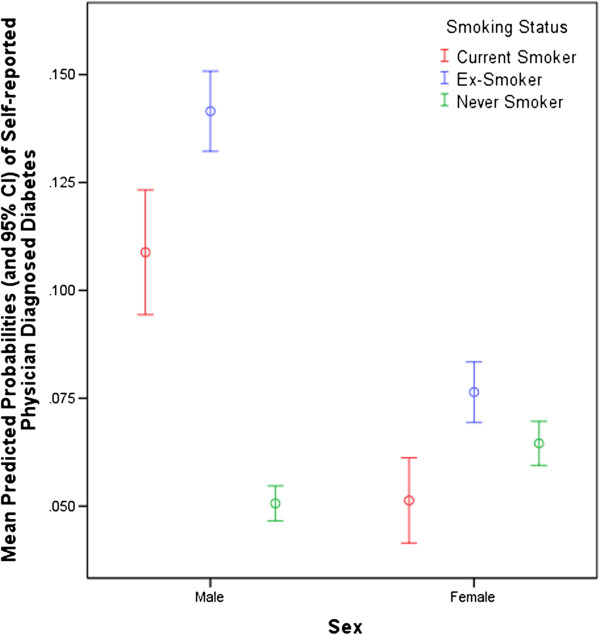
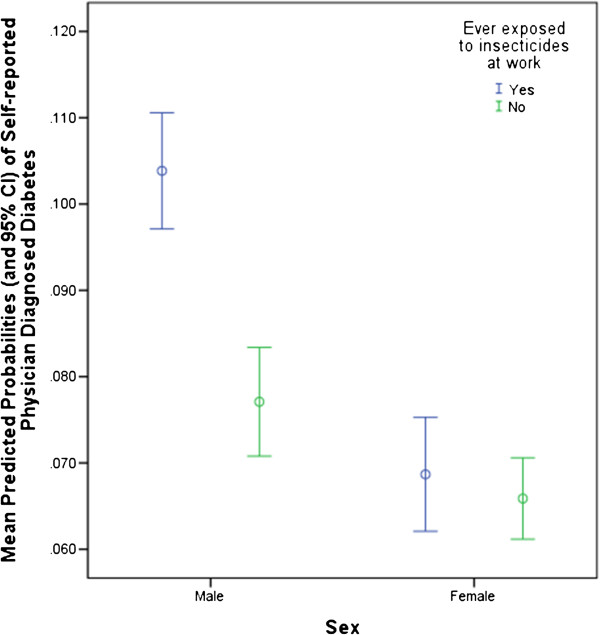
Responses were obtained from 4624 (42%) households comprising 8208 males and females aged 18 years or older and 7847 self-described Caucasian participants (7708 with complete information). The overall age-standardized diabetes prevalence for the latter was 6.35% but people whose primary residence was on farms had significantly lower diabetes prevalence than those living in non-farm locations (5.11% versus 7.33% respectively; p<0.0001). Diabetes risk increased with age and affected almost 17% of those older than 65 (OR 2.57; CI' 1.63, 4.04 compared to those aged 18-45). Other known independent risk factors included family history of diabetes (OR 2.50 [CI's 1.94, 3.23] if father; OR 3.11 [CI's 2.44, 3.98] if mother), obesity (OR 2.66; CI's 1.86, 3.78), as well as lower socioeconomic status, minimal/no alcohol intake and smoking. The most original finding was that exposure to insecticides conferred an increased risk for diabetes among males (OR 1.83; CI's 1.15, 2.91). Finally, the co-morbidities with the strongest independent association with diabetes were heart disease and hypertension.
While known diabetes risk factors are important determinants of diabetes in the agricultural zones of Saskatchewan, on-farm residence is protective and appears related to increased outdoor activities. In contrast, we have now shown for the first time that exposure to insecticides is an independent risk factor for diabetes among men in rural Canada.
据报道,加拿大农村居民的糖尿病发病率高于其他人群,但对于已知的与农业相关的风险因素与糖尿病之间的相对影响,人们知之甚少。本研究的目的是全面研究萨斯喀彻温省农村成年人的糖尿病患病率、风险因素和合并症,并确定居住在农场内外的人群之间可能存在的差异。
2010 年,我们对该省四个农业象限内的 11982 户家庭进行了基线邮寄调查(萨斯喀彻温农村健康研究)。除了自我报告的医生诊断的糖尿病外,调查问卷还从农场和小镇队列中收集了可能的糖尿病决定因素信息,包括生活方式、家族史、早期生活因素和环境/农业相关暴露。使用广义估计方程方法调整家庭内的聚类效应。
共收到 4624 户(42%)家庭的回复,其中包括 8208 名 18 岁或以上的男性和女性,以及 7847 名自称为白人的参与者(7708 名有完整信息)。后者的总体年龄标准化糖尿病患病率为 6.35%,但居住在农场的主要居所的人患糖尿病的比例明显低于居住在非农场地点的人(分别为 5.11%和 7.33%;p<0.0001)。糖尿病风险随年龄增长而增加,几乎 17%的 65 岁以上人群患病(与 18-45 岁人群相比,OR 2.57;CI' 1.63, 4.04)。其他已知的独立风险因素包括糖尿病家族史(如果父亲为 OR 2.50[CI's 1.94, 3.23];如果母亲为 OR 3.11[CI's 2.44, 3.98])、肥胖(OR 2.66;CI's 1.86, 3.78),以及较低的社会经济地位、极少或不饮酒和吸烟。最原始的发现是,接触杀虫剂会增加男性患糖尿病的风险(OR 1.83;CI's 1.15, 2.91)。最后,与糖尿病有最强独立关联的合并症是心脏病和高血压。
虽然已知的糖尿病风险因素是萨斯喀彻温省农业区糖尿病的重要决定因素,但居住在农场有助于预防糖尿病,且似乎与户外活动增加有关。相比之下,我们现在首次表明,在加拿大农村地区,男性接触杀虫剂是糖尿病的一个独立风险因素。