Department of Anesthesiology and Mucosal Inflammation Program, University of Colorado Denver, CO, USA.
Int J Biochem Cell Biol. 2013 Mar;45(3):667-71. doi: 10.1016/j.biocel.2012.12.022. Epub 2013 Jan 3.
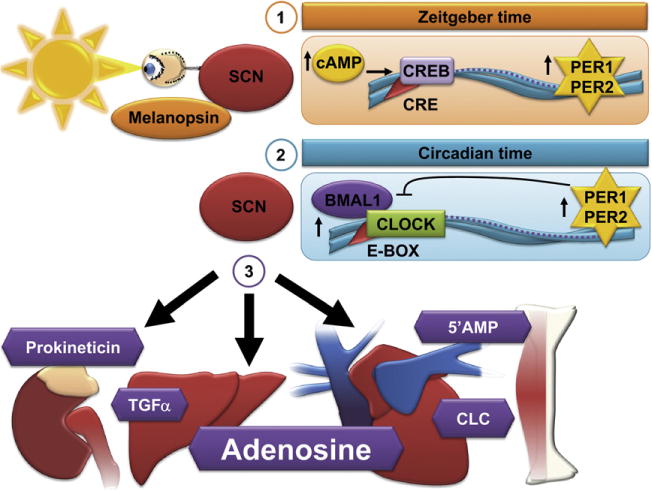
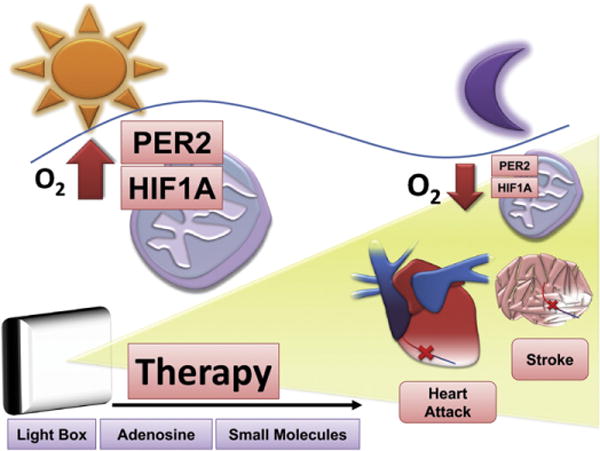
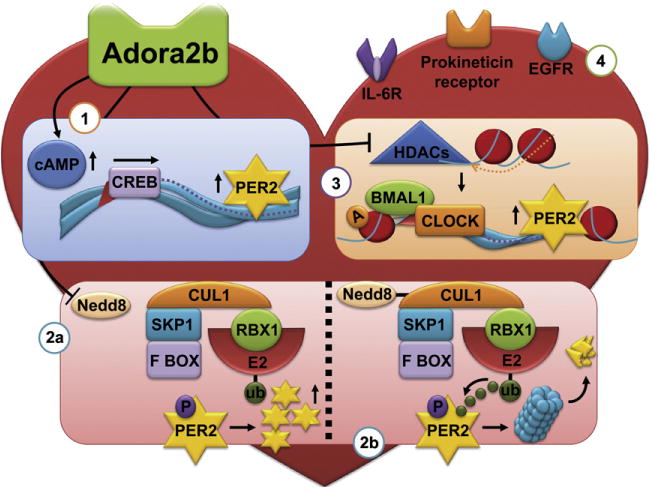
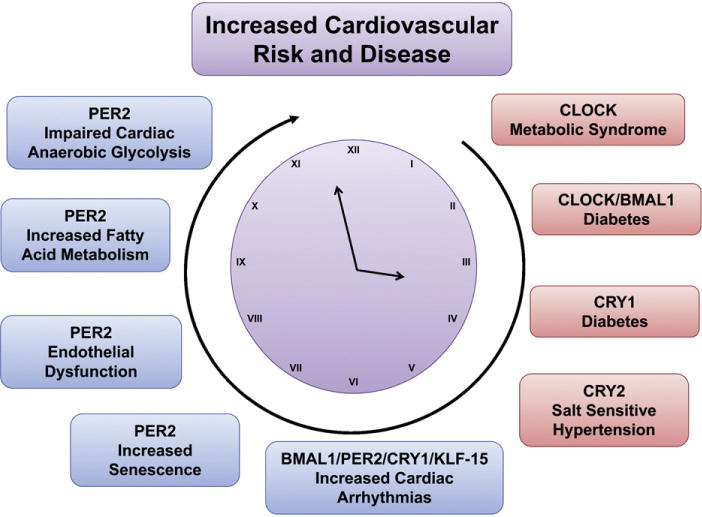
Since the onset of myocardial infarction and stroke has distinct circadian patterns, the disruption of circadian rhythms may contribute to cardiovascular disease. A recent clinical study, reporting that the severity of myocardial ischemia depends on the time-of-day when ischemia occurs, highlights the impact of circadian rhythms on cardiovascular disease. In support of these observations, we found a cardioprotective role of the circadian rhythm protein Period 2 (Per2) during myocardial ischemia in mice. In these studies, exposing mice to daylight induced cardiac Per2, which was associated with protection from myocardial ischemia. Recent epidemiological studies found sunlight to be the dominant regulator of the human circadian rhythm, suggesting sunlight cycles are critical for maintaining a healthy cardiovascular system. However, the impact of circadian rhythm proteins on human disease remains unclear. This current review aims to make a link to current and future clinical practice by targeting cardiac Per2.
由于心肌梗死和中风的发作具有明显的昼夜节律模式,因此昼夜节律的破坏可能导致心血管疾病。最近的一项临床研究报告称,心肌缺血的严重程度取决于缺血发生的时间,这凸显了昼夜节律对心血管疾病的影响。为了支持这些观察结果,我们发现昼夜节律蛋白 Period 2(Per2)在小鼠心肌缺血期间具有心脏保护作用。在这些研究中,使小鼠暴露在日光下会诱导心脏 Per2,这与保护心肌免受缺血有关。最近的流行病学研究发现,阳光是人类昼夜节律的主要调节剂,这表明阳光周期对于维持健康的心血管系统至关重要。然而,昼夜节律蛋白对人类疾病的影响仍不清楚。本综述旨在通过针对心脏 Per2 将当前和未来的临床实践联系起来。