Physical Activity Center of Excellence, Health Promotion Board, 3 Second Hospital Ave, S168937, Singapore.
Int J Environ Res Public Health. 2013 Jan 7;10(1):210-8. doi: 10.3390/ijerph10010210.
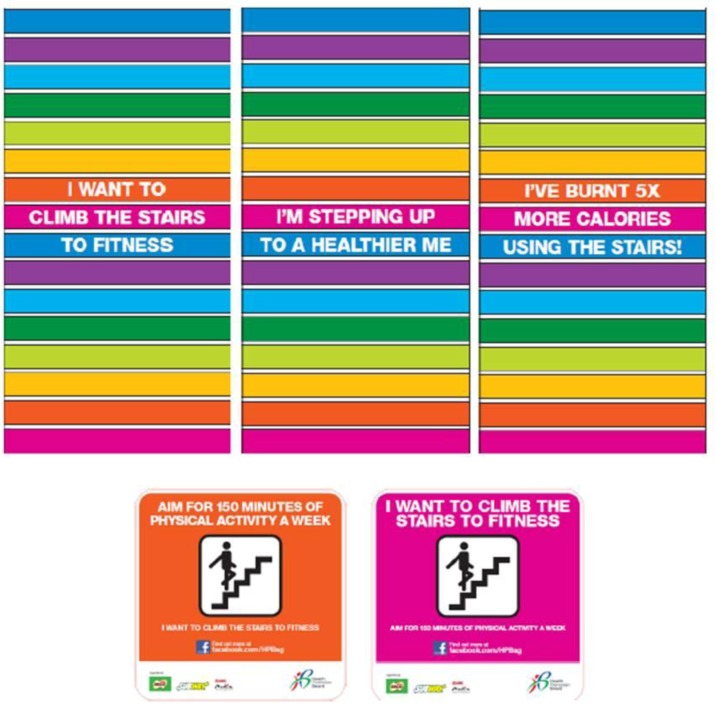
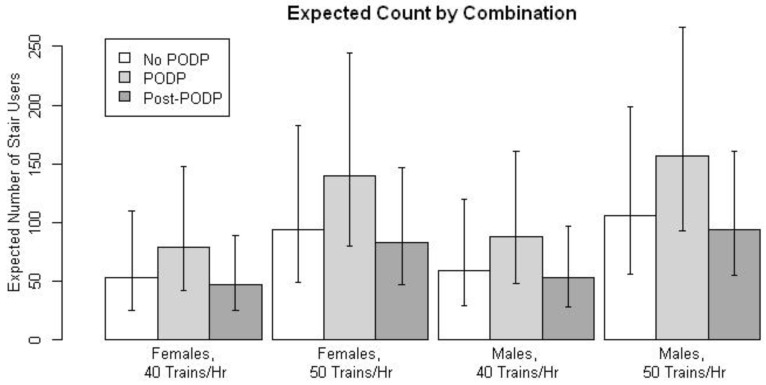
Physical inactivity is a significant contributor to worldwide mortality and morbidity associated with non-communicable diseases. An excellent avenue to incorporate lifestyle physical activity into regular routine is to encourage the use of stairs during daily commutes. We evaluated the effectiveness of point-of-decision prompts (PODPs) in promoting the use of stairs instead of the escalators in a Singapore Mass Rapid Transit (MRT) station. We measured the number of stair climbers before the PODPs were put up, during the 4 weeks that they were in use, and 2 weeks after they were removed. Measurements at a no intervention control site were additionally taken. The use of stair-riser banners was associated with an increase in the number of people using the stairs by a factor of 1.49 (95% CI 1.34-1.64). After the banners were removed, the number of stair climbers at the experimental station dropped to slightly below baseline levels. The Singapore MRT serves a diverse multi-ethnic population with an average daily ridership of over 2 million and 88 stations island-wide. An increase of physical activity among these MRT commuters would have a large impact at the population level. Our findings can be translated into part of the national strategy to encourage an active lifestyle in Singaporeans.
身体活动不足是导致全球与非传染性疾病相关的死亡率和发病率的一个重要因素。将生活方式体力活动融入日常生活的一个绝佳途径是鼓励在日常通勤中使用楼梯。我们评估了决策点提示(PODP)在促进新加坡捷运(MRT)站使用楼梯代替自动扶梯方面的效果。我们在设置 PODP 之前、使用的 4 周以及移除后的 2 周内测量了爬楼梯者的数量。此外,还在没有干预的对照点进行了测量。楼梯踏步横幅的使用使使用楼梯的人数增加了 1.49 倍(95%置信区间 1.34-1.64)。横幅移除后,实验站的爬楼梯者数量略低于基线水平。新加坡 MRT 服务于一个多元化的多民族人口,平均每日客流量超过 200 万,全岛有 88 个车站。在这些 MRT 通勤者中增加体力活动将对人口层面产生重大影响。我们的研究结果可以转化为鼓励新加坡人积极生活方式的国家战略的一部分。