Department of Psychology, School of Social Sciences, Brunel University, Uxbridge, United Kingdom.
PLoS One. 2013;8(1):e52532. doi: 10.1371/journal.pone.0052532. Epub 2013 Jan 2.
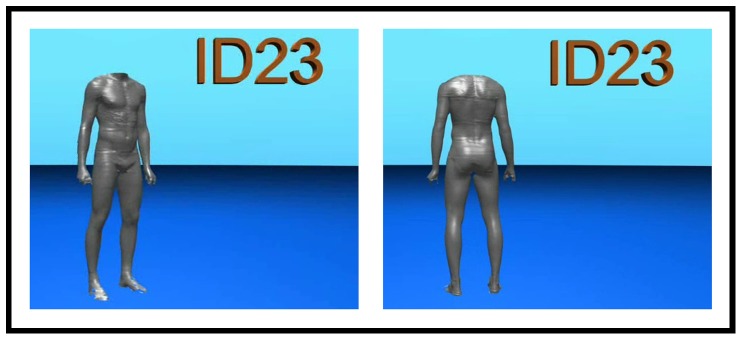
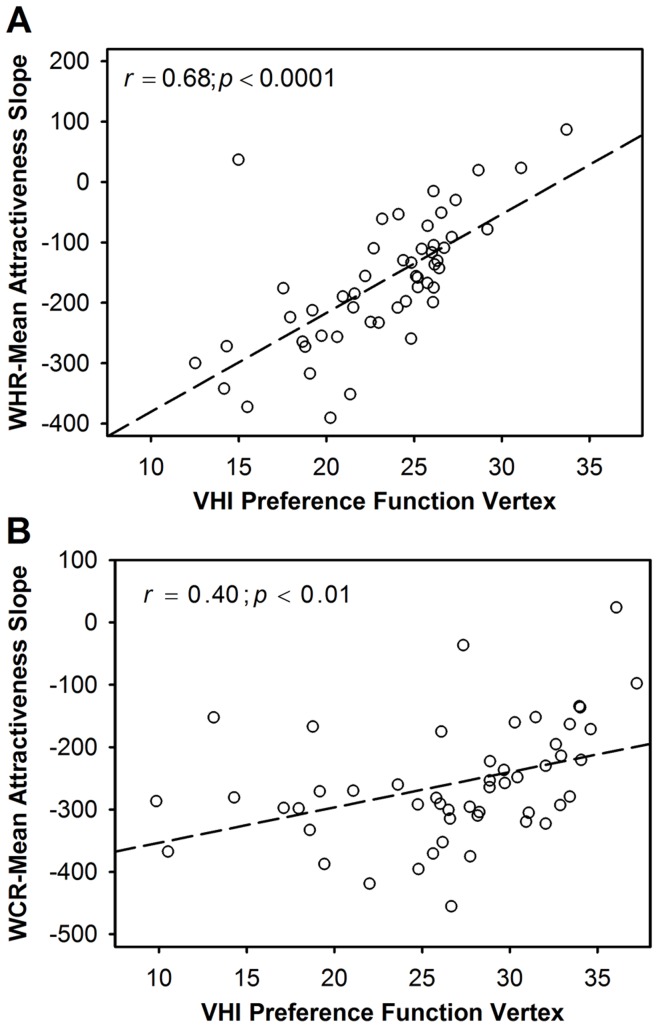
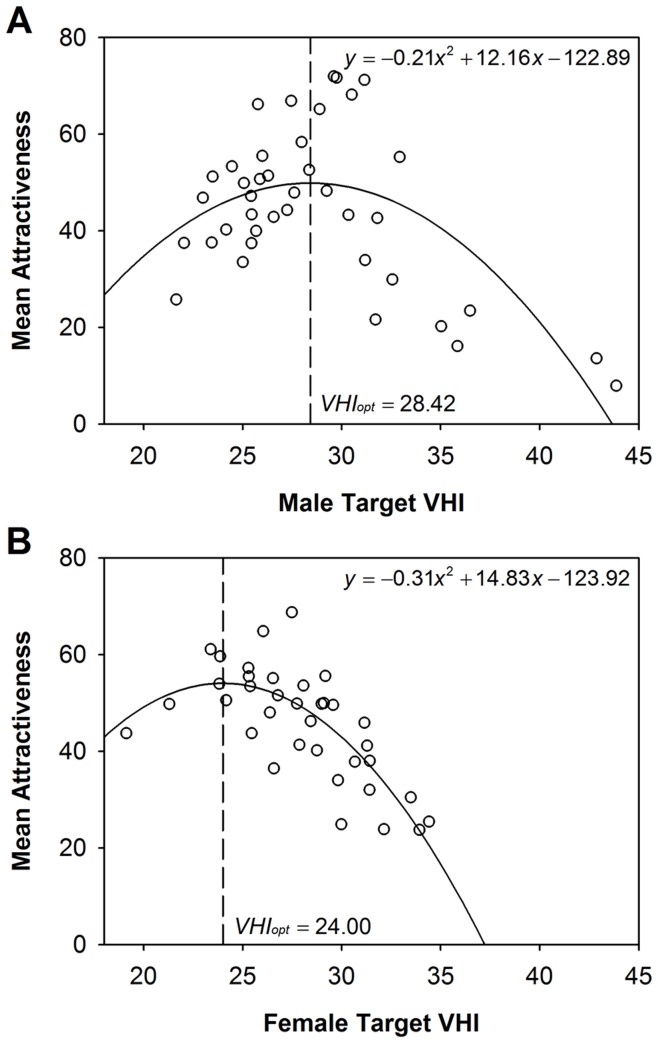
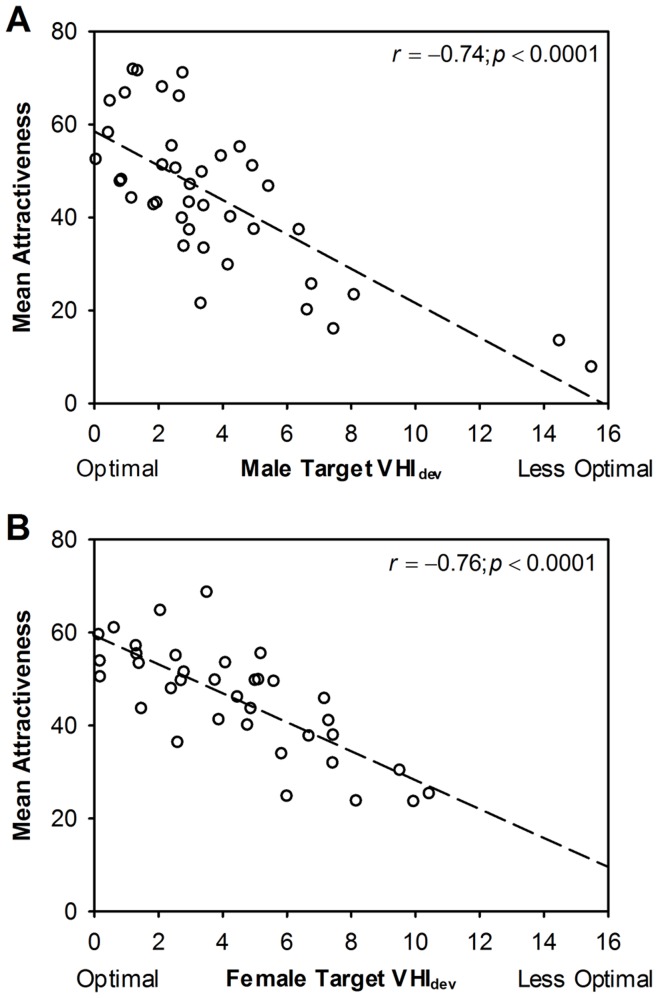
There is accumulating evidence of condition-dependent mate choice in many species, that is, individual preferences varying in strength according to the condition of the chooser. In humans, for example, people with more attractive faces/bodies, and who are higher in sociosexuality, exhibit stronger preferences for attractive traits in opposite-sex faces/bodies. However, previous studies have tended to use only relatively simple, isolated measures of rater attractiveness. Here we use 3D body scanning technology to examine associations between strength of rater preferences for attractive traits in opposite-sex bodies, and raters' body shape, self-perceived attractiveness, and sociosexuality. For 118 raters and 80 stimuli models, we used a 3D scanner to extract body measurements associated with attractiveness (male waist-chest ratio [WCR], female waist-hip ratio [WHR], and volume-height index [VHI] in both sexes) and also measured rater self-perceived attractiveness and sociosexuality. As expected, WHR and VHI were important predictors of female body attractiveness, while WCR and VHI were important predictors of male body attractiveness. Results indicated that male rater sociosexuality scores were positively associated with strength of preference for attractive (low) VHI and attractive (low) WHR in female bodies. Moreover, male rater self-perceived attractiveness was positively associated with strength of preference for low VHI in female bodies. The only evidence of condition-dependent preferences in females was a positive association between attractive VHI in female raters and preferences for attractive (low) WCR in male bodies. No other significant associations were observed in either sex between aspects of rater body shape and strength of preferences for attractive opposite-sex body traits. These results suggest that among male raters, rater self-perceived attractiveness and sociosexuality are important predictors of preference strength for attractive opposite-sex body shapes, and that rater body traits -with the exception of VHI in female raters- may not be good predictors of these preferences in either sex.
越来越多的证据表明,许多物种存在条件依赖的配偶选择,即个体的偏好强度会根据选择者的状态而变化。例如,在人类中,面部/身体更有吸引力、社交开放性更高的人,对异性面部/身体的吸引力特征表现出更强的偏好。然而,以前的研究往往只使用相对简单、孤立的评估者吸引力衡量标准。在这里,我们使用 3D 身体扫描技术来研究评估者对异性身体有吸引力的特征的偏好强度与评估者的体型、自我感知吸引力和社交开放性之间的关联。对于 118 名评估者和 80 名刺激模型,我们使用 3D 扫描仪提取与吸引力相关的身体测量值(男性腰围-胸比 [WCR]、女性腰围-臀比 [WHR]和两性的体积-身高指数 [VHI]),并测量评估者的自我感知吸引力和社交开放性。正如预期的那样,WHR 和 VHI 是女性身体吸引力的重要预测指标,而 WCR 和 VHI 是男性身体吸引力的重要预测指标。结果表明,男性评估者的社交开放性得分与对女性身体有吸引力(低)VHI 和有吸引力(低)WHR 的偏好强度呈正相关。此外,男性评估者的自我感知吸引力与对女性身体低 VHI 的偏好强度呈正相关。女性中唯一存在条件依赖偏好的证据是,女性评估者的有吸引力的 VHI 与对男性身体有吸引力(低)WCR 的偏好之间存在正相关。在任何性别中,评估者体型的各个方面与对异性身体有吸引力的特征的偏好强度之间都没有观察到其他显著的关联。这些结果表明,在男性评估者中,评估者的自我感知吸引力和社交开放性是对异性身体形状有吸引力的偏好强度的重要预测指标,而评估者的体型——除了女性评估者的 VHI 之外——可能不是两性这些偏好的良好预测指标。