MOH Key Laboratory of Systems Biology of Pathogens, Institute of Pathogen Biology, Chinese Academy of Medical Sciences and Peking Union Medical College, Beijing, People's Republic of China.
PLoS One. 2013;8(1):e52954. doi: 10.1371/journal.pone.0052954. Epub 2013 Jan 3.
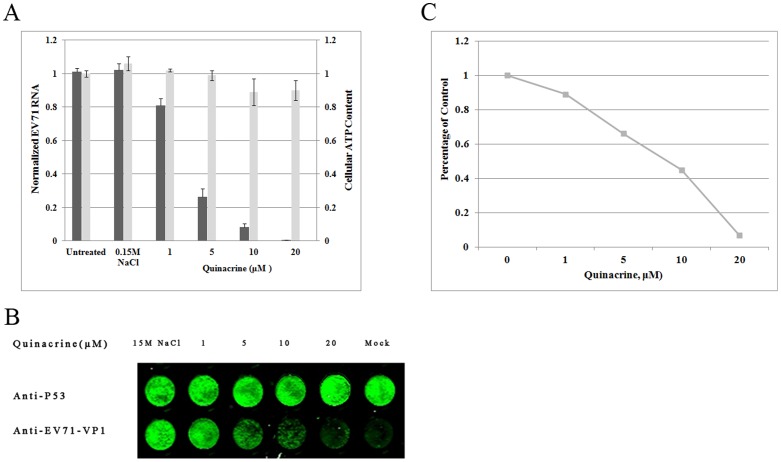
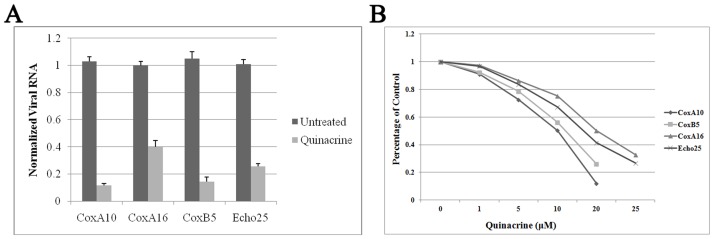
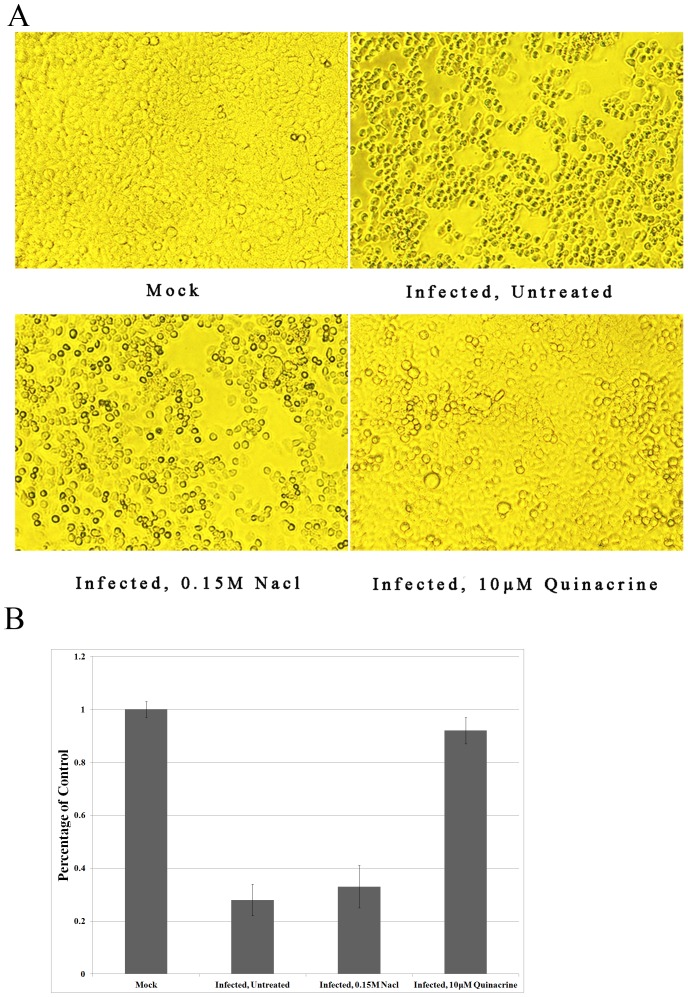
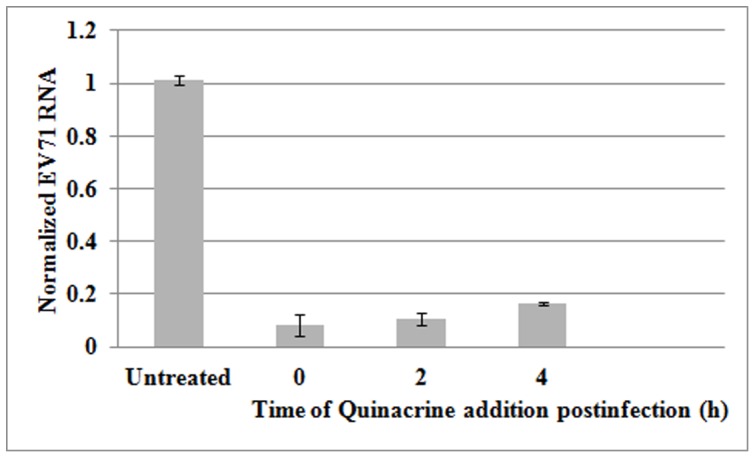
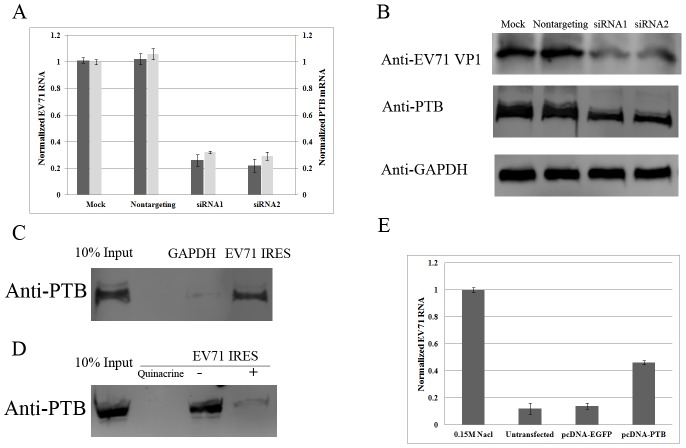
Since the 1980s, epidemics of enterovirus 71 (EV71) and other enteroviruses have occurred in Asian countries and regions, causing a wide range of human diseases. No effective therapy is available for the treatment of these infections. Internal ribosome entry sites (IRESs) are indispensable for the initiation of translation in enteroviruses. Several cellular factors, as well as the ribosome, are recruited to the conserved IRES during this process. Quinacrine intercalates into the RNA architecture and inhibits RNA transcription and protein synthesis, and a recent study showed that quinacrine inhibited encephalomyocarditis virus and poliovirus IRES-mediated translation in vitro without disrupting internal cellular IRES. Here, we report that quinacrine was highly active against EV71, protecting cells from EV71 infection. Replication of viral RNA, expression of viral capsid protein, and production of virus were all strongly inhibited by quinacrine. Interaction of the polypyrimidine tract-binding protein (PTB) with the conserved IRES was prevented by quinacrine. Coxsackieviruses and echovirus were also inhibited by quinacrine in cultured cells. These results indicate that quinacrine may serve as a potential protective agent for use in the treatment of patients with chronic enterovirus infection.
自 20 世纪 80 年代以来,肠道病毒 71 型(EV71)和其他肠道病毒在亚洲国家和地区爆发,引起了广泛的人类疾病。目前尚无有效的治疗方法来治疗这些感染。内部核糖体进入位点(IRES)对于肠道病毒的翻译起始是必不可少的。在这个过程中,几个细胞因子以及核糖体被招募到保守的 IRES 上。吖啶橙插入 RNA 结构中,抑制 RNA 转录和蛋白质合成,最近的一项研究表明,吖啶橙在体外抑制脑炎心肌炎病毒和脊髓灰质炎病毒 IRES 介导的翻译,而不破坏细胞内 IRES。在这里,我们报告吖啶橙对 EV71 具有高度活性,可保护细胞免受 EV71 感染。病毒 RNA 的复制、病毒衣壳蛋白的表达和病毒的产生都被吖啶橙强烈抑制。吖啶橙还可以阻止多嘧啶 tract 结合蛋白(PTB)与保守的 IRES 相互作用。柯萨奇病毒和埃可病毒在培养细胞中也被吖啶橙抑制。这些结果表明,吖啶橙可能作为一种潜在的保护剂,用于治疗慢性肠道病毒感染的患者。