Department of Pathology, University of Alabama at Birmingham, Birmingham, AL 35294, USA.
BMC Cancer. 2013 Jan 11;13:16. doi: 10.1186/1471-2407-13-16.
Interleukin (IL)-11, a cytokine produced by breast cancer, has been implicated in breast cancer-induced osteolysis (bone destruction) but the mechanism(s) of action remain controversial. Some studies show that IL-11 is able to promote osteoclast formation independent of the receptor activator of NF-κB ligand (RANKL), while others demonstrate IL-11 can induce osteoclast formation by inducing osteoblasts to secrete RANKL. This work aims to further investigate the role of IL-11 in metastasis-induced osteolysis by addressing a new hypothesis that IL-11 exerts effects on osteoclast progenitor cells.
To address the precise role of breast cancer-derived IL-11 in osteoclastogenesis, we determined the effect of breast cancer conditioned media on osteoclast progenitor cells with or without an IL-11 neutralizing antibody. We next investigated whether recombinant IL-11 exerts effects on osteoclast progenitor cells and survival of mature osteoclasts. Finally, we examined the ability of IL-11 to mediate osteoclast formation in tissue culture dishes and on bone slices in the absence of RANKL, with suboptimal levels of RANKL, or from RANKL-pretreated murine bone marrow macrophages (BMMs).
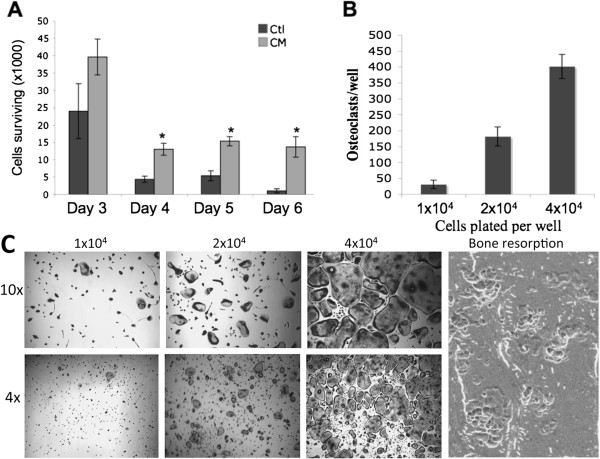
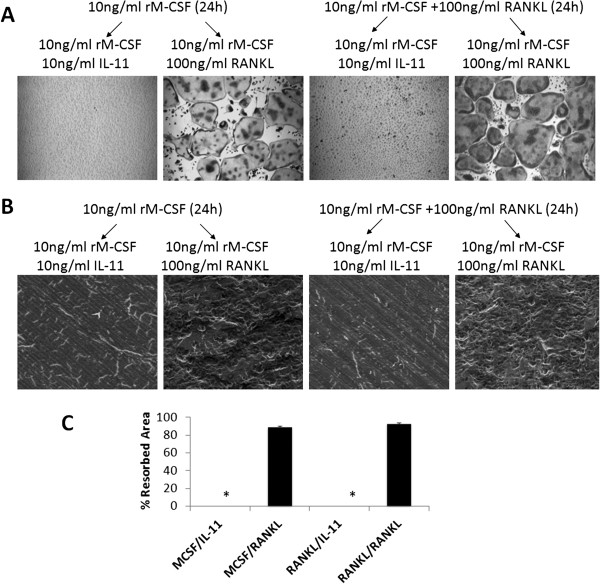
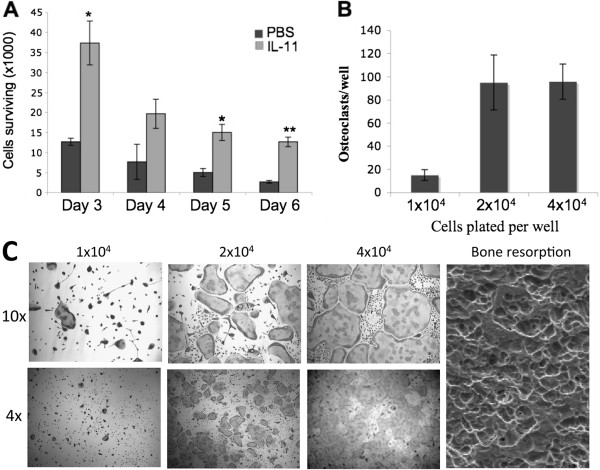
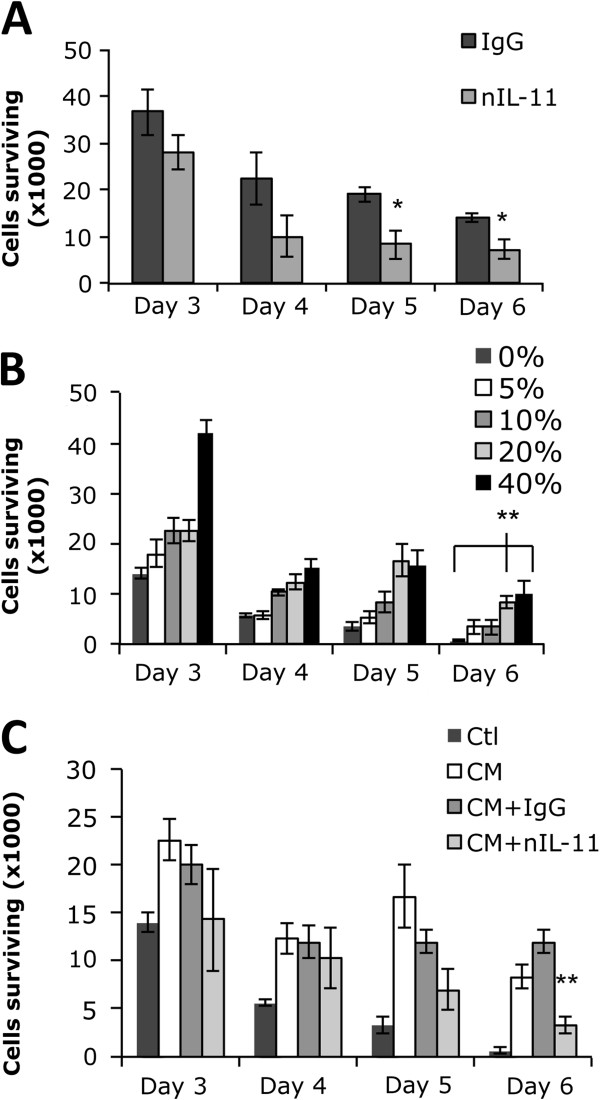
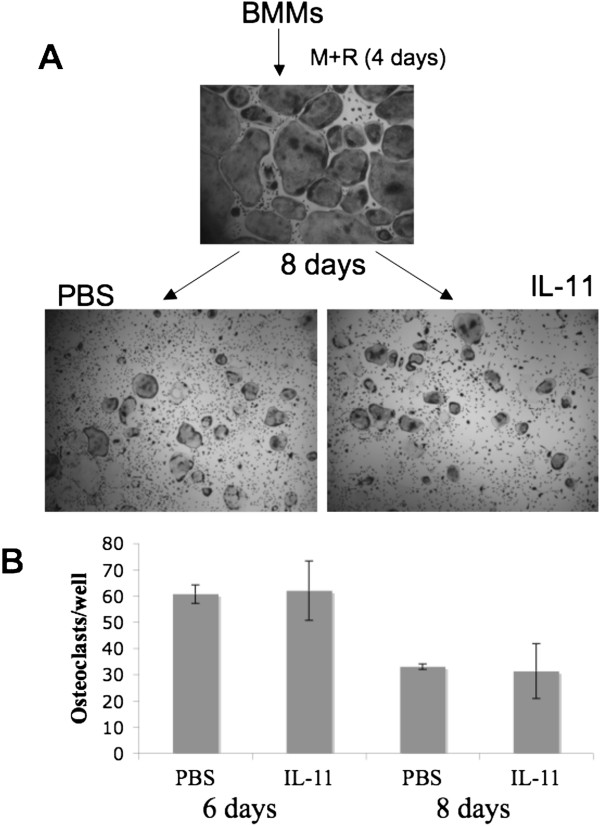
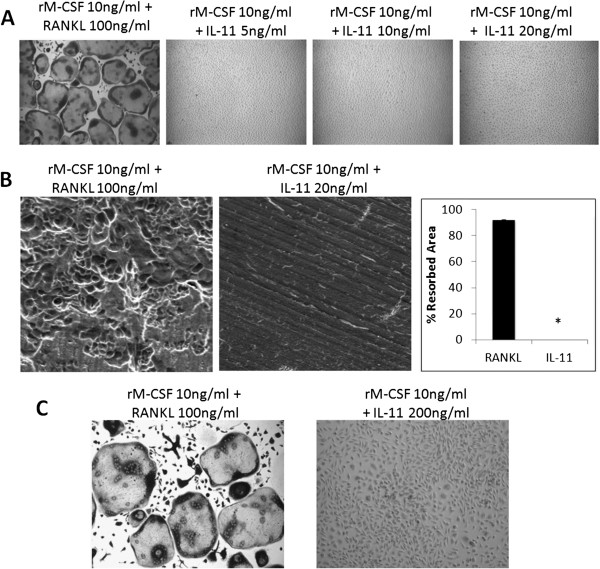
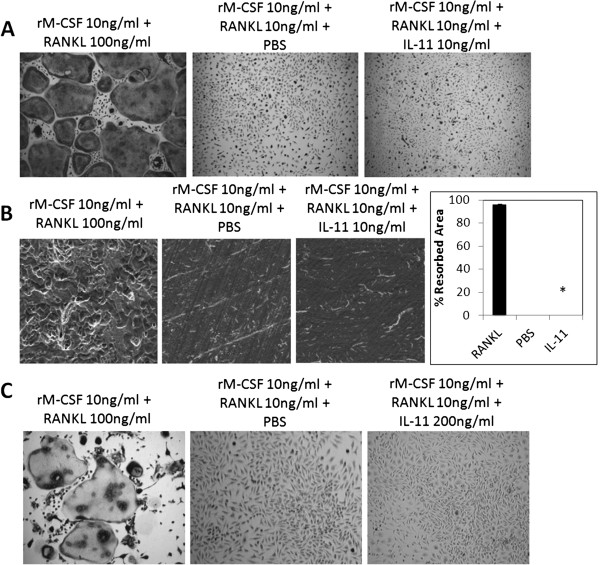
We found that freshly isolated murine bone marrow cells cultured in the presence of breast cancer conditioned media for 6 days gave rise to a population of cells which were able to form osteoclasts upon treatment with RANKL and M-CSF. Moreover, a neutralizing anti-IL-11 antibody significantly inhibited the ability of breast cancer conditioned media to promote the development and/or survival of osteoclast progenitor cells. Similarly, recombinant IL-11 was able to sustain a population of osteoclast progenitor cells. However, IL-11 was unable to exert any effect on osteoclast survival, induce osteoclastogenesis independent of RANKL, or promote osteoclastogenesis in suboptimal RANKL conditions.
Our data indicate that a) IL-11 plays an important role in osteoclastogenesis by stimulating the development and/or survival of osteoclast progenitor cells and b) breast cancer may promote osteolysis in part by increasing the pool of osteoclast progenitor cells via tumor cell-derived IL-11. However, given the heterogeneous nature of the bone marrow cells, the precise mechanism by which IL-11 treatment gives rise to a population of osteoclast progenitor cells warrants further investigation.
白细胞介素 (IL)-11 是一种由乳腺癌产生的细胞因子,已被牵连到乳腺癌诱导的溶骨性骨破坏(骨破坏)中,但作用机制仍存在争议。一些研究表明,IL-11 能够独立于核因子-κB 受体激活剂配体 (RANKL) 促进破骨细胞形成,而另一些研究表明,IL-11 通过诱导成骨细胞分泌 RANKL 来诱导破骨细胞形成。这项工作旨在通过提出一个新的假设来进一步研究 IL-11 在转移诱导的溶骨性骨破坏中的作用,即 IL-11 对破骨细胞祖细胞有影响。
为了确定乳腺癌来源的 IL-11 在破骨细胞发生中的确切作用,我们用或不用抗 IL-11 中和抗体确定乳腺癌条件培养基对破骨细胞祖细胞的影响。接下来,我们研究了重组 IL-11 是否对破骨细胞祖细胞和成熟破骨细胞的存活有影响。最后,我们检查了在没有 RANKL、RANKL 水平不足或经 RANKL 预处理的鼠骨髓巨噬细胞 (BMM) 的情况下,IL-11 介导组织培养盘中和骨切片上的破骨细胞形成的能力。
我们发现,在乳腺癌条件培养基中培养 6 天的新鲜分离的鼠骨髓细胞在 RANKL 和 M-CSF 处理下可形成破骨细胞。此外,抗 IL-11 中和抗体显著抑制了乳腺癌条件培养基促进破骨细胞祖细胞发育和/或存活的能力。同样,重组 IL-11 能够维持破骨细胞祖细胞的群体。然而,IL-11 不能发挥任何作用来维持破骨细胞的存活,不能在没有 RANKL 的情况下诱导破骨细胞发生,也不能在 RANKL 水平不足的情况下促进破骨细胞发生。
我们的数据表明,a)IL-11 通过刺激破骨细胞祖细胞的发育和/或存活在破骨细胞发生中起重要作用,b)乳腺癌可能通过肿瘤细胞衍生的 IL-11 增加破骨细胞祖细胞池来促进溶骨性骨破坏。然而,鉴于骨髓细胞的异质性,IL-11 治疗导致破骨细胞祖细胞群体的确切机制需要进一步研究。