Department of Biomedical Engineering, University of Alabama at Birmingham, Birmingham, AL 35294, USA.
Biomaterials. 2013 Mar;34(10):2455-62. doi: 10.1016/j.biomaterials.2012.12.026. Epub 2013 Jan 11.
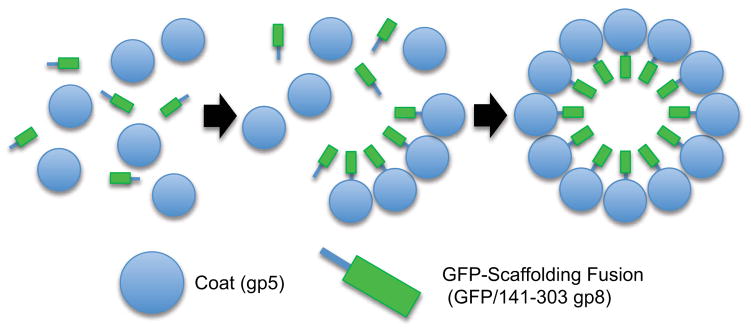
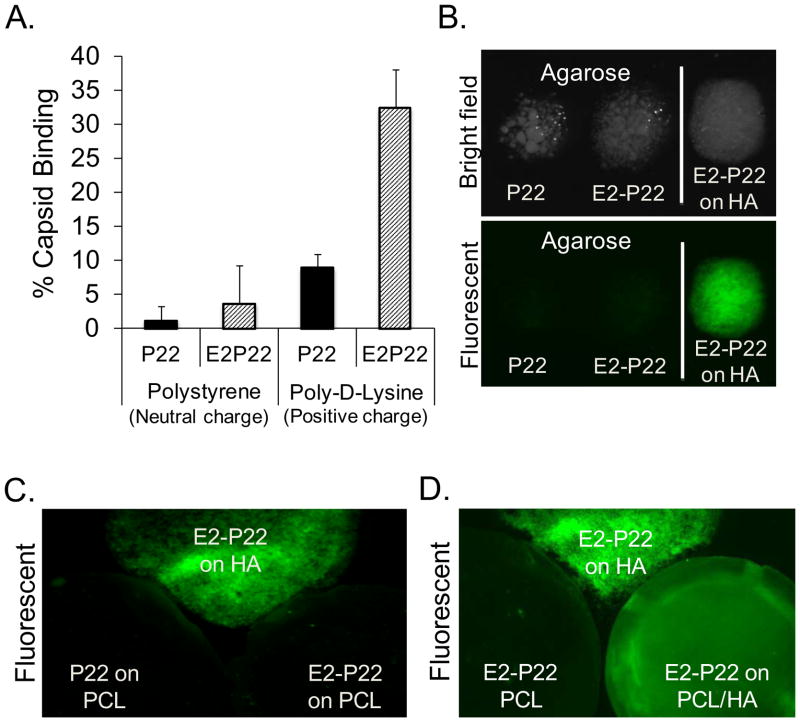
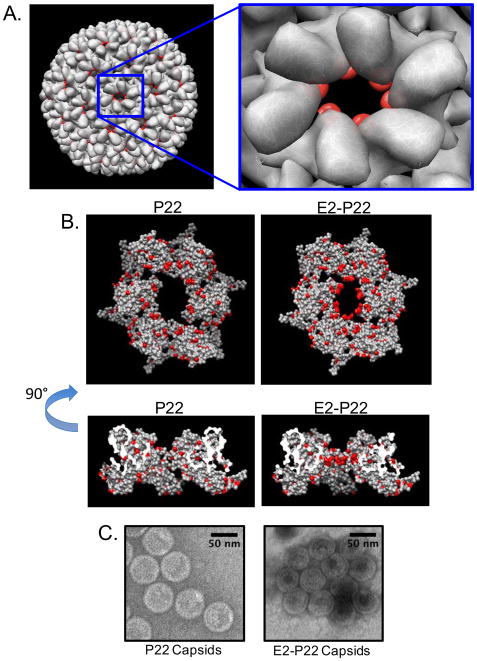
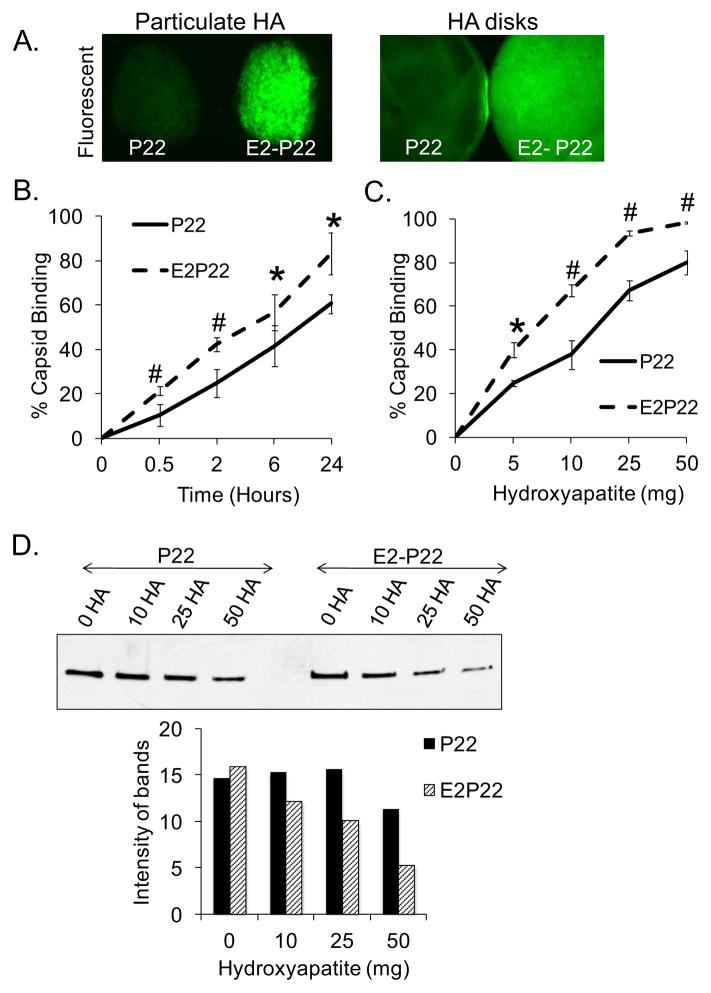
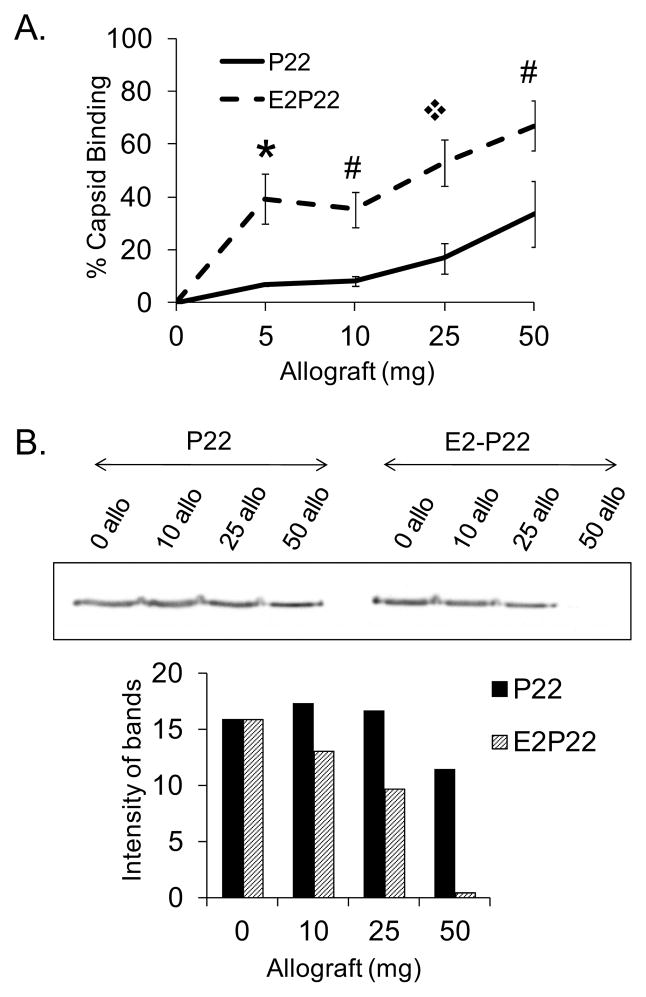
Hydroxyapatite (HA) is the principal constituent of bone mineral, and synthetic HA is widely used as a biomaterial for bone repair. Previous work has shown that polyglutamate domains bind selectively to HA and that these domains can be utilized to couple bioactive peptides onto many different HA-containing materials. In the current study we have adapted this technology to engineer polyglutamate domains into cargo-loaded nanocage structures derived from the P22 bacteriophage. P22 nanocages have demonstrated significant potential as a drug delivery system due to their stability, large capacity for loading with a diversity of proteins and other types of cargo, and ability to resist degradation by proteases. Site-directed mutagenesis was used to modify the primary coding sequence of the P22 coat protein to incorporate glutamate-rich regions. Relative to wild-type P22, the polyglutamate-modified nanocages (E2-P22) exhibited increased binding to ceramic HA disks, particulate HA and allograft bone. Furthermore, E2-P22 binding was HA selective, as evidenced by negligible binding of the nanocages to non-HA materials including polystyrene, agarose, and polycaprolactone (PCL). Taken together these results establish a new mechanism for the directed coupling of nanocage drug delivery systems to a variety of HA-containing materials commonly used in diverse bone therapies.
羟基磷灰石(HA)是骨矿物质的主要成分,合成 HA 被广泛用作骨修复的生物材料。先前的工作表明,多谷氨酸域选择性地结合到 HA 上,并且这些域可以用于将生物活性肽偶联到许多不同的含 HA 的材料上。在本研究中,我们将这项技术应用于将多谷氨酸域工程化到源自 P22 噬菌体的载药纳米笼结构中。由于其稳定性、能够装载多种蛋白质和其他类型的载药、以及能够抵抗蛋白酶降解的能力,P22 纳米笼已被证明具有作为药物递送系统的巨大潜力。通过定点突变修饰 P22 衣壳蛋白的主要编码序列,引入富含谷氨酸的区域。与野生型 P22 相比,多谷氨酸修饰的纳米笼(E2-P22)表现出与陶瓷 HA 盘、颗粒状 HA 和同种异体骨更强的结合能力。此外,E2-P22 的结合是 HA 选择性的,因为纳米笼与非 HA 材料(包括聚苯乙烯、琼脂糖和聚己内酯(PCL))的结合可以忽略不计。这些结果共同建立了一种新的机制,用于将纳米笼药物递送系统定向偶联到各种在不同骨治疗中常用的含 HA 材料上。