McGovern Institute for Brain Research, Department of Brain and Cognitive Sciences, Massachusetts Institute of Technology, United States.
Brain Res. 2013 May 20;1511:102-14. doi: 10.1016/j.brainres.2013.01.008. Epub 2013 Jan 10.
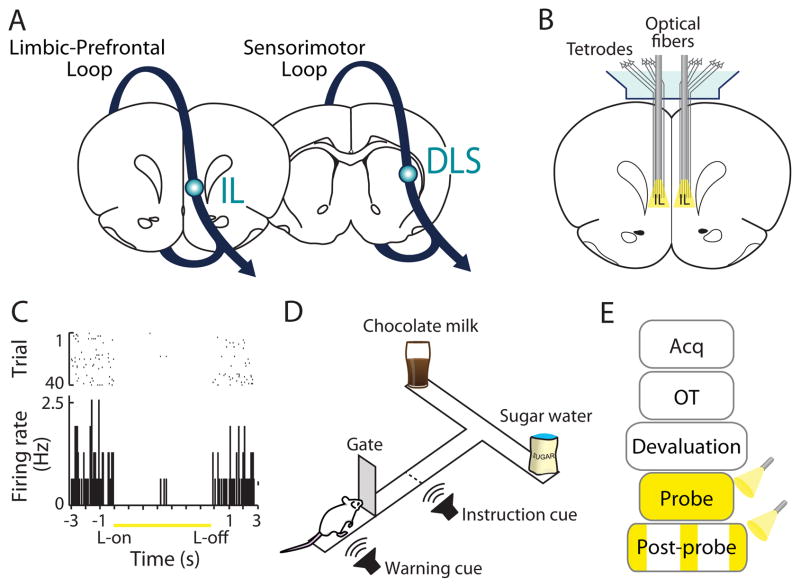
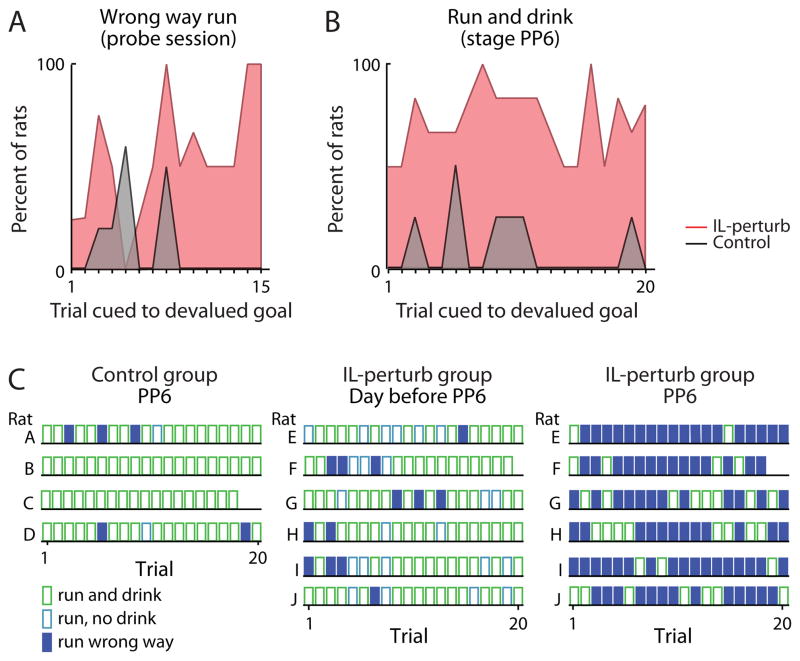
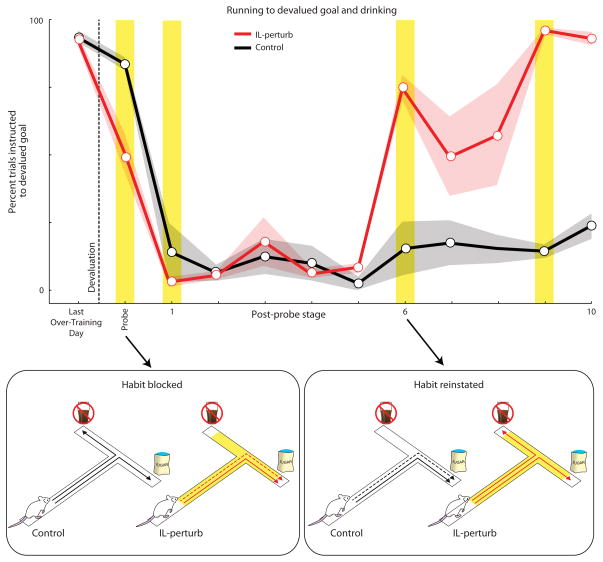
It is now well documented that optogenetics brings to neuroscience a long sought-after foothold to study the causal role of millisecond-scale activity of genetically or anatomically defined populations of neurons. Progress is rapid, and, as evidenced by the work collected in this Special Issue, the possibilities of what can now be done are almost dizzying. Even for those concerned with complex phenomena, such as behavioral habits and flexibility, signs are that we could be on the threshold of a leap in scientific understanding. Here. we note this special time in neuroscience by the example of our use of optogenetics to study habitual behavior. We present a basic sketch of the neural circuitry of habitual behavior built mainly on findings from experiments in which lesion and drug microinjection techniques were employed in combination with sophisticated behavioral analysis. We then outline the types of questions that now can be approached through the use of optogenetic approaches, and, as an example, we summarize the results of a recent study of ours in which we took this approach to probe the neural basis of habit formation. With optogenetic methods, we were able to demonstrate that a small site in the medial prefrontal cortex can control habits on-line during their execution, and we were able to control new habits when they competed with prior ones. The nearly immediate effect of disabling this site optogenetically suggests the existence of a mechanism for moment-to-moment monitoring of behaviors that long have been thought to be almost automatic and reflexive. This example highlights the kind of new knowledge that can be gained by the carefully timed use of optogenetic tools. This article is part of a Special Issue entitled Optogenetics (7th BRES).
现在有大量文献证明,光遗传学为神经科学提供了一个长期以来备受期待的立足点,可以研究遗传或解剖定义的神经元群体的毫秒级活动的因果作用。进展迅速,正如本特刊中收集的工作所证明的那样,现在可以做的事情的可能性几乎令人眼花缭乱。即使对于那些关注复杂现象(例如行为习惯和灵活性)的人来说,也有迹象表明,我们可能正处于科学理解飞跃的门槛上。在这里,我们以我们使用光遗传学研究习惯性行为为例,来记录神经科学的这个特殊时刻。我们主要基于使用损伤和药物微注射技术结合复杂行为分析的实验结果,展示了习惯性行为的神经回路的基本示意图。然后,我们概述了现在可以通过使用光遗传学方法来解决的问题类型,并以我们最近的一项研究为例,总结了我们使用这种方法来探究习惯形成的神经基础的结果。通过光遗传学方法,我们能够证明内侧前额叶皮层的一个小部位可以在线控制习惯的执行,并且当新习惯与先前的习惯竞争时,我们能够控制新习惯。通过光遗传学方法禁用该部位几乎可以立即产生效果,这表明存在一种机制,可以实时监测那些长期以来被认为几乎是自动和反射性的行为。这个例子突出了通过精心设计的光遗传学工具使用可以获得的新知识。本文是题为《光遗传学(第 7 期 BRES)》特刊的一部分。