Department of Environmental Sciences and Engineering, UNC Gillings School of Global Public Health, University of North Carolina at Chapel Hill, Chapel Hill, NC 27599, USA.
J Biochem Mol Toxicol. 2013 Feb;27(2):106-15. doi: 10.1002/jbt.21462. Epub 2013 Jan 11.
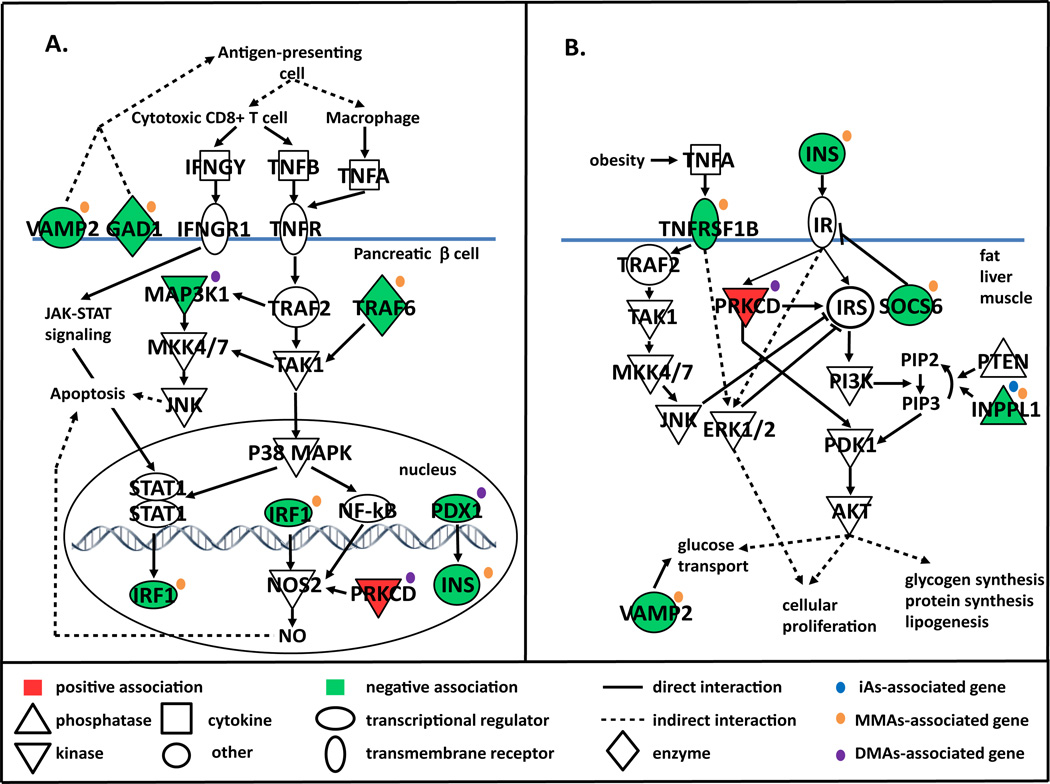
Biotransformation of inorganic arsenic (iAs) is one of the factors that determines the character and magnitude of the diverse detrimental health effects associated with chronic iAs exposure, but it is unknown how iAs biotransformation may impact the epigenome. Here, we integrated analyses of genome-wide, gene-specific promoter DNA methylation levels of peripheral blood leukocytes with urinary arsenical concentrations of subjects from a region of Mexico with high levels of iAs in drinking water. These analyses revealed dramatic differences in DNA methylation profiles associated with concentrations of specific urinary metabolites of arsenic (As). The majority of individuals in this study had positive indicators of As-related disease, namely pre-diabetes mellitus or diabetes mellitus (DM). Methylation patterns of genes with known associations with DM were associated with urinary concentrations of specific iAs metabolites. Future studies will determine whether these DNA methylation profiles provide mechanistic insight into the development of iAs-associated disease, predict disease risk, and/or serve as biomarkers of iAs exposure in humans.
无机砷(iAs)的生物转化是决定与慢性 iAs 暴露相关的多种有害健康影响的特征和程度的因素之一,但目前尚不清楚 iAs 生物转化如何影响表观基因组。在这里,我们整合了对来自墨西哥一个饮用水中 iAs 含量高的地区的研究对象的外周血白细胞的全基因组、基因特异性启动子 DNA 甲基化水平的分析,以及尿砷浓度的分析。这些分析揭示了与砷的特定尿代谢物浓度相关的 DNA 甲基化谱的显著差异。本研究中的大多数人具有与砷相关疾病的阳性指标,即前驱糖尿病或糖尿病(DM)。与 DM 相关的已知基因的甲基化模式与特定 iAs 代谢物的尿浓度有关。未来的研究将确定这些 DNA 甲基化谱是否为 iAs 相关疾病的发展提供机制见解,预测疾病风险,并/或作为人类 iAs 暴露的生物标志物。