Institut des Sciences de l'Evolution, UMR CNRS-UM2 5554, Université Montpellier 2 Montpellier cedex 05, France.
Front Microbiol. 2013 Jan 4;3:432. doi: 10.3389/fmicb.2012.00432. eCollection 2012.
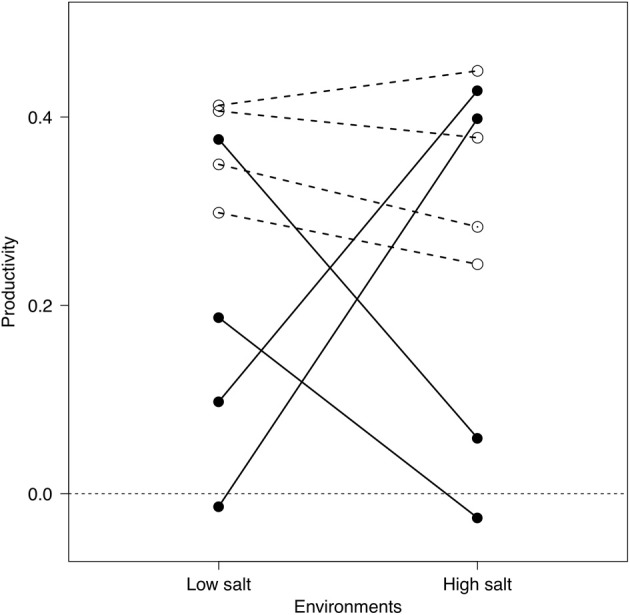
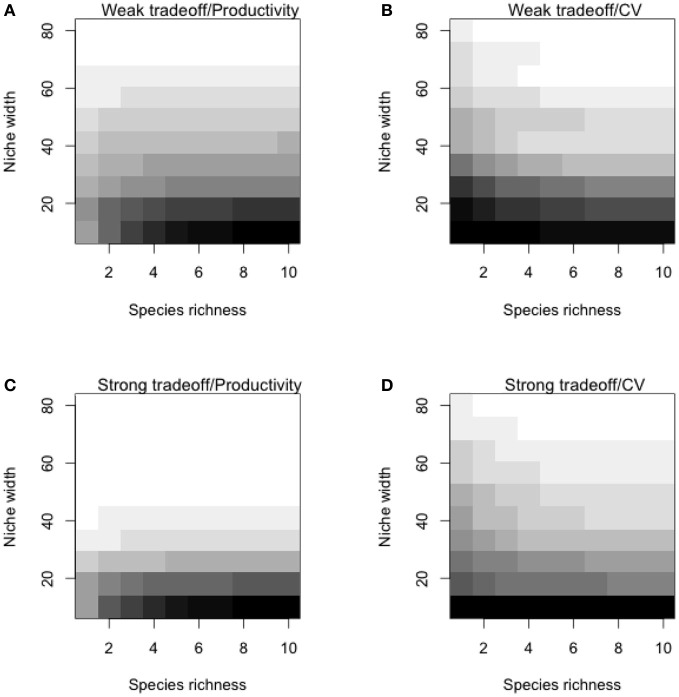
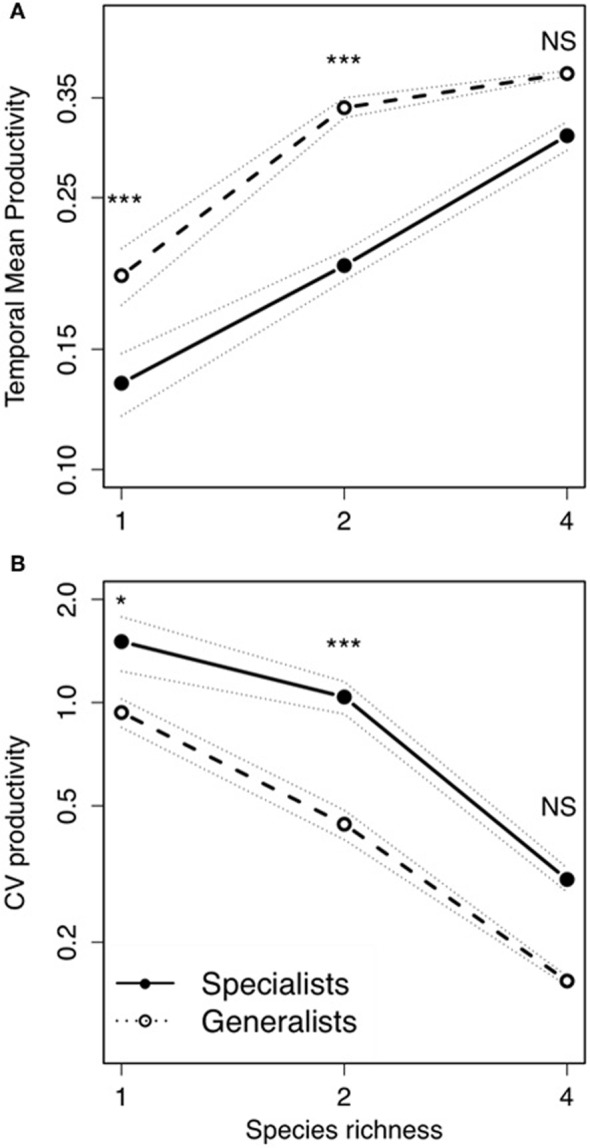
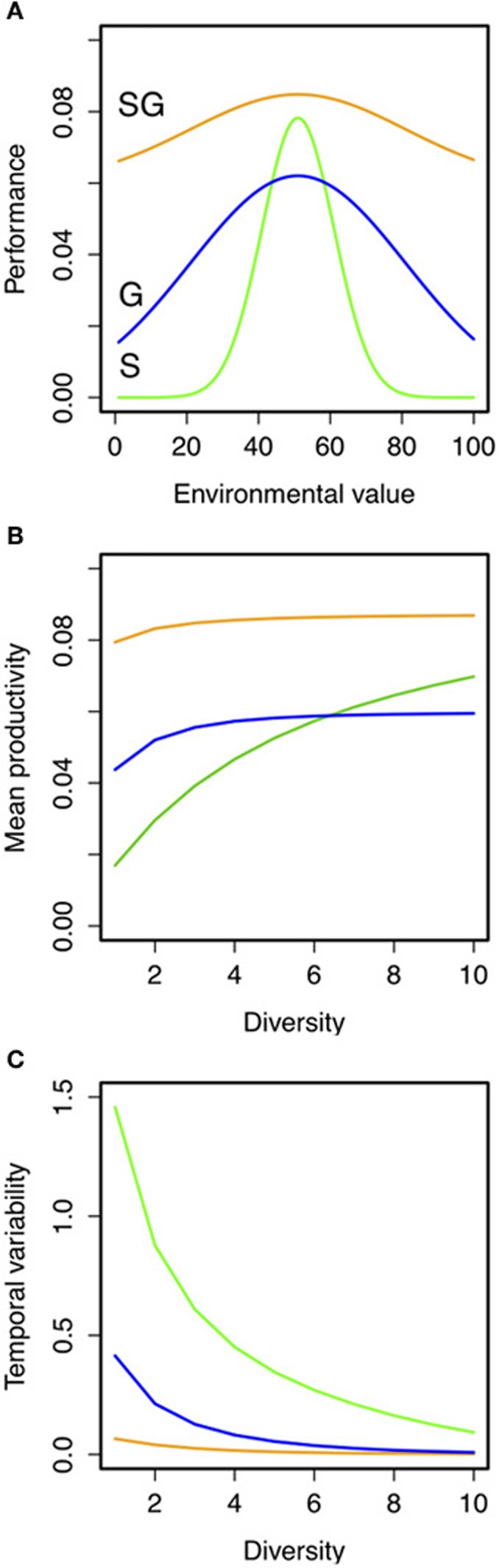
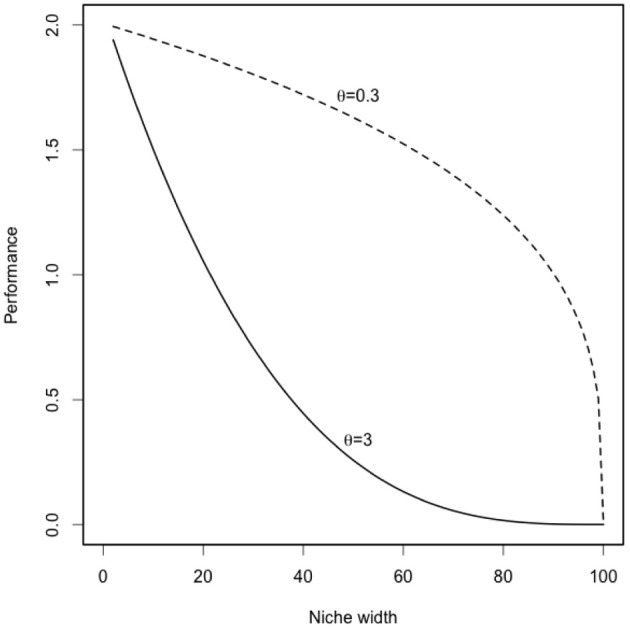
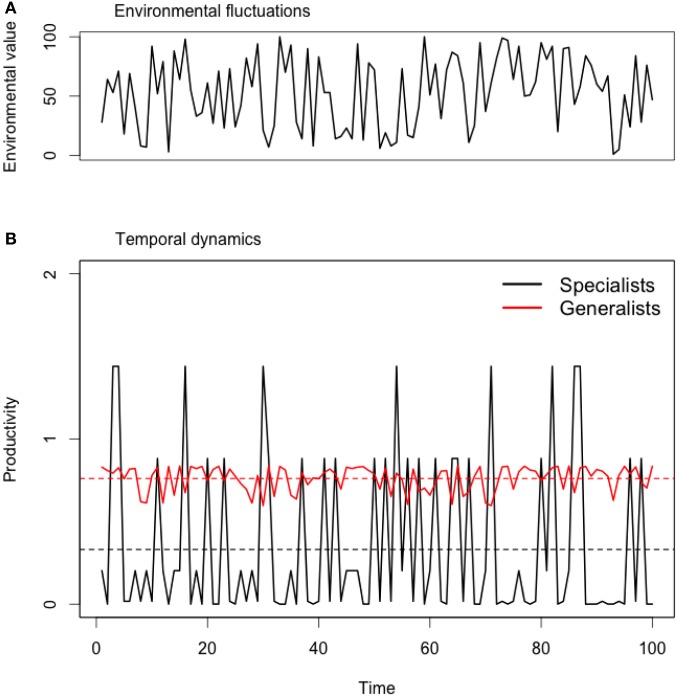
Biodiversity is thought to provide insurance for ecosystem functioning under heterogeneous environments; however, such insurance potential is under serious threat following unprecedented loss of biodiversity. One of the key mechanism underlying ecological insurance is that niche differentiation allows asynchronous responses to fluctuating environments, although the role of different ecological strategies (e.g., specialists vs. generalists) has yet to be formally evaluated. We present here a simple experimental study that illustrates how different ecological strategies (i.e., generalists vs. specialists) can shape the biodiversity-insurance relationship. We assembled microcosm of generalists and specialist bacteria over a gradient of salinity and found that, bacterial communities made up of generalists were more productive and more stable over time under environmental fluctuations. We discuss our results in context with simple theoretical predictions and propose future directions for biological insurance theory. We argue that beyond species richness itself, it is essential to incorporate the distribution of ecological strategies across relevant environmental gradients as predictors of the insurance potential of biodiversity in natural ecosystems.
生物多样性被认为为异质环境下的生态系统功能提供了保险;然而,随着生物多样性的空前丧失,这种保险潜力受到了严重威胁。生态保险的一个关键机制是,生态位分化允许对波动的环境做出异步响应,尽管不同生态策略(例如,专家与通才)的作用尚未得到正式评估。我们在这里提出了一个简单的实验研究,说明了不同的生态策略(即,通才与专家)如何塑造生物多样性保险关系。我们在盐度梯度上组装了通才和专家细菌的微宇宙,发现由通才组成的细菌群落在环境波动下的生产力更高,且随着时间的推移更稳定。我们根据简单的理论预测讨论了我们的结果,并为生物保险理论提出了未来的方向。我们认为,除了物种丰富度本身之外,至关重要的是将生态策略在相关环境梯度上的分布纳入自然生态系统中生物多样性保险潜力的预测因子。