Division for Heart Disease and Stroke Prevention, National Center for Chronic Disease Prevention and Health Promotion, Centers for Disease Control and Prevention, Atlanta, GA, USA.
J Am Heart Assoc. 2012 Dec;1(6):e005371. doi: 10.1161/JAHA.112.005371. Epub 2012 Dec 19.
With ideal cardiovascular health metrics, the American Heart Association established a goal of improving cardiovascular health for all Americans by 20% by 2020. Determining how the metrics vary by state is important to the individual states as well as to researchers and policy makers nationwide.
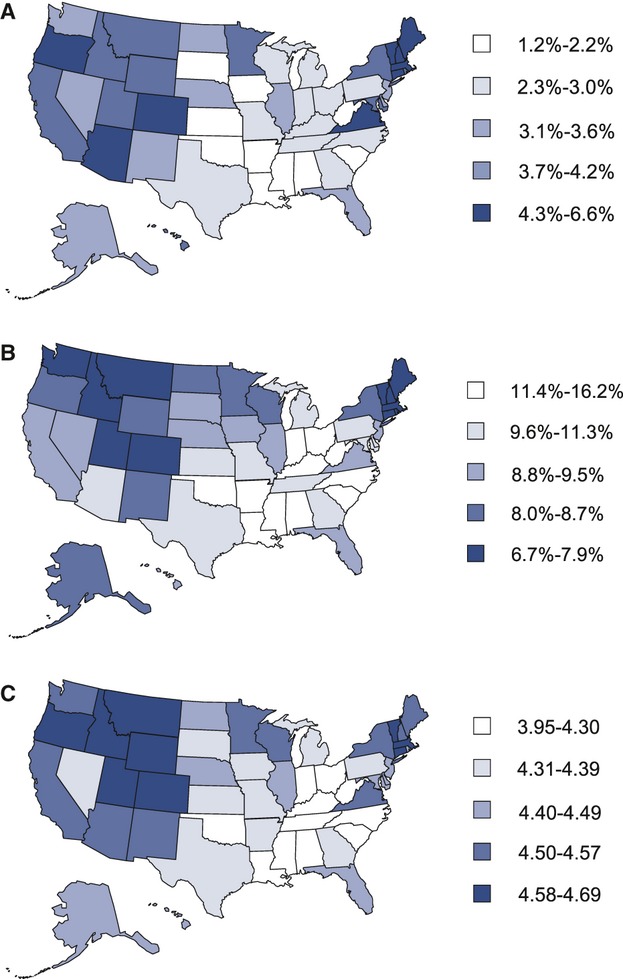
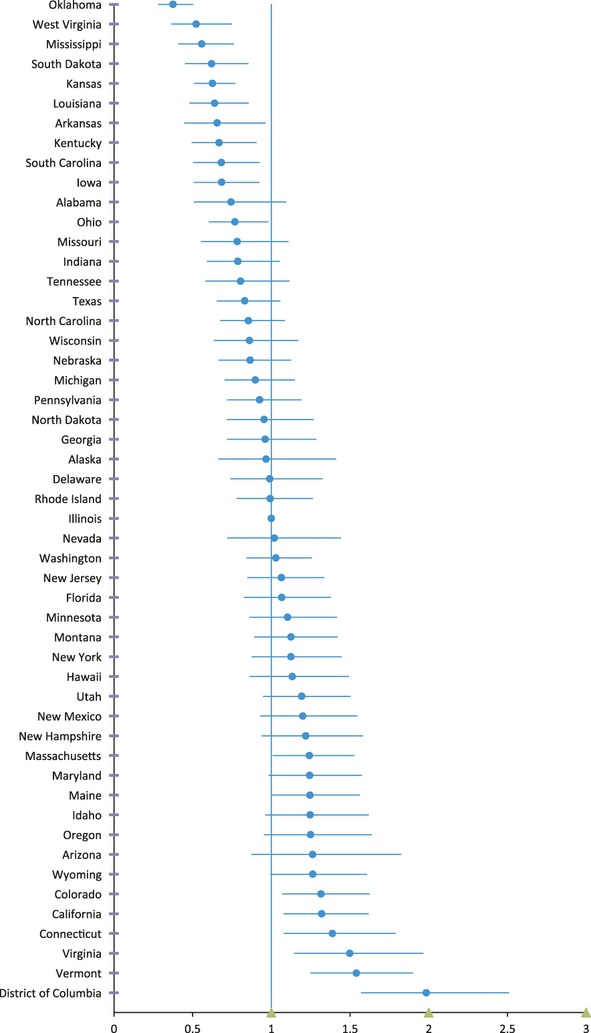
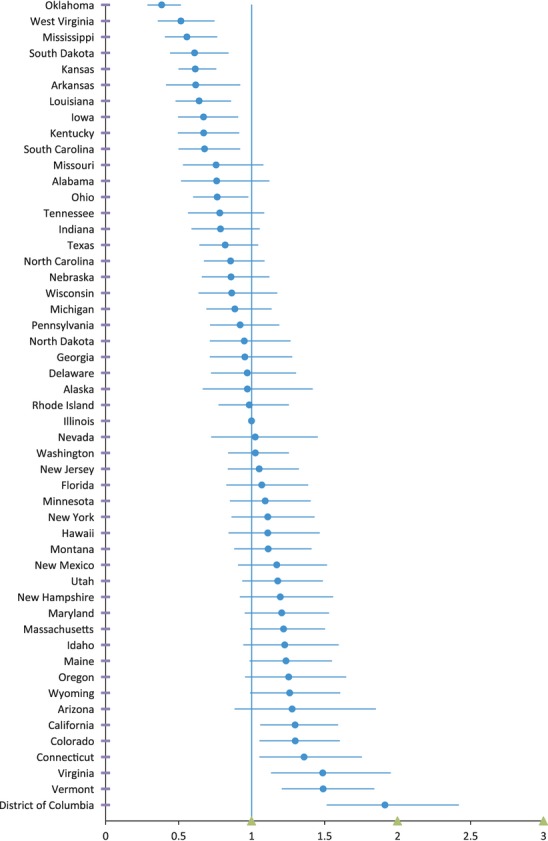
Using 2009 data from Behavioral Risk Factor Surveillance System, a state-based telephone survey with 356 441 eligible participants, we examined the 7 metrics defined by the American Heart Association: hypertension, high cholesterol, smoking, body mass index, diabetes, physical activity, and consumption of fruits and vegetables. The 3 primary outcomes of this study were (1) the percentage of the population achieving ideal health status on all 7 factors, (2) the percentage of the population with only 0 to 2 of the 7 metrics (poor cardiovascular health); and (3) the mean overall score (number of ideal metrics). Overall, 3.3% of population was in ideal cardiovascular health, and 9.9% was in poor cardiovascular health. The mean overall score was 4.42. The percentage with ideal cardiovascular health varied from 1.2% (Oklahoma) to 6.9% (District of Columbia ). The adjusted prevalence ratio of ideal cardiovascular health ranged from 0.38, 95% confidence interval 0.29 to 0.52 (Oklahoma), to 1.91, 95% confidence interval 1.51 to 2.42 (District of Columbia), with Illinois as the referent.
In the United States, the cardiovascular health status of the population varies substantially by state. The estimates here could help state programs charged with preventing heart disease and stroke to set their goals for reducing risk and improving cardiovascular health in their jurisdictions.
美国心脏协会(American Heart Association)设定了一个目标,即用理想的心血管健康指标改善所有美国人的心血管健康,到 2020 年提高 20%。确定各州的指标如何变化对各州以及全国的研究人员和政策制定者都很重要。
我们使用了 2009 年来自行为风险因素监测系统(一个基于州的电话调查,共有 356441 名合格参与者)的数据,研究了美国心脏协会定义的 7 项指标:高血压、高胆固醇、吸烟、体重指数、糖尿病、身体活动和水果及蔬菜的摄入。本研究的 3 个主要结果是:(1)所有 7 项指标均达到理想健康状态的人口比例;(2)仅有 0 至 2 项指标(心血管健康不良)的人口比例;(3)总体平均得分(理想指标数)。总体而言,3.3%的人口处于理想心血管健康状态,9.9%的人口处于心血管健康不良状态。总体平均得分为 4.42。理想心血管健康的比例从 1.2%(俄克拉荷马州)到 6.9%(哥伦比亚特区)不等。调整后的理想心血管健康的患病率比从 0.38,95%置信区间 0.29 至 0.52(俄克拉荷马州)到 1.91,95%置信区间 1.51 至 2.42(哥伦比亚特区)不等,伊利诺伊州为参照。
在美国,人群的心血管健康状况因州而异。这里的估计可以帮助负责预防心脏病和中风的州计划在其管辖范围内设定降低风险和改善心血管健康的目标。