Pasten Consuelo, Rosa Rey, Ortiz Stephanie, González Sebastián, García-Arrarás José E
Millenium Nucleus in Regenerative Biology (MINREB), Pontificia Universidad Católica de Chile, Chile.
Int J Dev Biol. 2012;56(9):681-91. doi: 10.1387/ijdb.113473cp.
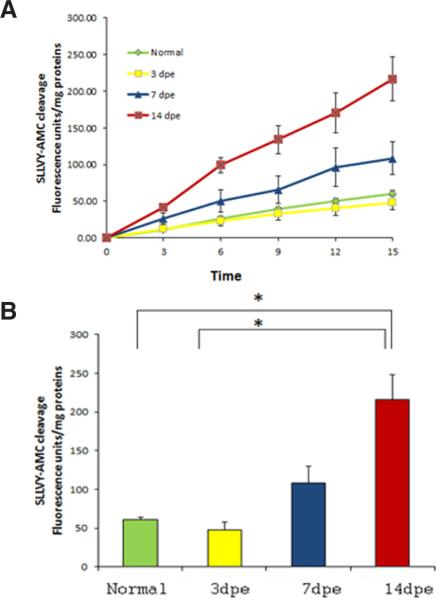
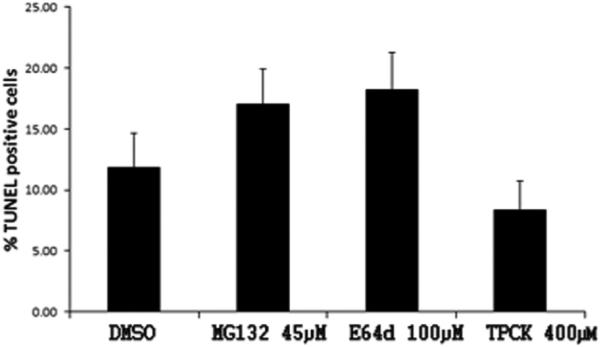
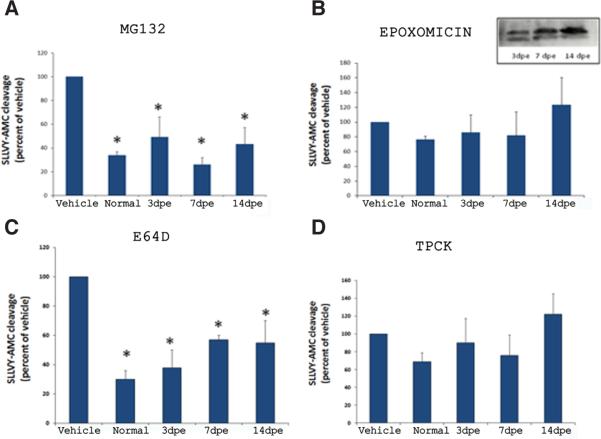
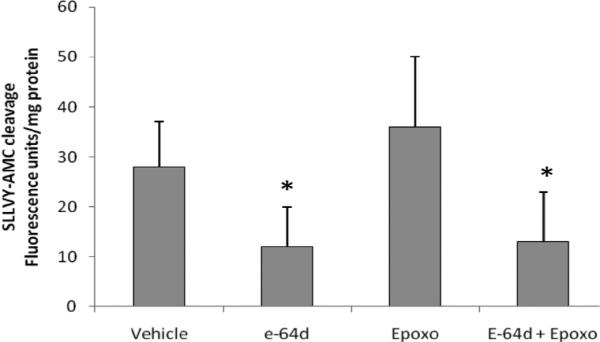
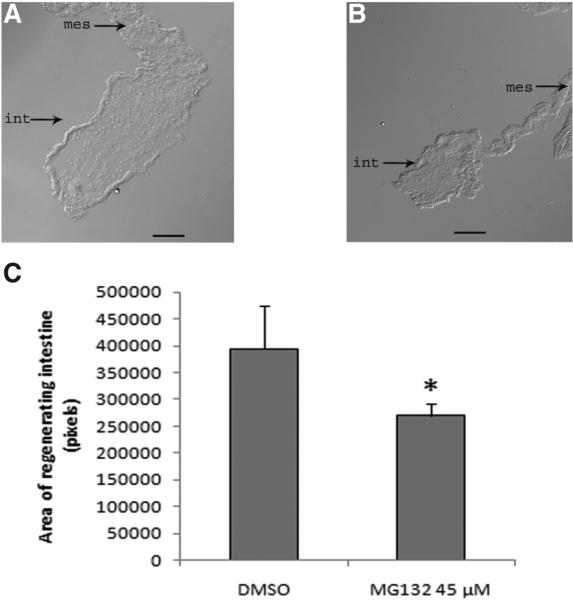
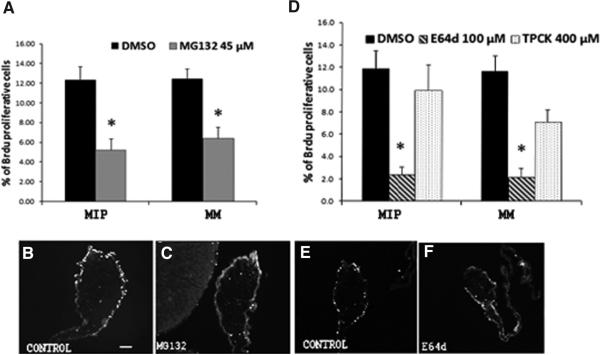
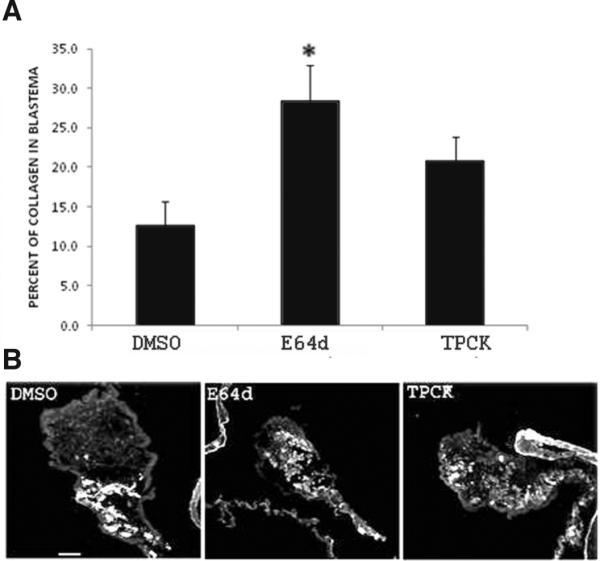
Proteolysis carried out by different proteases control cellular processes during development and regeneration. Here we investigated the function of the proteasome and other proteases in the process of intestinal regeneration using as a model the sea cucumber Holothuria glaberrima. This echinoderm possesses the ability to regenerate its viscera after a process of evisceration. Enzymatic activity assays showed that intestinal extracts at different stages of regeneration possessed chymotrypsin-like activity. This activity was inhibited by i) MG132, a reversible inhibitor of chymotrypsin and peptidylglutamyl peptidase hydrolase (PGPH) activities of the proteasome, ii) E64d, a permeable inhibitor of cysteine proteases and iii) TPCK, a serine chymotrypsin inhibitor, but not by epoxomicin, an irreversible and potent inhibitor of all enzymatic activities of the proteasome. To elucidate the role which these proteases might play during intestinal regeneration, we carried out in vivo experiments injecting MG132, E64d and TPCK into regenerating animals. The results showed effects on the size of the regenerating intestine, cell proliferation and collagen degradation. These findings suggest that proteolysis by several proteases is important in the regulation of intestinal regeneration in H. glaberrima.
不同蛋白酶进行的蛋白水解作用在发育和再生过程中控制着细胞进程。在此,我们以光裸海参(Holothuria glaberrima)为模型,研究了蛋白酶体和其他蛋白酶在肠道再生过程中的功能。这种棘皮动物具有在去内脏过程后再生其内脏的能力。酶活性测定表明,再生不同阶段的肠道提取物具有胰凝乳蛋白酶样活性。这种活性受到以下物质的抑制:i)MG132,一种蛋白酶体胰凝乳蛋白酶和肽基谷氨酰肽酶水解酶(PGPH)活性的可逆抑制剂;ii)E64d,一种可渗透的半胱氨酸蛋白酶抑制剂;iii)TPCK,一种丝氨酸胰凝乳蛋白酶抑制剂,但不受环氧霉素的抑制,环氧霉素是蛋白酶体所有酶活性的不可逆且强效的抑制剂。为了阐明这些蛋白酶在肠道再生过程中可能发挥的作用,我们进行了体内实验,向再生动物体内注射MG132、E64d和TPCK。结果显示对再生肠道的大小、细胞增殖和胶原蛋白降解有影响。这些发现表明,几种蛋白酶的蛋白水解作用在光裸海参肠道再生的调节中很重要。