Molecular Structure and Function Program, Hospital for Sick Children, Toronto, ON, Canada.
Oxid Med Cell Longev. 2012;2012:686972. doi: 10.1155/2012/686972. Epub 2012 Dec 25.
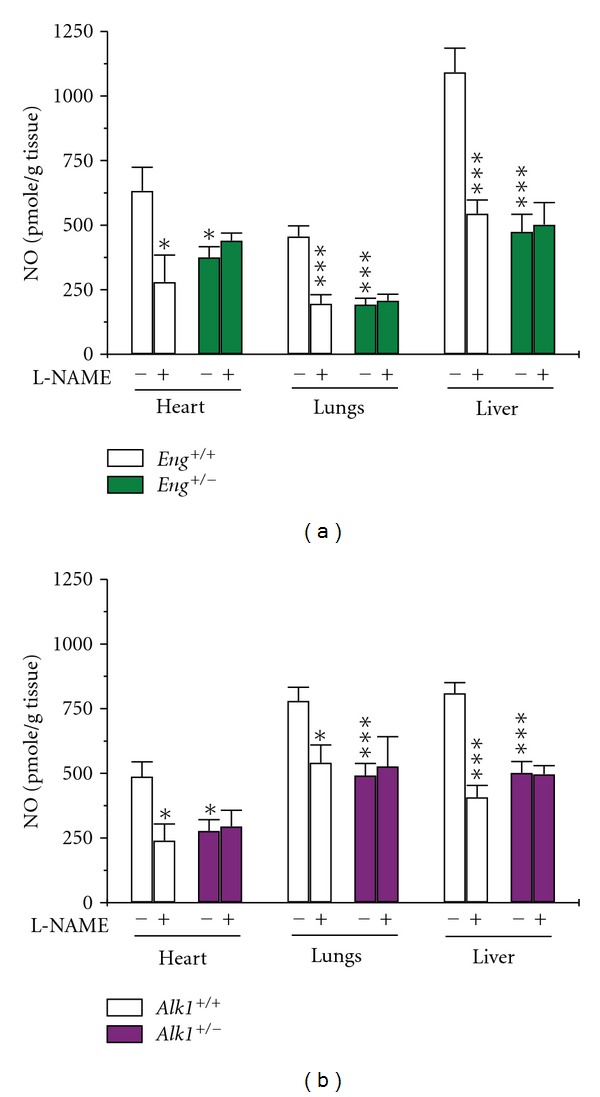
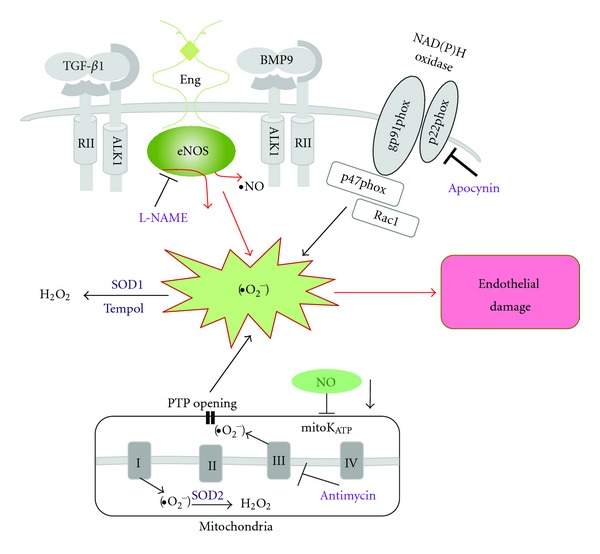
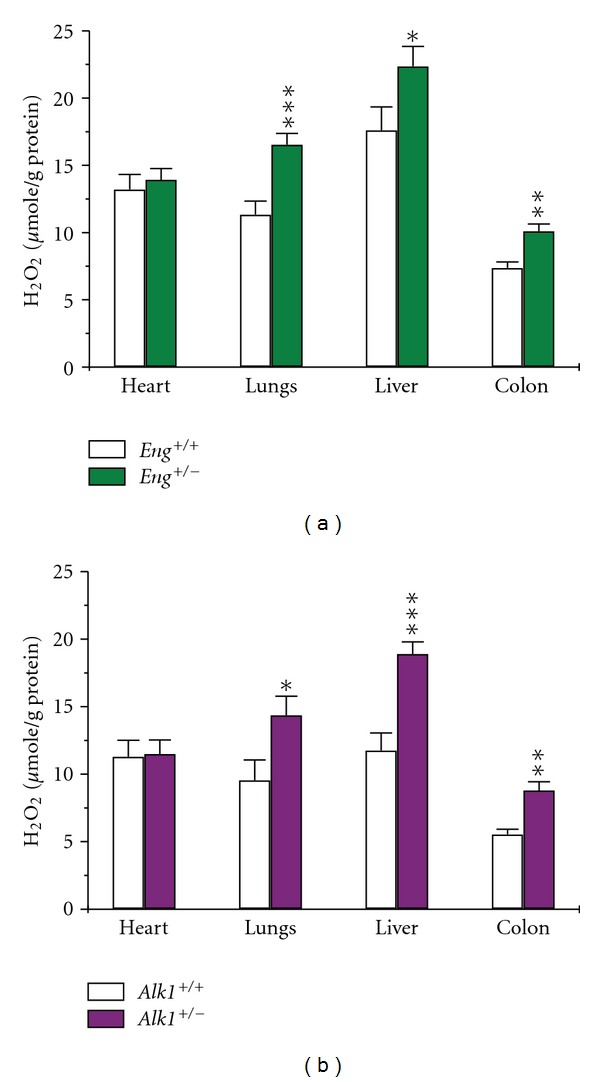
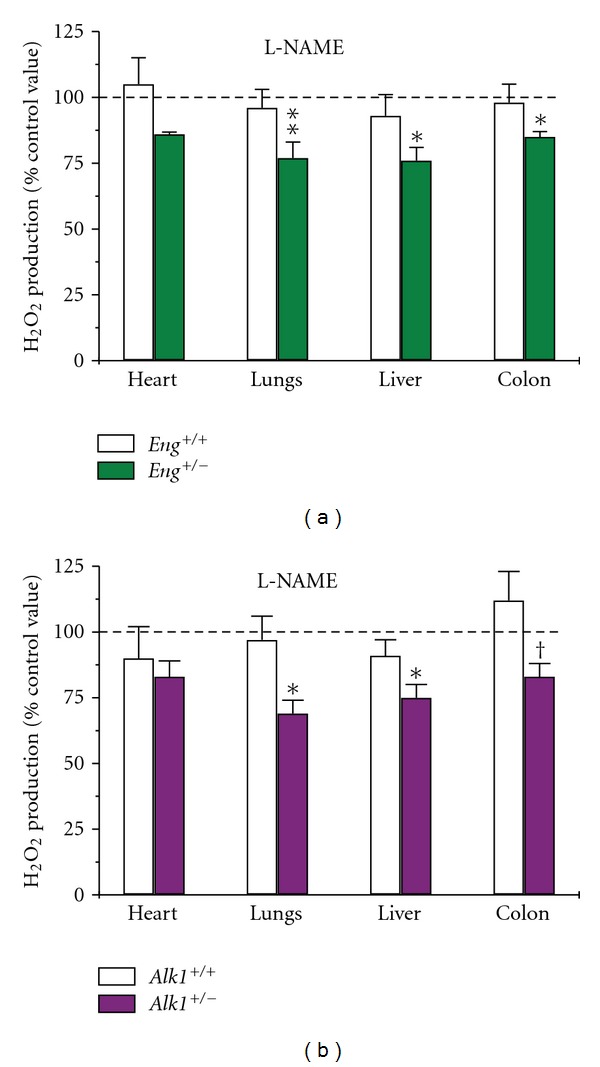
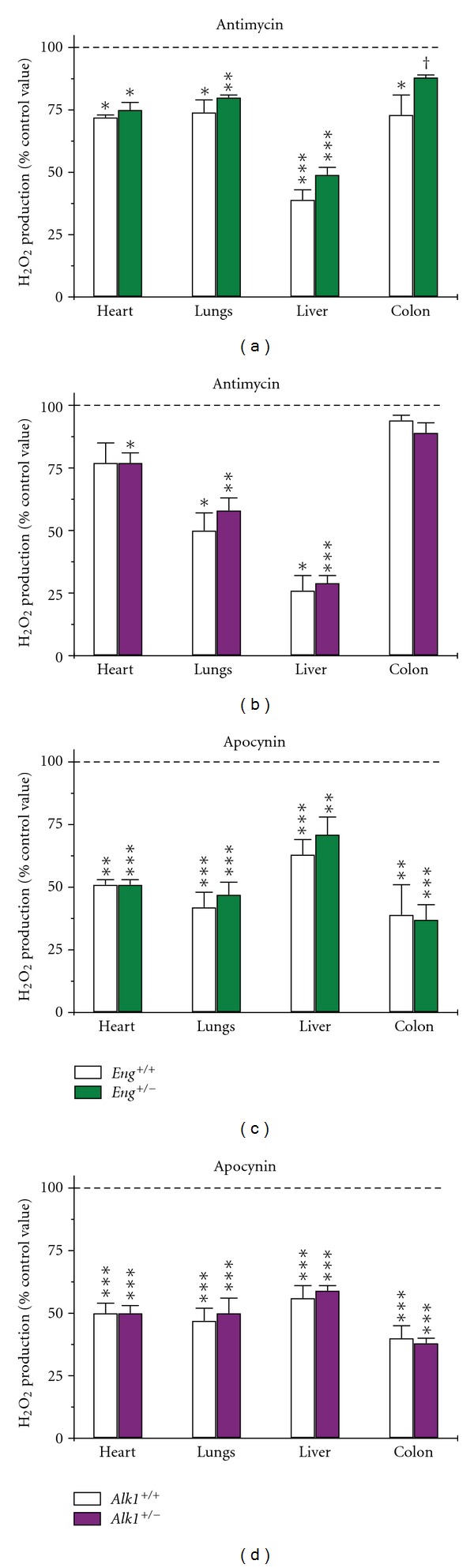
Hereditary hemorrhagic telangiectasia (HHT) is a vascular dysplasia caused by mutations in endoglin (ENG; HHT1) or activin receptor-like kinase (ALK1; HHT2) genes, coding for transforming growth factor-β (TGF-β) superfamily receptors. We demonstrated previously that endoglin and ALK1 interact with endothelial NO synthase (eNOS) and affect its activation. Endothelial cells deficient in endoglin or ALK1 proteins show eNOS uncoupling, reduced NO, and increased reactive oxygen species (ROS) production. In this study, we measured NO and H(2)O(2) levels in several organs of adult Eng and Alk1 heterozygous mice, to ascertain whether decreased NO and increased ROS production is a generalized manifestation of HHT. A significant reduction in NO and increase in ROS production were found in several organs, known to be affected in patients. ROS overproduction in mutant mice was attributed to eNOS, as it was L-NAME inhibitable. Mitochondrial ROS contribution, blocked by antimycin, was highest in liver while NADPH oxidase, inhibited by apocynin, was a major source of ROS in the other tissues. However, there was no difference in antimycin- and apocynin-inhibitable ROS production between mutant and control mice. Our results indicate that eNOS-derived ROS contributes to endothelial dysfunction and likely predisposes to disease manifestations in several organs of HHT patients.
遗传性出血性毛细血管扩张症(HHT)是一种血管发育不良,由内皮糖蛋白(ENG;HHT1)或激活素受体样激酶(ALK1;HHT2)基因突变引起,这些基因编码转化生长因子-β(TGF-β)超家族受体。我们之前已经证明,内皮糖蛋白和 ALK1 与内皮型一氧化氮合酶(eNOS)相互作用,并影响其激活。内皮糖蛋白或 ALK1 蛋白缺失的内皮细胞表现出 eNOS 解偶联、NO 减少和活性氧物种(ROS)产生增加。在这项研究中,我们测量了成年 Eng 和 Alk1 杂合子小鼠几个器官中的 NO 和 H2O2 水平,以确定 NO 减少和 ROS 产生增加是否是 HHT 的普遍表现。在已知受影响的几种器官中,发现 NO 显著减少,ROS 产生增加。突变小鼠中的 ROS 过度产生归因于 eNOS,因为它可以被 L-NAME 抑制。在肝脏中,线粒体 ROS 贡献最高,被抗霉素阻断;而 NADPH 氧化酶,被 apocynin 抑制,是其他组织中 ROS 的主要来源。然而,突变和对照小鼠之间的抗霉素和 apocynin 抑制的 ROS 产生没有差异。我们的结果表明,eNOS 衍生的 ROS 有助于内皮功能障碍,并可能使 HHT 患者的几个器官容易发生疾病表现。