Laboratory of Plant Molecular Genetics, Nara Institute of Science and Technology, 8916-5 Takayama, Ikoma, Nara, 630-0192 Japan.
Plant Cell Physiol. 2013 Mar;54(3):385-97. doi: 10.1093/pcp/pct005. Epub 2013 Jan 16.
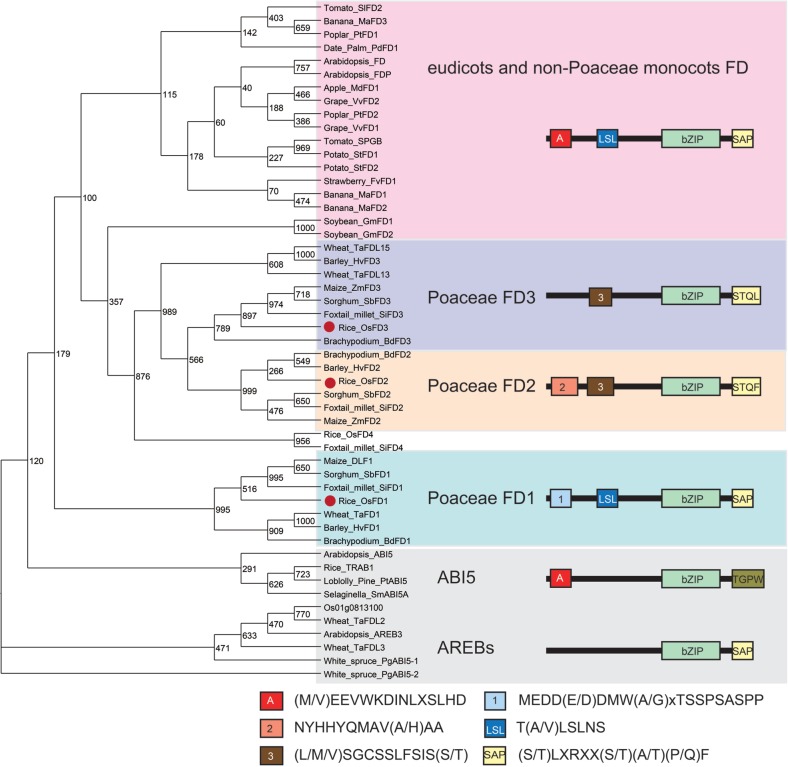
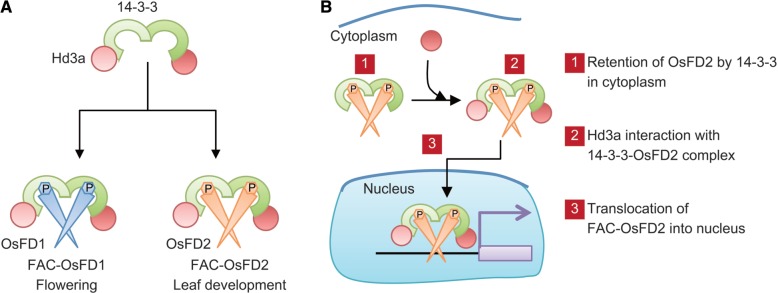
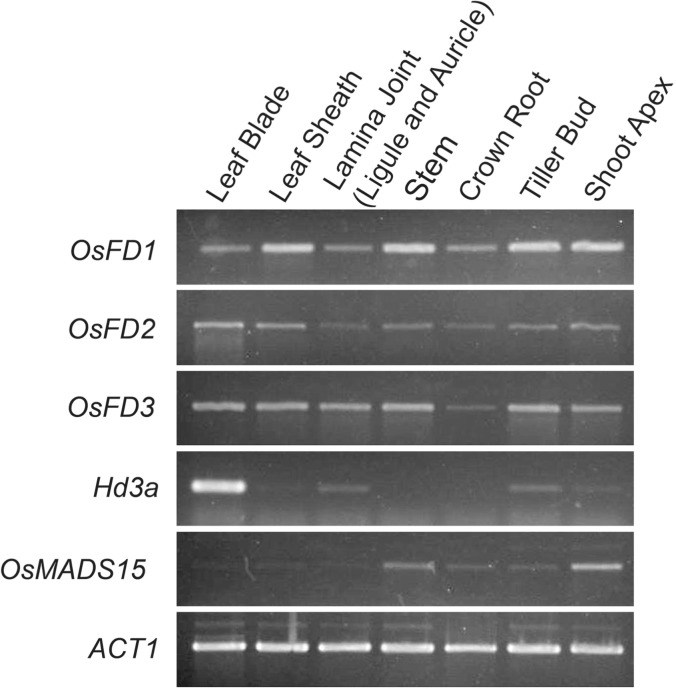
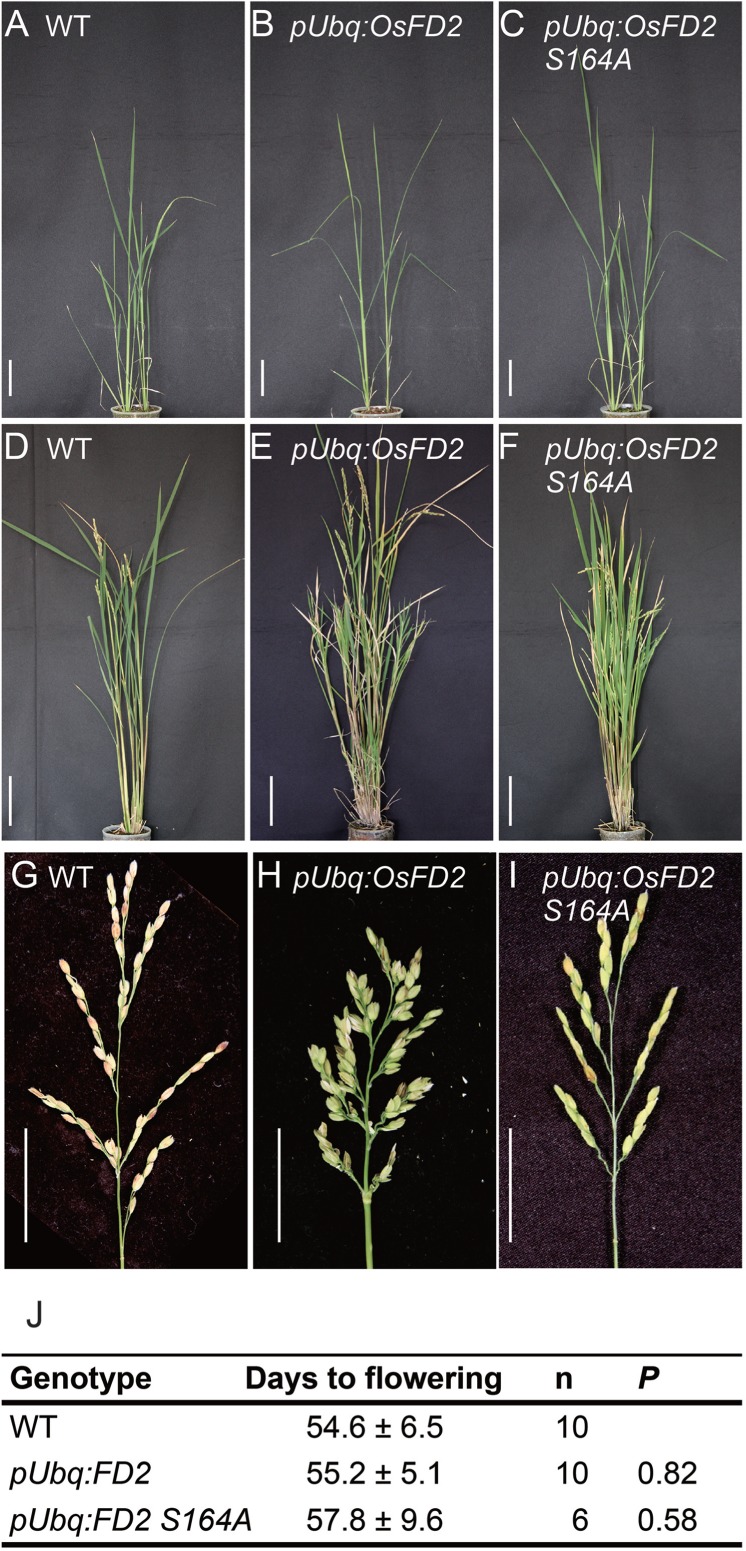
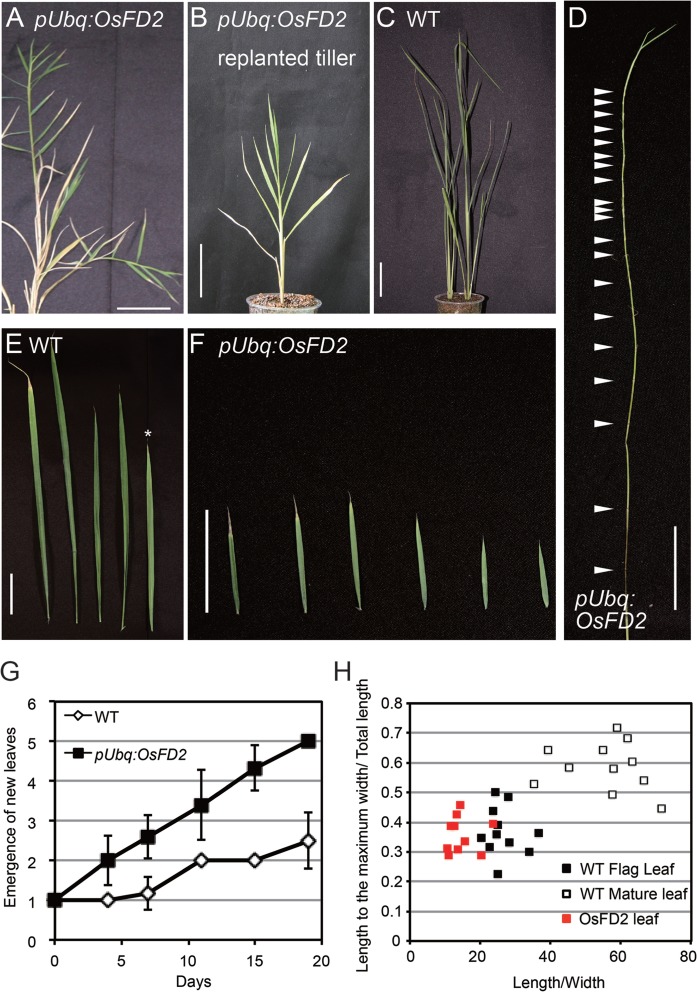
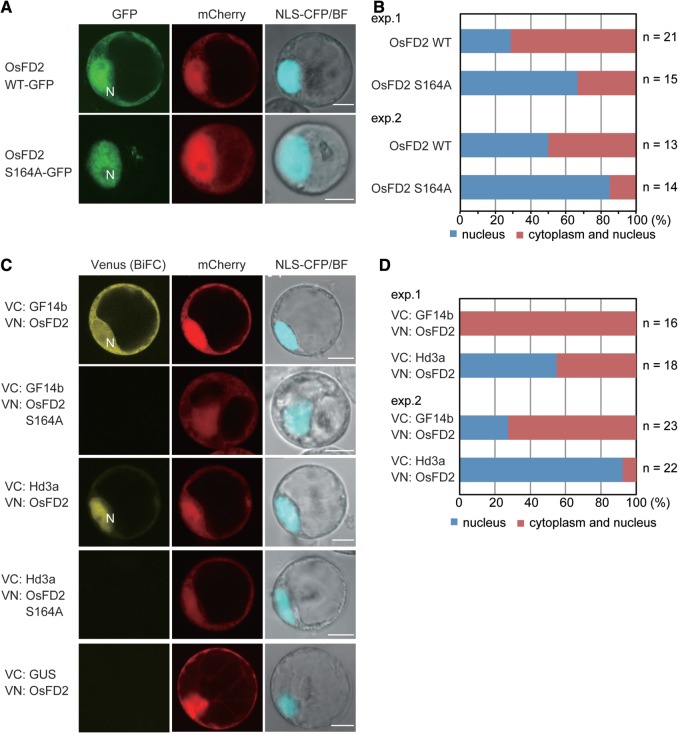
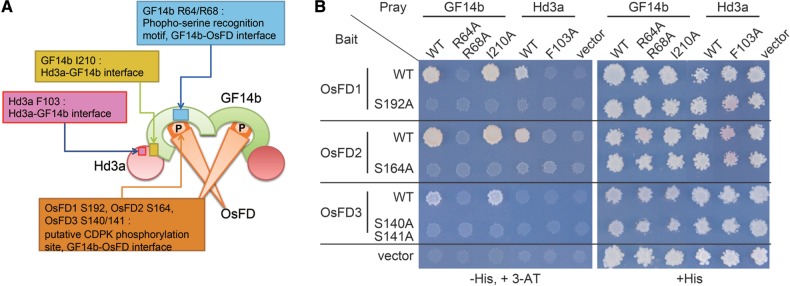
Florigen, a protein encoded by the FLOWERING LOCUS T (FT) in Arabidopsis and Heading date 3a (Hd3a) in rice, is the universal flowering hormone in plants. Florigen is transported from leaves to the shoot apical meristem and initiates floral evocation. In shoot apical cells, conserved cytoplasmic 14-3-3 proteins act as florigen receptors. A hexameric florigen activation complex (FAC) composed of Hd3a, 14-3-3 proteins, and OsFD1, a transcription factor, activates OsMADS15, a rice homolog of Arabidopsis APETALA1, leading to flowering. Because FD is a key component of the FAC, we characterized the FD gene family and their functions. Phylogenetic analysis of FD genes indicated that this family is divided into two groups: (i) canonical FD genes that are conserved among eudicots and non-Poaceae monocots; and (ii) Poaceae-specific FD genes that are organized into three subgroups: Poaceae FD1, FD2 and FD3. The Poaceae FD1 group shares a small sequence motif, T(A/V)LSLNS, with FDs of eudicots and non-Poaceae monocots. Overexpression of OsFD2, a member of the Poaceae FD2 group, produced smaller leaves with shorter plastochrons, suggesting that OsFD2 controls leaf development. In vivo subcellular localization of Hd3a, 14-3-3 and OsFD2 suggested that in contrast to OsFD1, OsFD2 is restricted to the cytoplasm through its interaction with the cytoplasmic 14-3-3 proteins, and interaction of Hd3a with 14-3-3 facilitates nuclear translocation of the FAC containing OsFD2. These results suggest that FD function has diverged between OsFD1 and OsFD2, but formation of a FAC is essential for their function.
成花素是一种植物普遍的开花激素,由拟南芥的 FLOWERING LOCUS T (FT) 和水稻的Heading date 3a (Hd3a) 基因编码的蛋白质。成花素从叶片运输到茎尖分生组织并启动花的诱导。在茎尖细胞中,保守的细胞质 14-3-3 蛋白作为成花素受体。由 Hd3a、14-3-3 蛋白和转录因子 OsFD1 组成的六聚体成花素激活复合物 (FAC) 激活水稻拟南芥 APETALA1 同源物 OsMADS15,导致开花。因为 FD 是 FAC 的关键组成部分,我们对 FD 基因家族及其功能进行了表征。FD 基因的系统发育分析表明,该家族分为两组:(i)在真双子叶植物和非禾本科单子叶植物中保守的典型 FD 基因;和 (ii) 禾本科特有的 FD 基因,分为三个亚组:禾本科 FD1、FD2 和 FD3。禾本科 FD1 组与真双子叶植物和非禾本科单子叶植物的 FD 基因共享一个小的序列基序 T(A/V)LSLNS。禾本科 FD2 组的成员 OsFD2 的过表达导致叶片变小,叶原基变短,表明 OsFD2 控制叶片发育。Hd3a、14-3-3 和 OsFD2 的体内亚细胞定位表明,与 OsFD1 不同,OsFD2 通过与细胞质 14-3-3 蛋白相互作用而局限在细胞质中,并且 Hd3a 与 14-3-3 的相互作用促进含有 OsFD2 的 FAC 的核易位。这些结果表明,FD 功能在 OsFD1 和 OsFD2 之间已经分化,但 FAC 的形成对于它们的功能是必需的。