Department of Anatomy, Guangdong Provincial Key laboratory of Medical Biomechanics, School of Basic Medicine Science, Southern Medical University, Guangzhou, Guangdong, China.
PLoS One. 2013;8(1):e53580. doi: 10.1371/journal.pone.0053580. Epub 2013 Jan 10.
With the properties of three-column fixation and anterior-approach-only procedure, anterior transpedicular screw (ATPS) is ideal for severe multilevel traumatic cervical instabilities. However, the accurate insertion of ATPS remains challenging. Here we constructed a patient-specific biocompatible drill template and evaluated its accuracy in assisting ATPS insertion.
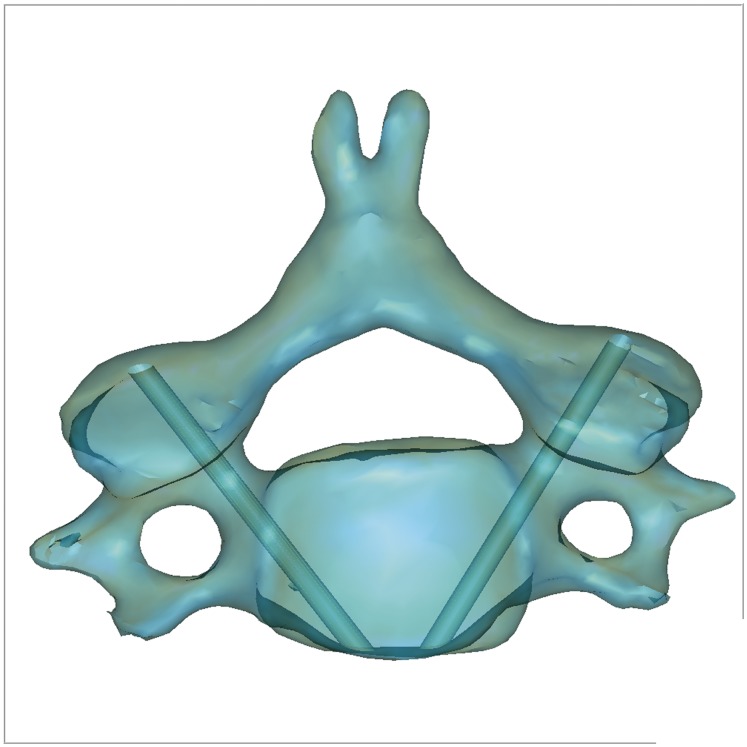
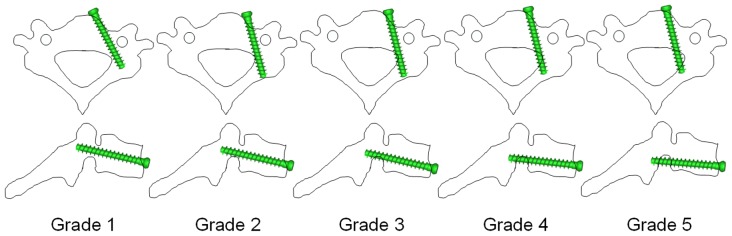
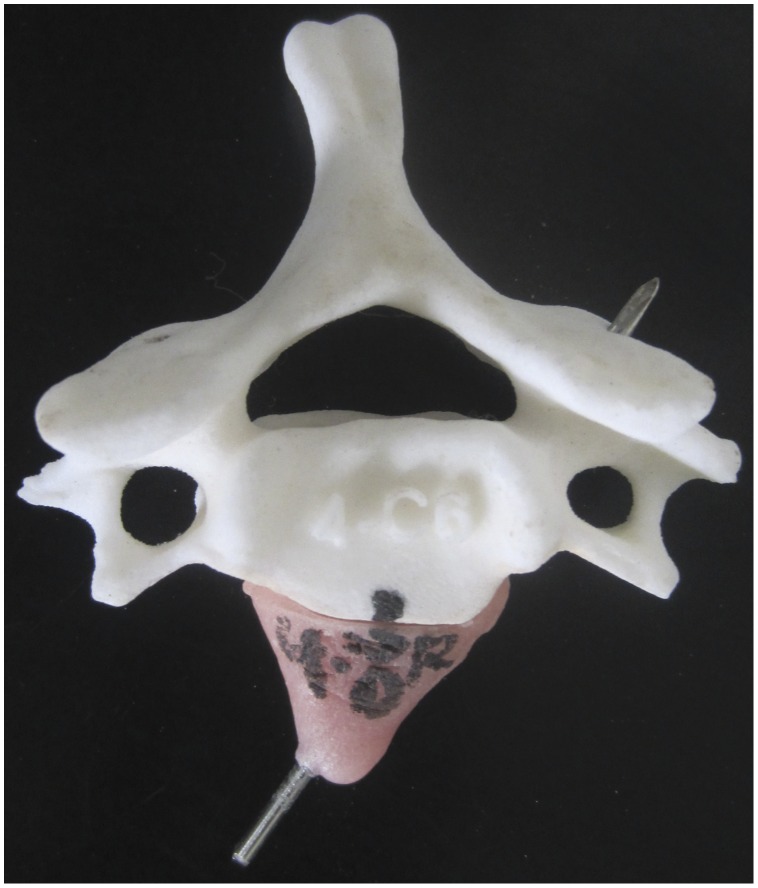
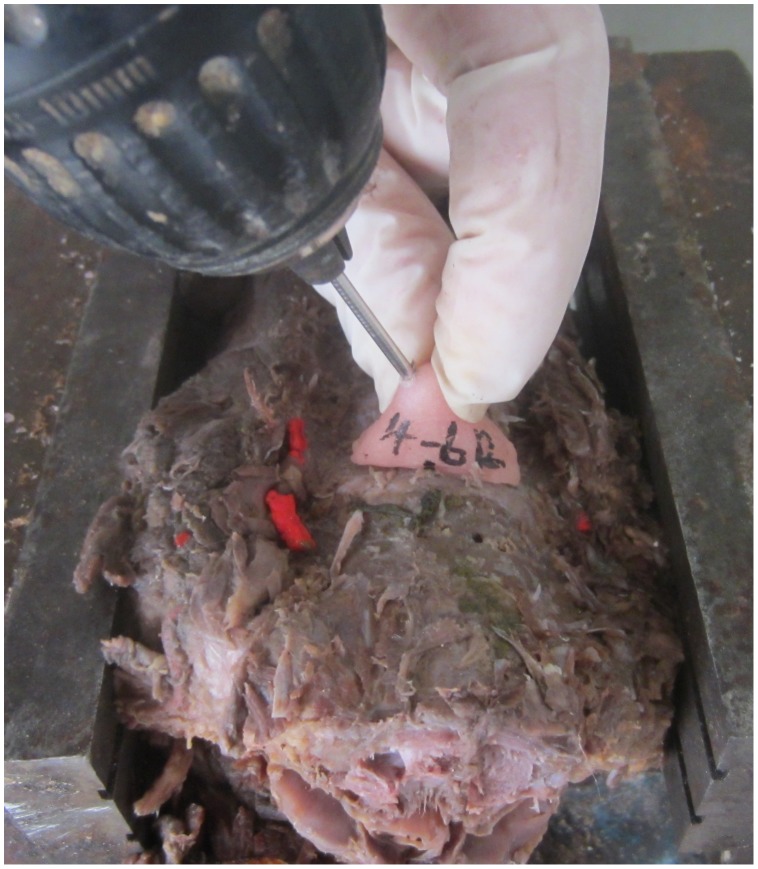
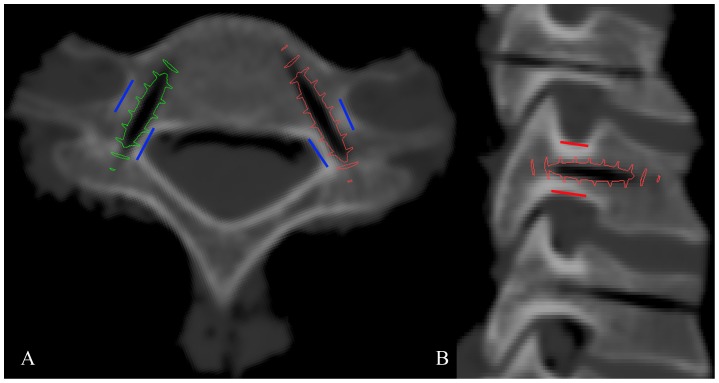
After ethical approval, 24 formalin-preserved cervical vertebrae (C2-C7) were CT scanned. 3D reconstruction models of cervical vertebra were obtained with 2-mm-diameter virtual pin tracts at the central pedicles. The 3D models were used for rapid prototyping (RP) printing. A 2-mm-diameter Kirschner wire was then inserted into the pin tract of the RP model before polymethylmethacrylate was used to construct the patient-specific biocompatible drill template. After removal of the anterior soft tissue, a 2-mm-diameter Kirschner wire was inserted into the cervical pedicle with the assistance of drill template. Cadaveric cervical spines with pin tracts were subsequently scanned using the same CT scanner. A 3D reconstruction was performed of the scanned spines to get 3D models of the vertebrae containing the actual pin tracts. The deviations were calculated between 3D models with virtual and actual pin tracts at the middle point of the cervical pedicle. 3D models of 3.5 mm-diameter screws were used in simulated insertion to grade the screw positions.
The patient-specific biocompatible drill template was constructed to assist ATPS insertion successfully. There were no significant differences between medial/lateral deviations (P = 0.797) or between superior/inferior deviations (P = 0.741). The absolute deviation values were 0.82±0.75 mm and 1.10±0.96 mm in axial and sagittal planes, respectively. In the simulated insertion, the screws in non-critical position were 44/48 (91.7%).
The patient-specific drill template is biocompatible, easy-to-apply and accurate in assisting ATPS insertion. Its clinical applications should be further researched.
前经椎弓根螺钉(ATPS)具有三柱固定和前路手术的特点,非常适合严重的多节段创伤性颈椎失稳。然而,ATPS 的准确插入仍然具有挑战性。在这里,我们构建了一种患者特异性的生物相容性钻模板,并评估了其在辅助 ATPS 插入中的准确性。
在获得伦理批准后,对 24 个福尔马林固定的颈椎(C2-C7)进行 CT 扫描。使用直径为 2 毫米的虚拟销钉轨迹在中心椎弓根获得颈椎的 3D 重建模型。使用 3D 模型进行快速原型(RP)打印。在 RP 模型的销钉轨迹中插入直径为 2 毫米的克氏针,然后用聚甲基丙烯酸甲酯构建患者特异性的生物相容性钻模板。在前软组织切除后,在钻模板的辅助下将直径为 2 毫米的克氏针插入颈椎椎弓根。随后使用相同的 CT 扫描仪扫描带有销钉轨迹的尸体颈椎。对扫描的脊柱进行 3D 重建,得到包含实际销钉轨迹的脊柱的 3D 模型。在颈椎椎弓根中点计算虚拟和实际销钉轨迹的 3D 模型之间的偏差。使用直径为 3.5 毫米的螺钉进行模拟插入,以评定螺钉位置。
成功构建了患者特异性的生物相容性钻模板以辅助 ATPS 插入。内侧/外侧偏差(P=0.797)或上下偏差(P=0.741)之间无显著差异。轴向和矢状面的绝对偏差值分别为 0.82±0.75 毫米和 1.10±0.96 毫米。在模拟插入中,非关键位置的螺钉为 44/48(91.7%)。
患者特异性钻模板具有生物相容性、易于应用和辅助 ATPS 插入准确的特点。其临床应用应进一步研究。