Departamento de Bioquímica e Biologia Molecular, Universidade Federal do Paraná, Rua Quinze de Novembro, 1299, 80060-000, Centro Curitiba, PR, Brazil.
BMC Microbiol. 2013 Jan 17;13:10. doi: 10.1186/1471-2180-13-10.
Amastins are surface glycoproteins (approximately 180 residues long) initially described in Trypanosoma cruzi as particularly abundant during the amastigote stage of this protozoan parasite. Subsequently, they have been found to be encoded by large gene families also present in the genomes of several species of Leishmania and in other Trypanosomatids. Although most amastin genes are organized in clusters associated with tuzin genes and are up-regulated in the intracellular stage of T. cruzi and Leishmania spp, distinct genomic organizations and mRNA expression patterns have also been reported.
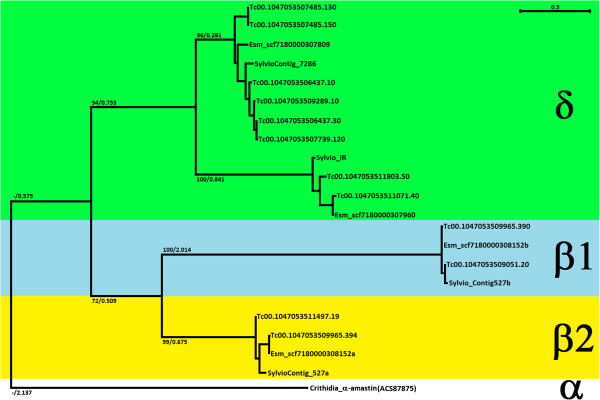
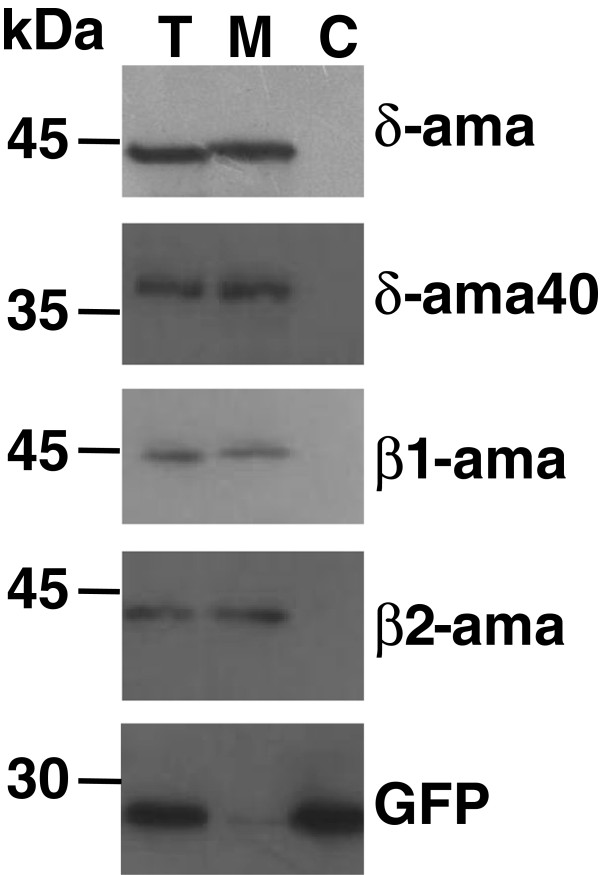
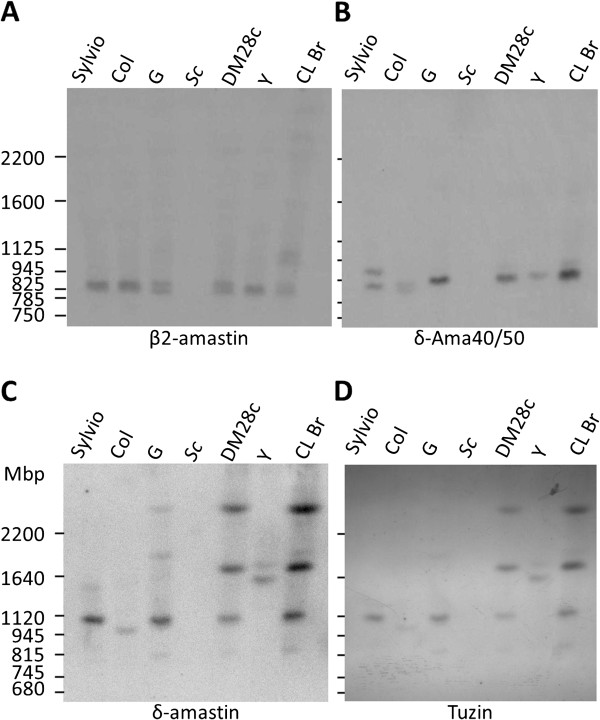
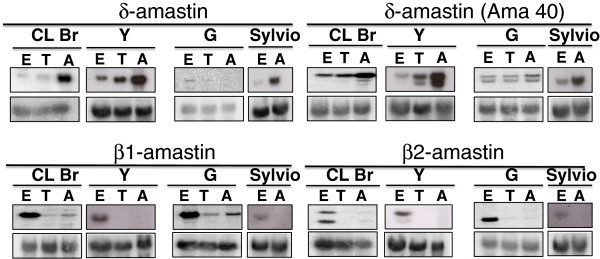
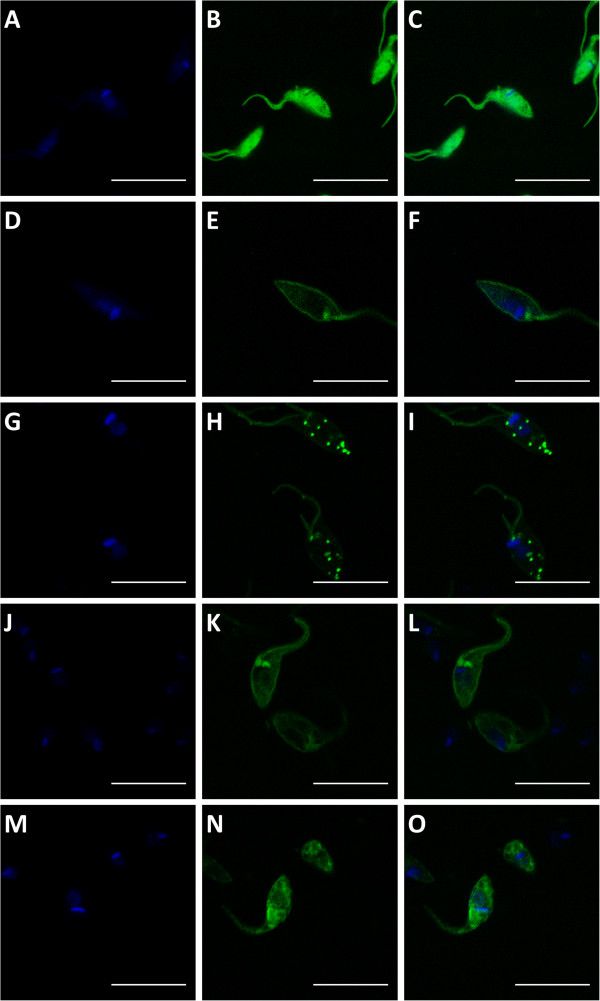
Based on the analysis of the complete genome sequences of two T. cruzi strains, we identified a total of 14 copies of amastin genes in T. cruzi and showed that they belong to two of the four previously described amastin subfamilies. Whereas δ-amastin genes are organized in two or more clusters with alternating copies of tuzin genes, the two copies of β-amastins are linked together in a distinct chromosome. Most T. cruzi amastins have similar surface localization as determined by confocal microscopy and western blot analyses. Transcript levels for δ-amastins were found to be up-regulated in amastigotes from several T. cruzi strains, except in the G strain, which is known to have low infection capacity. In contrast, in all strains analysed, β-amastin transcripts are more abundant in epimastigotes, the stage found in the insect vector.
Here we showed that not only the number and diversity of T. cruzi amastin genes is larger than what has been predicted, but also their mode of expression during the parasite life cycle is more complex. Although most T. cruzi amastins have a similar surface localization, only δ-amastin genes have their expression up-regulated in amastigotes. The results showing that a sub-group of this family is up-regulated in epimastigotes, suggest that, in addition of their role in intracellular amastigotes, T. cruzi amastins may also serve important functions during the insect stage of the parasite life cycle. Most importantly, evidence for their role as virulence factors was also unveiled from the data showing that δ-amastin expression is down regulated in a strain presenting low infection capacity.
天蚕素是一种表面糖蛋白(约 180 个残基长),最初在克氏锥虫中被描述,在这种原生动物寄生虫的无鞭毛体阶段特别丰富。随后,在几种利什曼原虫和其他锥虫门生物的基因组中也发现了它们由大型基因家族编码。尽管大多数天蚕素基因组织在与 tuzin 基因相关的簇中,并在 T. cruzi 和利什曼原虫 spp 的细胞内阶段上调,但也报道了不同的基因组组织和 mRNA 表达模式。
基于对两种 T. cruzi 株的完整基因组序列的分析,我们在 T. cruzi 中总共鉴定出 14 个天蚕素基因拷贝,并表明它们属于之前描述的四个天蚕素亚家族中的两个。虽然 δ-天蚕素基因组织在两个或更多的簇中,交替有 tuzin 基因的拷贝,但两个 β-天蚕素基因拷贝则连接在一起在一个独特的染色体上。通过共聚焦显微镜和 western blot 分析,发现大多数 T. cruzi 天蚕素具有相似的表面定位。除了感染能力较低的 G 株外,来自几种 T. cruzi 株的无鞭毛体中 δ-天蚕素的转录水平被发现上调。相比之下,在所有分析的菌株中,β-天蚕素的转录本在昆虫载体中发现的滋养体阶段更为丰富。
在这里,我们不仅表明 T. cruzi 天蚕素基因的数量和多样性比之前预测的要大,而且它们在寄生虫生命周期中的表达模式也更加复杂。虽然大多数 T. cruzi 天蚕素具有相似的表面定位,但只有 δ-天蚕素基因在无鞭毛体中表达上调。结果表明,该家族的一个亚组在滋养体中上调,表明除了在细胞内无鞭毛体中的作用外,T. cruzi 天蚕素在寄生虫的昆虫阶段也可能具有重要功能。最重要的是,从数据中也揭示了它们作为毒力因子的作用的证据,表明在感染能力较低的菌株中,δ-天蚕素的表达下调。