Britton Chance Center for Biomedical Photonics, Wuhan National Lab for Optoelectronics-Huazhong University of Science and Technology, Wuhan 430074, China.
Sci Rep. 2013;3:1081. doi: 10.1038/srep01081. Epub 2013 Jan 17.
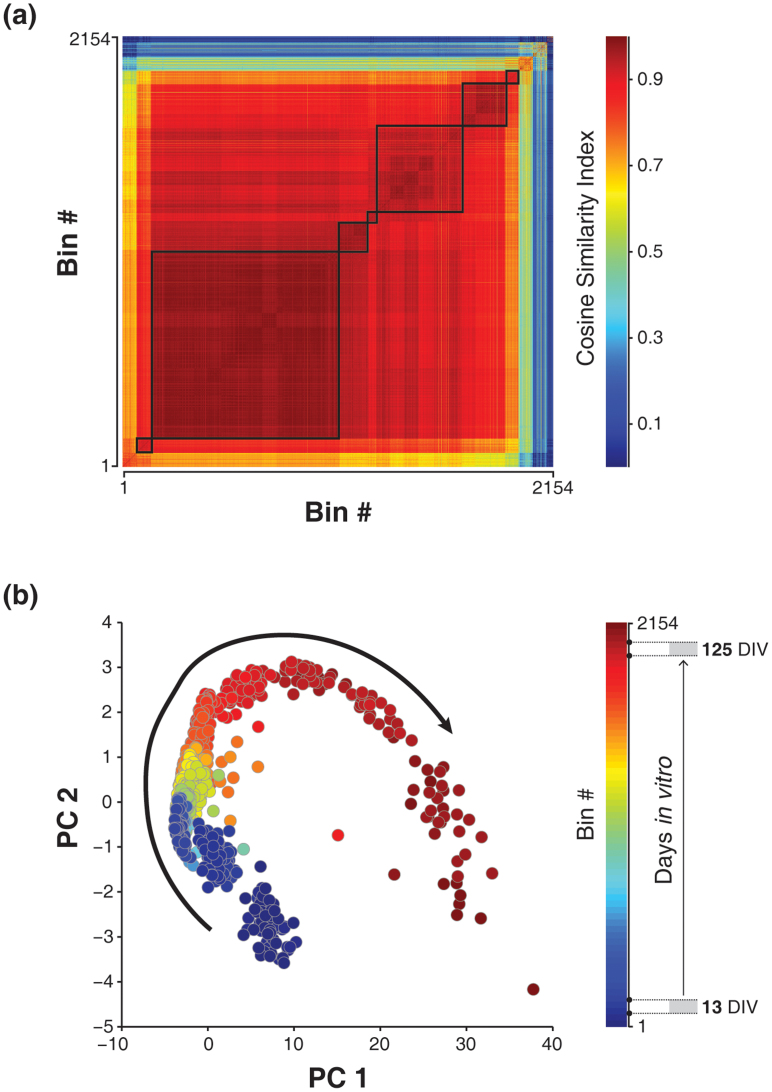
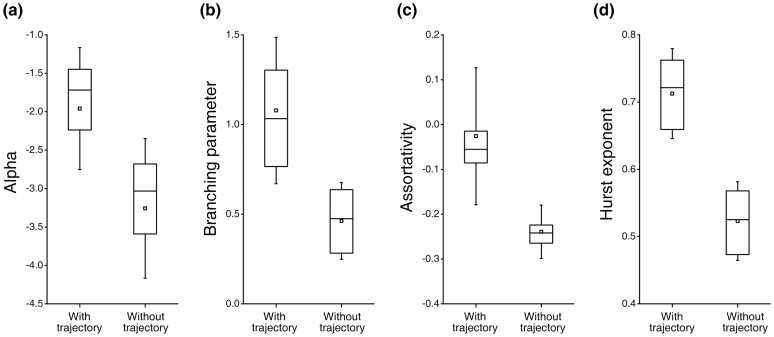
Self-organized criticality emerged in neural activity is one of the key concepts to describe the formation and the function of developing neuronal networks. The relationship between critical dynamics and neural development is both theoretically and experimentally appealing. However, whereas it is well-known that cortical networks exhibit a rich repertoire of activity patterns at different stages during in vitro maturation, dynamical activity patterns through the entire neural development still remains unclear. Here we show that a series of metastable network states emerged in the developing and "aging" process of hippocampal networks cultured from dissociated rat neurons. The unidirectional sequence of state transitions could be only observed in networks showing power-law scaling of distributed neuronal avalanches. Our data suggest that self-organized criticality may guide spontaneous activity into a sequential succession of homeostatically-regulated transient patterns during development, which may help to predict the tendency of neural development at early ages in the future.
自组织临界性出现在神经活动中,是描述发育中神经网络形成和功能的关键概念之一。临界动力学与神经发育之间的关系在理论和实验上都很吸引人。然而,尽管众所周知,皮质网络在体外成熟的不同阶段表现出丰富的活动模式,但整个神经发育过程中的动态活动模式仍不清楚。在这里,我们展示了在从分离的大鼠神经元培养的海马网络的发育和“老化”过程中出现的一系列亚稳态网络状态。只有在表现出分布式神经元瀑发现象幂律标度的网络中,才能观察到状态转变的单向序列。我们的数据表明,自组织临界性可能在发育过程中引导自发活动进入一个由稳态调节的瞬态模式的顺序连续,这可能有助于预测未来早期神经发育的趋势。