Laboratorio de Plasticidad Neuronal, Instituto Leloir, Instituto de Investigaciones Bioquímicas de Buenos Aires-Consejo Nacional de Investigaciones Científicas y Técnicas (CONICET), Avenida Patricias Argentinas 435, 1405 Buenos Aires, Argentina.
Science. 2012 Mar 9;335(6073):1238-42. doi: 10.1126/science.1214956. Epub 2012 Jan 26.
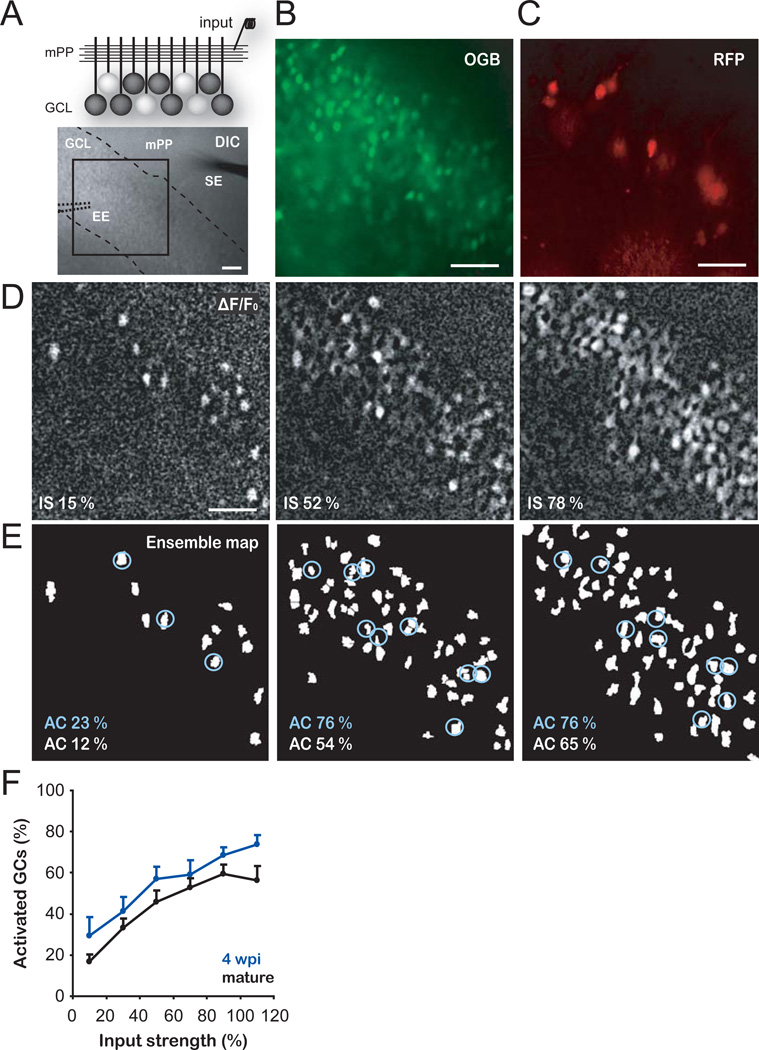
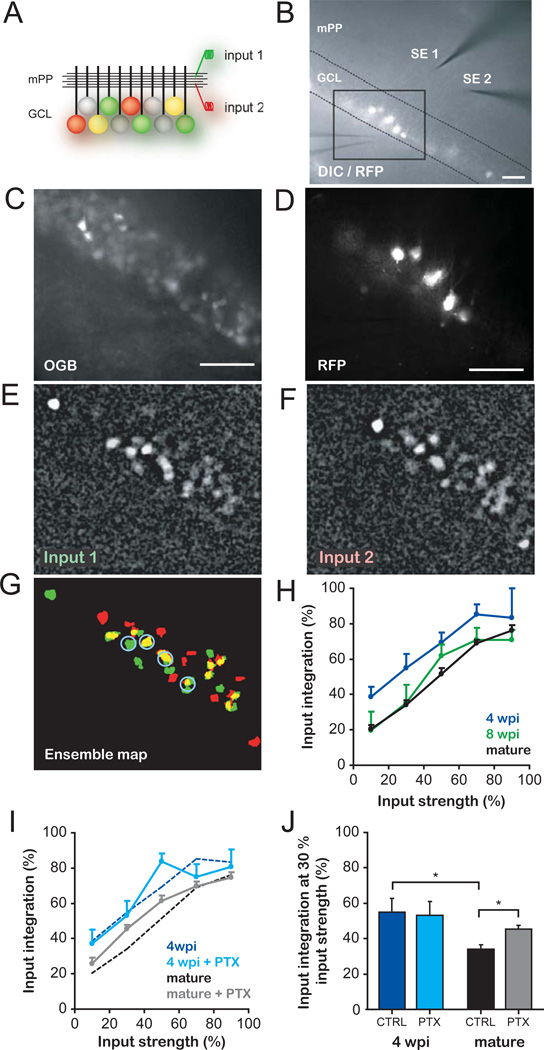
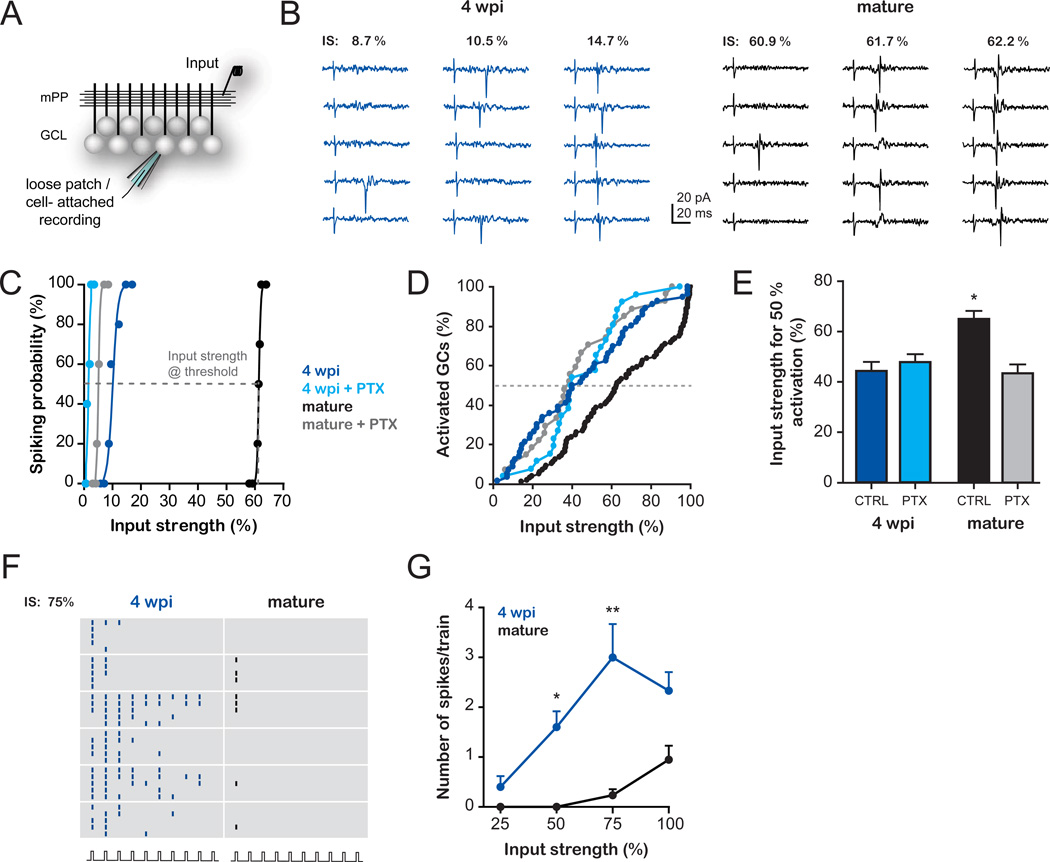
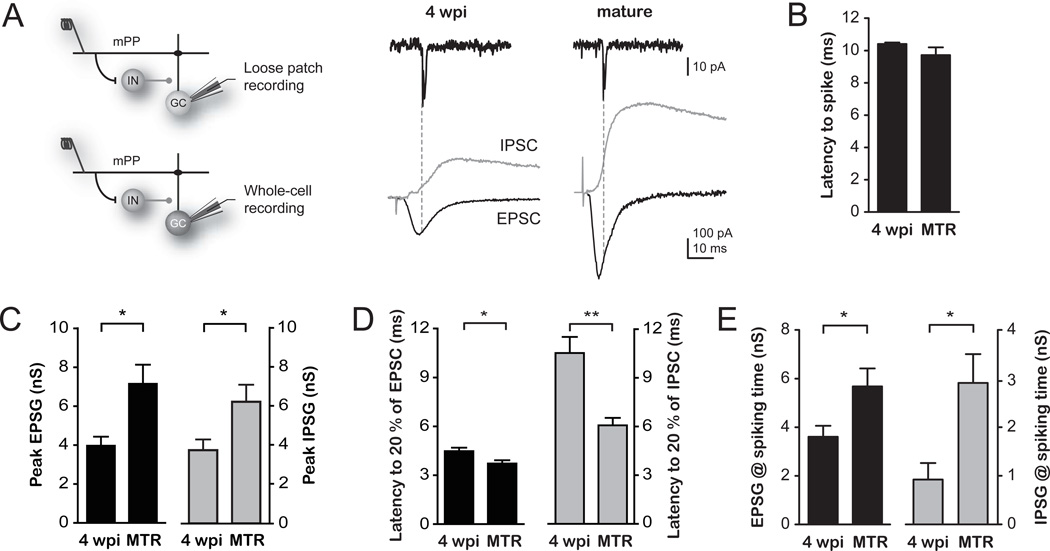
The adult dentate gyrus generates new granule cells (GCs) that develop over several weeks and integrate into the preexisting network. Although adult hippocampal neurogenesis has been implicated in learning and memory, the specific role of new GCs remains unclear. We examined whether immature adult-born neurons contribute to information encoding. By combining calcium imaging and electrophysiology in acute slices, we found that weak afferent activity recruits few mature GCs while activating a substantial proportion of the immature neurons. These different activation thresholds are dictated by an enhanced excitation/inhibition balance transiently expressed in immature GCs. Immature GCs exhibit low input specificity that switches with time toward a highly specific responsiveness. Therefore, activity patterns entering the dentate gyrus can undergo differential decoding by a heterogeneous population of GCs originated at different times.
成年齿状回产生新的颗粒细胞 (GCs),这些细胞需要数周的时间才能发育成熟并整合到现有的网络中。尽管成年海马神经发生与学习和记忆有关,但新 GCs 的具体作用仍不清楚。我们研究了不成熟的成年新生神经元是否有助于信息编码。通过在急性切片中结合钙成像和电生理学,我们发现,弱传入活动仅招募少数成熟的 GCs,同时激活相当一部分不成熟的神经元。这种不同的激活阈值是由不成熟 GCs 中短暂表达的增强的兴奋/抑制平衡决定的。不成熟的 GCs 表现出低输入特异性,随着时间的推移会向高度特异性的反应性转变。因此,进入齿状回的活动模式可以通过在不同时间产生的异质 GCs 群体进行差异解码。