Brain Research Imaging Center, Division of Clinical Neurosciences, University of Edinburgh Edinburgh, UK.
Front Psychol. 2013 Jan 10;3:606. doi: 10.3389/fpsyg.2012.00606. eCollection 2012.
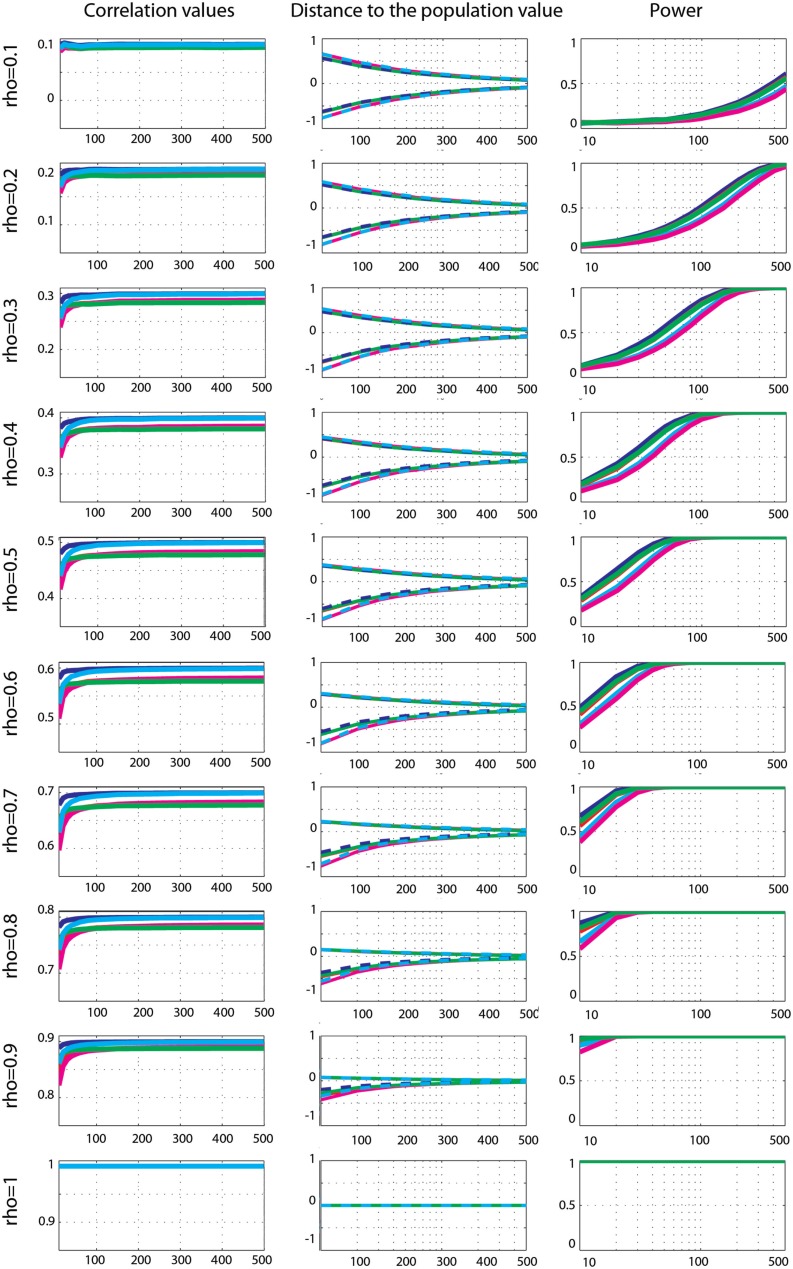
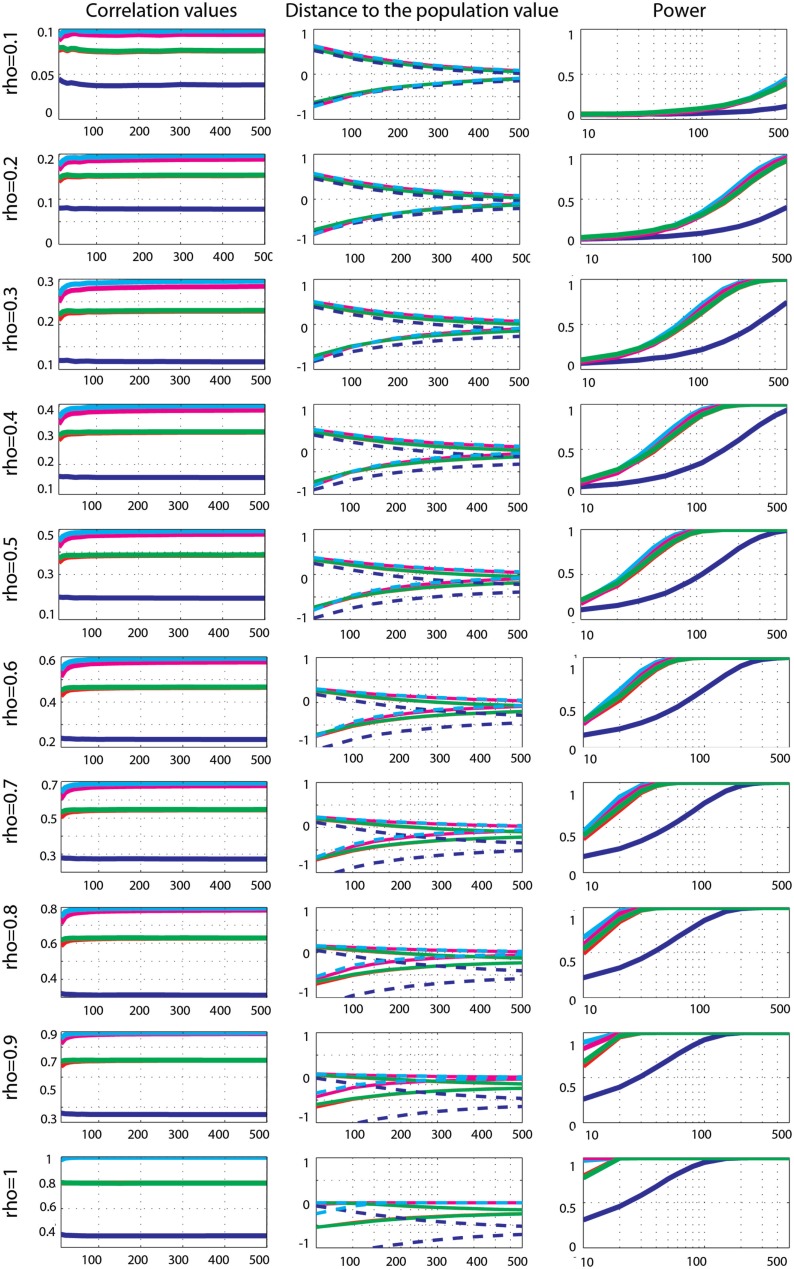
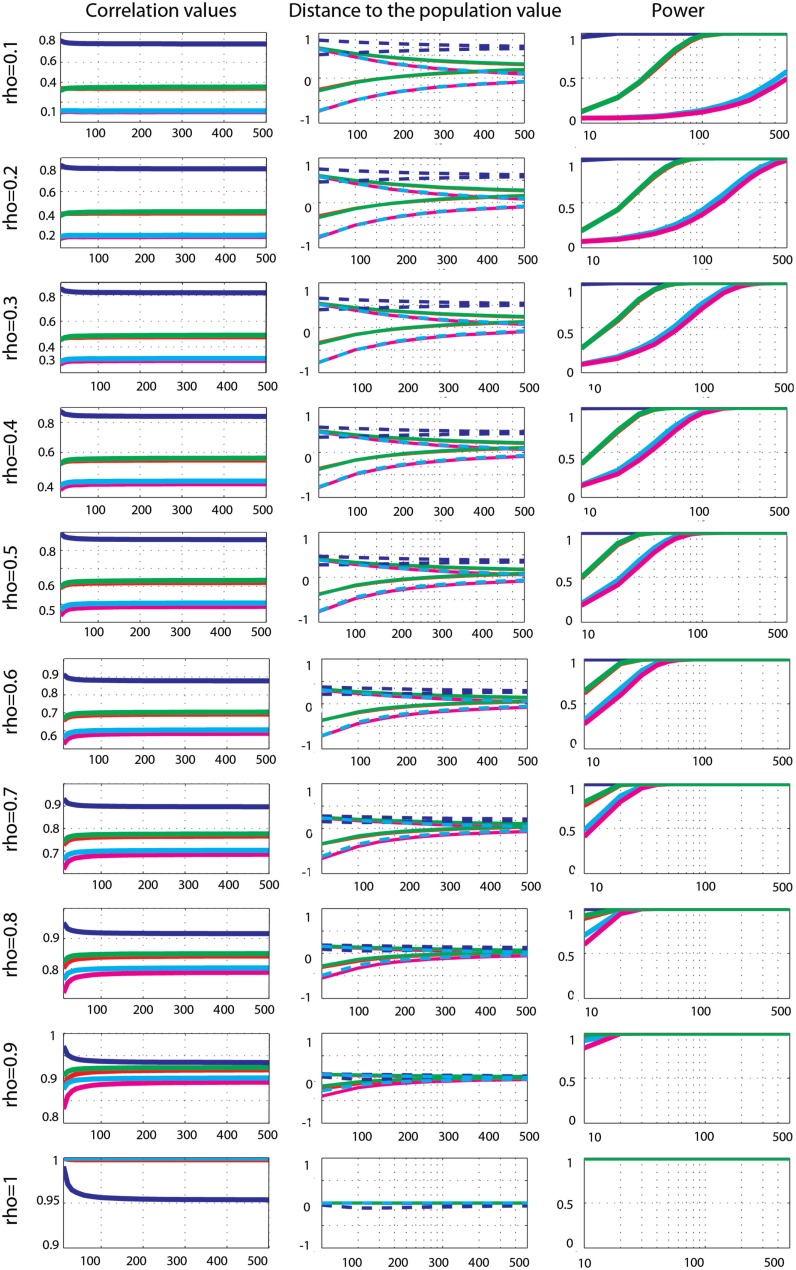
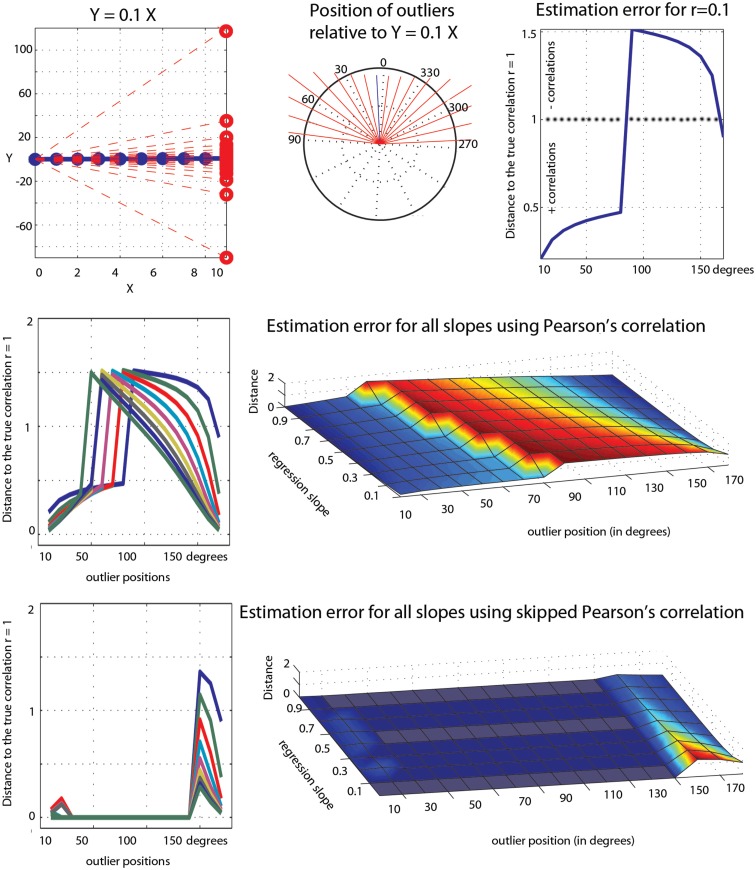
Pearson's correlation measures the strength of the association between two variables. The technique is, however, restricted to linear associations and is overly sensitive to outliers. Indeed, a single outlier can result in a highly inaccurate summary of the data. Yet, it remains the most commonly used measure of association in psychology research. Here we describe a free Matlab((R)) based toolbox (http://sourceforge.net/projects/robustcorrtool/) that computes robust measures of association between two or more random variables: the percentage-bend correlation and skipped-correlations. After illustrating how to use the toolbox, we show that robust methods, where outliers are down weighted or removed and accounted for in significance testing, provide better estimates of the true association with accurate false positive control and without loss of power. The different correlation methods were tested with normal data and normal data contaminated with marginal or bivariate outliers. We report estimates of effect size, false positive rate and power, and advise on which technique to use depending on the data at hand.
皮尔逊相关系数用于衡量两个变量之间的关联强度。然而,该技术仅限于线性关联,并且对异常值非常敏感。实际上,单个异常值可能会导致对数据的高度不准确总结。尽管如此,它仍然是心理学研究中最常用的关联度量方法。在这里,我们描述了一个免费的基于 Matlab((R))的工具箱(http://sourceforge.net/projects/robustcorrtool/),该工具箱可计算两个或多个随机变量之间的稳健关联度量:百分比弯曲相关系数和跳过相关系数。在说明了如何使用该工具箱之后,我们表明,稳健方法通过对异常值进行降权或去除,并在显著性检验中进行考虑,可以提供更准确的真实关联估计,同时具有准确的假阳性控制,并且不会降低功效。我们使用正态数据和带有边缘或双变量异常值的正态数据测试了不同的相关方法。我们报告了效应量、假阳性率和功效的估计值,并根据手头的数据建议使用哪种技术。