Department of Cell Biology, Institute for Molecular and Cellular Regulation, Gunma University, Maebashi, Japan.
PLoS One. 2013;8(1):e54500. doi: 10.1371/journal.pone.0054500. Epub 2013 Jan 15.
Sweet taste receptor is expressed not only in taste buds but also in nongustatory organs such as enteroendocrine cells and pancreatic beta-cells, and may play more extensive physiological roles in energy metabolism. Here we examined the expression and function of the sweet taste receptor in 3T3-L1 cells.
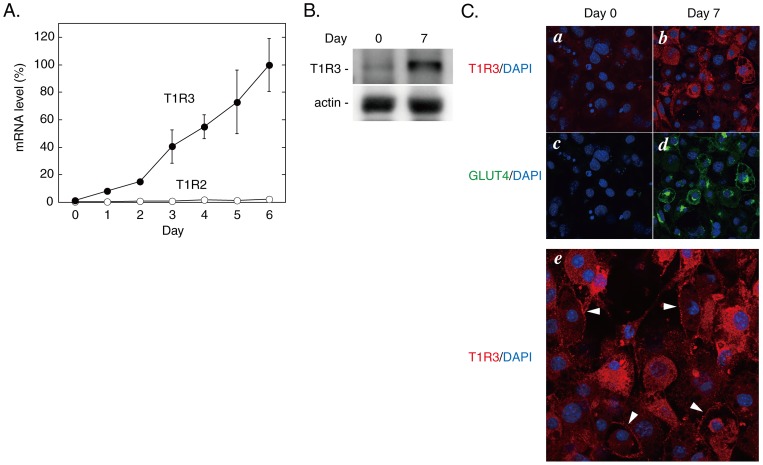
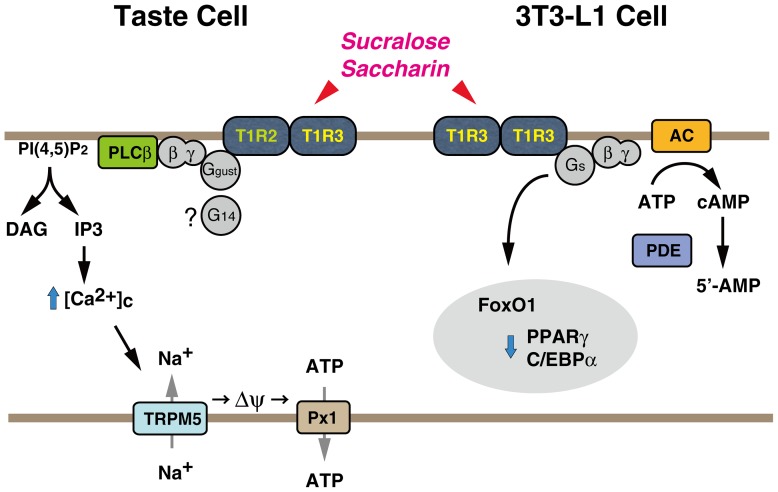
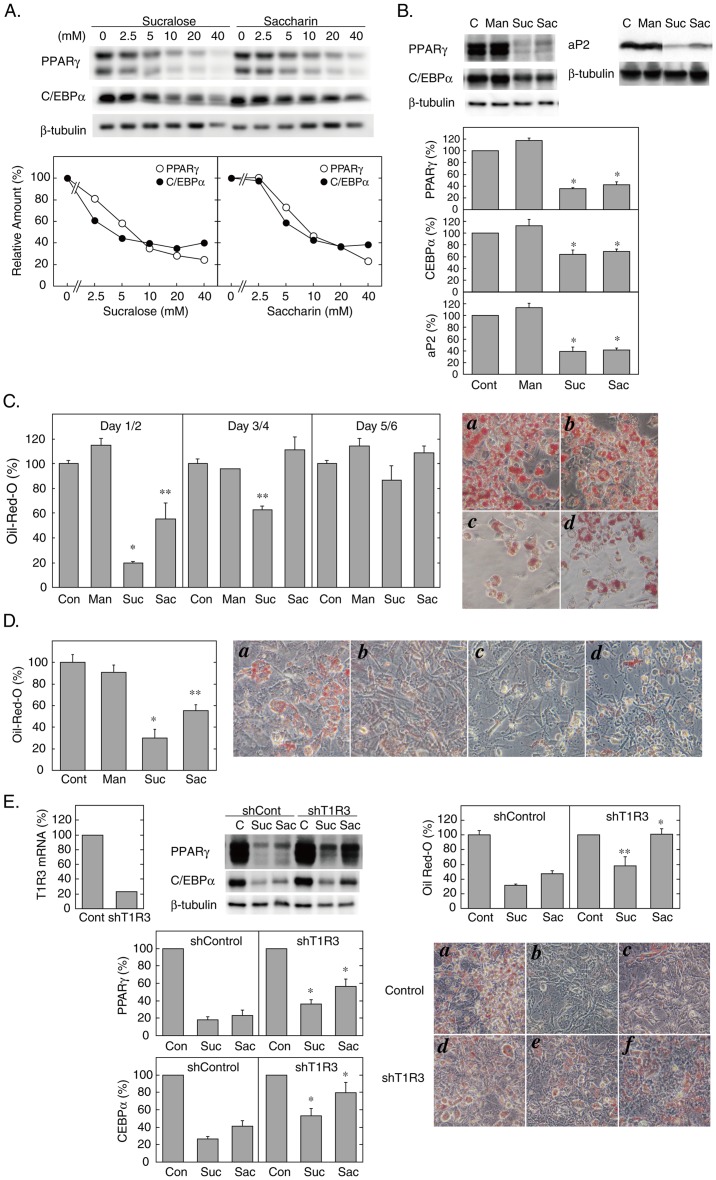
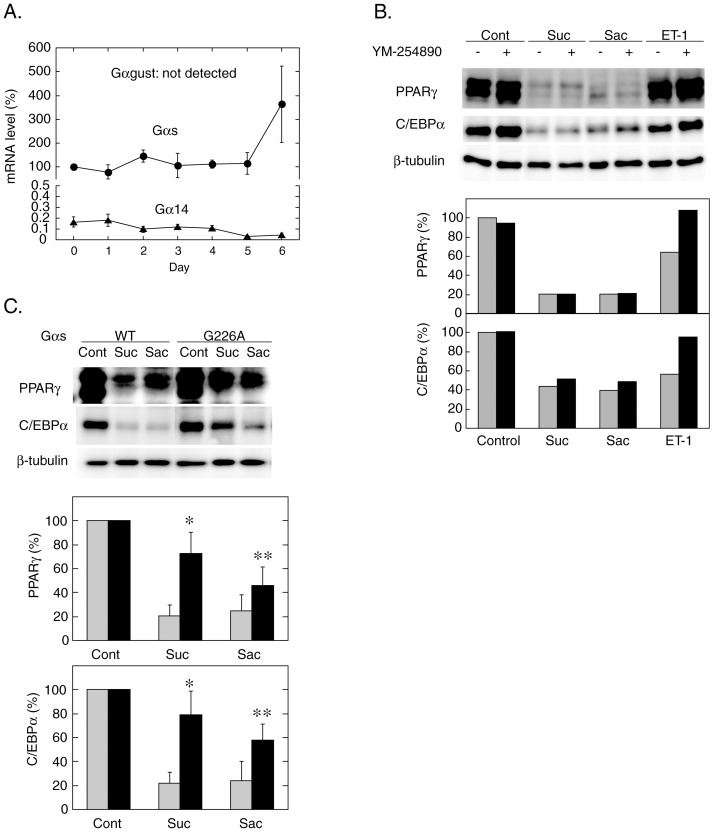
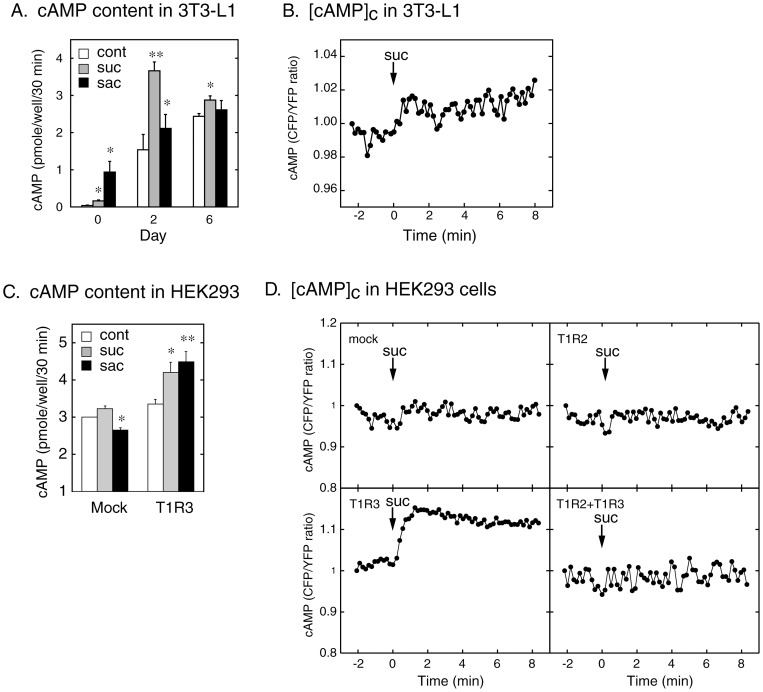
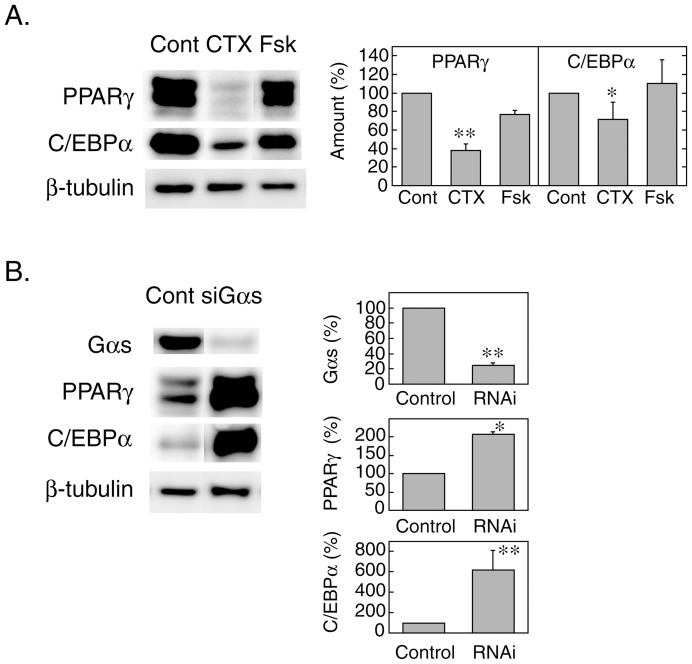
METHODOLOGY/PRINCIPAL FINDINGS: In undifferentiated preadipocytes, both T1R2 and T1R3 were expressed very weakly, whereas the expression of T1R3 but not T1R2 was markedly up-regulated upon induction of differentiation (by 83.0 and 3.8-fold, respectively at Day 6). The α subunits of Gs (Gαs) and G14 (Gα14) but not gustducin were expressed throughout the differentiation process. The addition of sucralose or saccharin during the first 48 hours of differentiation considerably reduced the expression of peroxisome proliferator activated receptor γ (PPARγ and CCAAT/enhancer-binding protein α (C/EBPα at Day 2, the expression of aP2 at Day 4 and triglyceride accumulation at Day 6. These anti-adipogenic effects were attenuated by short hairpin RNA-mediated gene-silencing of T1R3. In addition, overexpression of the dominant-negative mutant of Gαs but not YM-254890, an inhibitor of Gα14, impeded the effects of sweeteners, suggesting a possible coupling of Gs with the putative sweet taste-sensing receptor. In agreement, sucralose and saccharin increased the cyclic AMP concentration in differentiating 3T3-L1 cells and also in HEK293 cells heterologously expressing T1R3. Furthermore, the anti-adipogenic effects of sweeteners were mimicked by Gs activation with cholera toxin but not by adenylate cyclase activation with forskolin, whereas small interfering RNA-mediated knockdown of Gαs had the opposite effects.
3T3-L1 cells express a functional sweet taste-sensing receptor presumably as a T1R3 homomer, which mediates the anti-adipogenic signal by a Gs-dependent but cAMP-independent mechanism.
甜味受体不仅在味蕾中表达,也在肠内分泌细胞和胰腺β细胞等非味觉器官中表达,可能在能量代谢中发挥更广泛的生理作用。在这里,我们研究了甜味受体在 3T3-L1 细胞中的表达和功能。
方法/主要发现:在未分化的前脂肪细胞中,T1R2 和 T1R3 的表达都非常弱,而 T1R3 的表达(在第 6 天分别上调了 83.0 和 3.8 倍)在诱导分化时显著上调。G 蛋白的α亚基(Gs)和 G14(Gα14)但不是 gustducin 在整个分化过程中都有表达。在分化的前 48 小时添加蔗糖素或糖精会大大降低过氧化物酶体增殖物激活受体γ(PPARγ)和 CCAAT/增强子结合蛋白α(C/EBPα 在第 2 天的表达,aP2 在第 4 天的表达和第 6 天的甘油三酯积累。这些抗脂肪生成作用通过 T1R3 的短发夹 RNA 介导的基因沉默而减弱。此外,过表达显性失活突变体的 Gs 但不是 Gα14 的抑制剂 YM-254890 会阻碍甜味剂的作用,表明 Gs 可能与假定的甜味受体偶联。同样,蔗糖素和糖精增加了分化中的 3T3-L1 细胞和异源表达 T1R3 的 HEK293 细胞中环腺苷酸的浓度。此外,霍乱毒素激活 Gs 模拟甜味剂的抗脂肪生成作用,但福斯可林激活腺苷酸环化酶则没有,而 Gαs 的小干扰 RNA 介导的敲低则有相反的效果。
3T3-L1 细胞表达一种功能性的甜味受体,推测为 T1R3 同源二聚体,通过 Gs 依赖性但 cAMP 非依赖性机制介导抗脂肪生成信号。