School of Biological Sciences, MBC, Queen's University Belfast, Belfast BT9 7BL, Northern Ireland, UK.
Microb Biotechnol. 2013 Sep;6(5):453-92. doi: 10.1111/1751-7915.12027. Epub 2013 Jan 22.
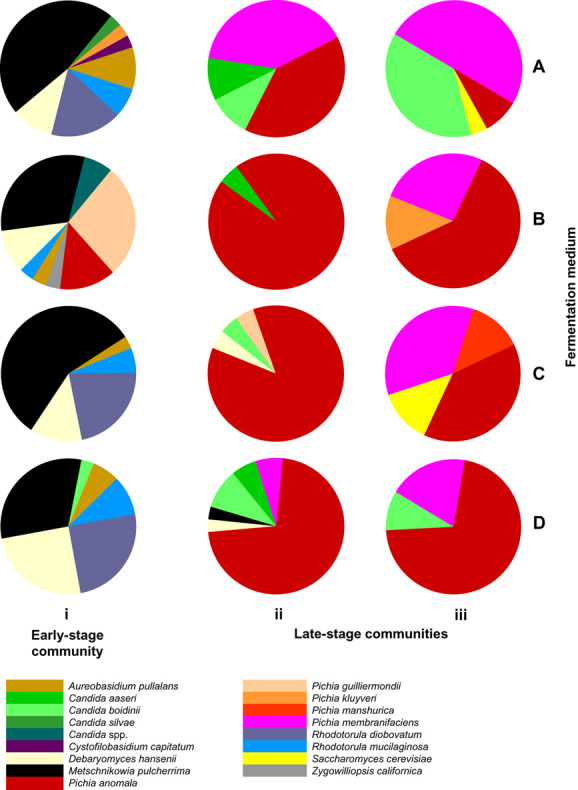
Competition between microbial species is a product of, yet can lead to a reduction in, the microbial diversity of specific habitats. Microbial habitats can resemble ecological battlefields where microbial cells struggle to dominate and/or annihilate each other and we explore the hypothesis that (like plant weeds) some microbes are genetically hard-wired to behave in a vigorous and ecologically aggressive manner. These 'microbial weeds' are able to dominate the communities that develop in fertile but uncolonized--or at least partially vacant--habitats via traits enabling them to out-grow competitors; robust tolerances to habitat-relevant stress parameters and highly efficient energy-generation systems; avoidance of or resistance to viral infection, predation and grazers; potent antimicrobial systems; and exceptional abilities to sequester and store resources. In addition, those associated with nutritionally complex habitats are extraordinarily versatile in their utilization of diverse substrates. Weed species typically deploy multiple types of antimicrobial including toxins; volatile organic compounds that act as either hydrophobic or highly chaotropic stressors; biosurfactants; organic acids; and moderately chaotropic solutes that are produced in bulk quantities (e.g. acetone, ethanol). Whereas ability to dominate communities is habitat-specific we suggest that some microbial species are archetypal weeds including generalists such as: Pichia anomala, Acinetobacter spp. and Pseudomonas putida; specialists such as Dunaliella salina, Saccharomyces cerevisiae, Lactobacillus spp. and other lactic acid bacteria; freshwater autotrophs Gonyostomum semen and Microcystis aeruginosa; obligate anaerobes such as Clostridium acetobutylicum; facultative pathogens such as Rhodotorula mucilaginosa, Pantoea ananatis and Pseudomonas aeruginosa; and other extremotolerant and extremophilic microbes such as Aspergillus spp., Salinibacter ruber and Haloquadratum walsbyi. Some microbes, such as Escherichia coli, Mycobacterium smegmatis and Pseudoxylaria spp., exhibit characteristics of both weed and non-weed species. We propose that the concept of nonweeds represents a 'dustbin' group that includes species such as Synodropsis spp., Polypaecilum pisce, Metschnikowia orientalis, Salmonella spp., and Caulobacter crescentus. We show that microbial weeds are conceptually distinct from plant weeds, microbial copiotrophs, r-strategists, and other ecophysiological groups of microorganism. Microbial weed species are unlikely to emerge from stationary-phase or other types of closed communities; it is open habitats that select for weed phenotypes. Specific characteristics that are common to diverse types of open habitat are identified, and implications of weed biology and open-habitat ecology are discussed in the context of further studies needed in the fields of environmental and applied microbiology.
物种间的竞争是特定生境中微生物多样性减少的产物。微生物生境可以类比为生态战场,微生物细胞在其中相互竞争并试图主宰或消灭对方。我们提出了一个假设,即有些微生物(就像植物杂草一样)在基因上被硬布线设计为以积极和具有生态攻击性的方式表现。这些“微生物杂草”能够通过使它们能够超越竞争对手的生长;对与栖息地相关的应激参数的稳健耐受性和高效的能量产生系统;避免或抵抗病毒感染、捕食和草食动物;强大的抗菌系统;以及非凡的隔离和储存资源的能力,从而在肥沃但未被殖民化的或至少部分空置的生境中所形成的群落中占据主导地位。此外,那些与营养复杂的栖息地相关的微生物在利用多样化的基质方面具有非凡的多功能性。杂草物种通常会部署多种类型的抗菌物质,包括毒素;作为疏水性或高度变构应激物的挥发性有机化合物;生物表面活性剂;有机酸;以及大量产生的中度变构溶质(例如丙酮、乙醇)。虽然主导群落的能力是特定于栖息地的,但我们认为某些微生物物种是典型的杂草,包括:异常毕赤酵母、不动杆菌属和恶臭假单胞菌;盐生杜氏藻、酿酒酵母、乳杆菌属和其他乳酸菌;淡水自养生物 Gonyostomum semen 和铜绿微囊藻;专性厌氧菌如丙酮丁醇梭菌;兼性病原菌如粘红酵母、成团泛菌和铜绿假单胞菌;以及其他极端耐受和极端微生物,如曲霉属、盐红杆菌和 Haloquadratum walsbyi。有些微生物,如大肠杆菌、耻垢分枝杆菌和拟青霉属,表现出杂草和非杂草物种的特征。我们提出,非杂草物种的概念代表了一个“垃圾桶”组,其中包括 Synodropsis spp.、Polypaecilum pisce、东方异枝霉、沙门氏菌属和新月柄杆菌等物种。我们表明,微生物杂草在概念上与植物杂草、微生物富营养型、r-策略者和其他微生物生态生理群不同。微生物杂草物种不太可能从静止期或其他类型的封闭群落中出现;只有开放的生境才会选择杂草表型。我们确定了各种开放生境共有的特定特征,并讨论了杂草生物学和开放生境生态学在环境和应用微生物学领域进一步研究中的意义。