Leibniz Institute for Agricultural Engineering and Bioeconomy (ATB), Max-Eyth Allee 100, 14469, Potsdam, Germany.
Institute for Biochemistry and Biology, University of Potsdam, 14476, Potsdam, Germany.
BMC Microbiol. 2024 Oct 19;24(1):417. doi: 10.1186/s12866-024-03574-0.
While substantial research has explored rhizosphere and phyllosphere microbiomes, knowledge on flower microbiome, particularly in wild plants remains limited. This study explores into the diversity, abundance, and composition of bacterial and fungal communities on leaves and flowers of wild flowering plants in their natural alpine habitat, considering the influence of environmental factors.
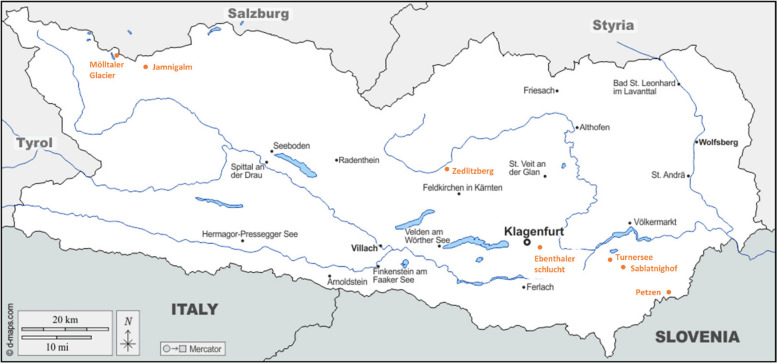
We investigated 50 wild flowering plants representing 22 families across seven locations in Austria. Sampling sites encompassed varied soil types (carbonate/silicate) and altitudes (450-2760 m). Amplicon sequencing to characterize bacterial and fungal communities and quantitative PCR to assess microbial abundance was applied, and the influence of biotic and abiotic factors assessed.
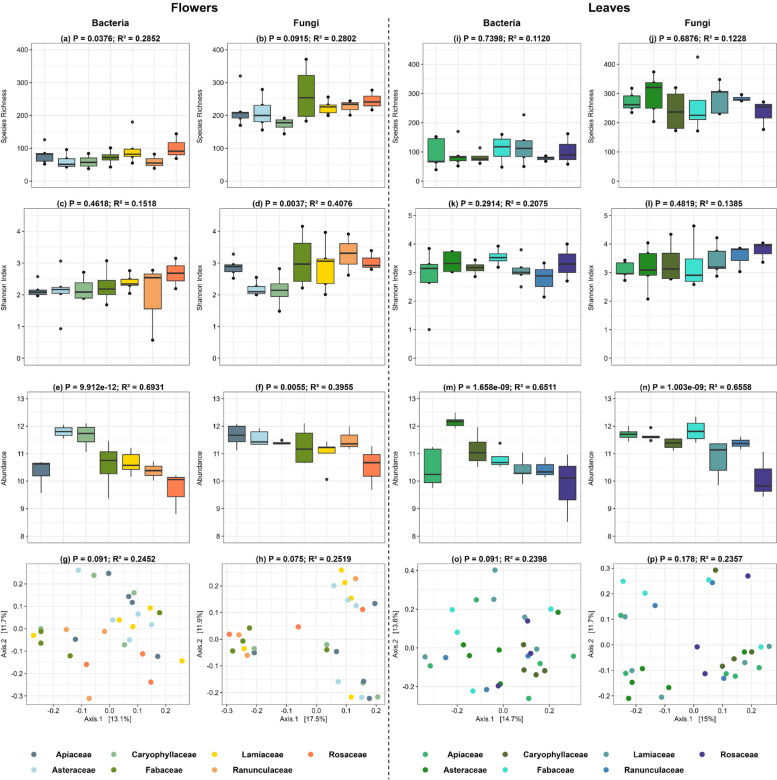
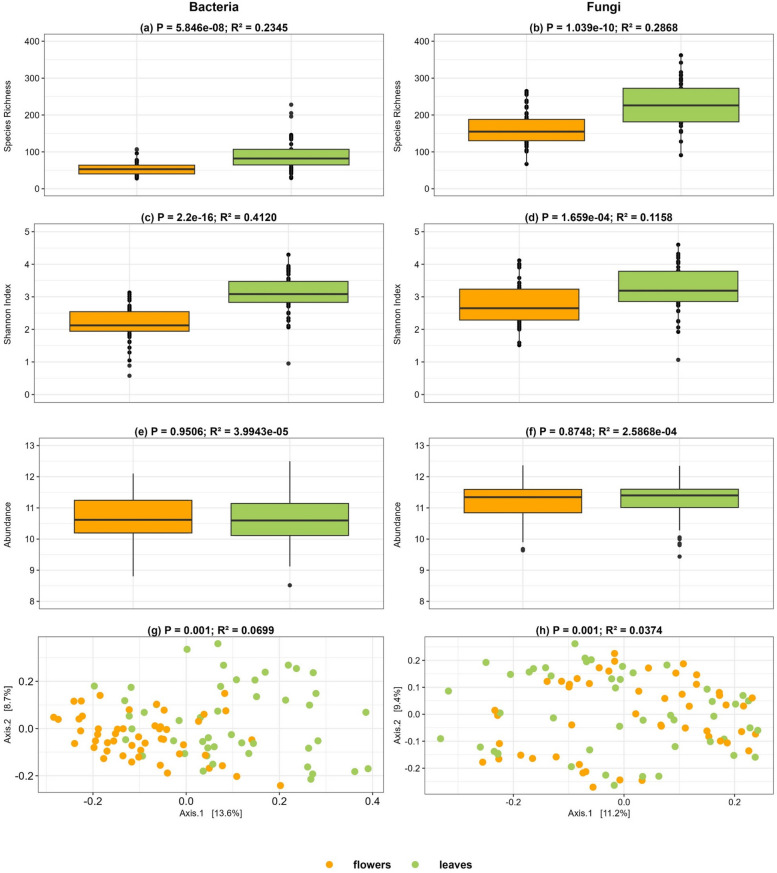
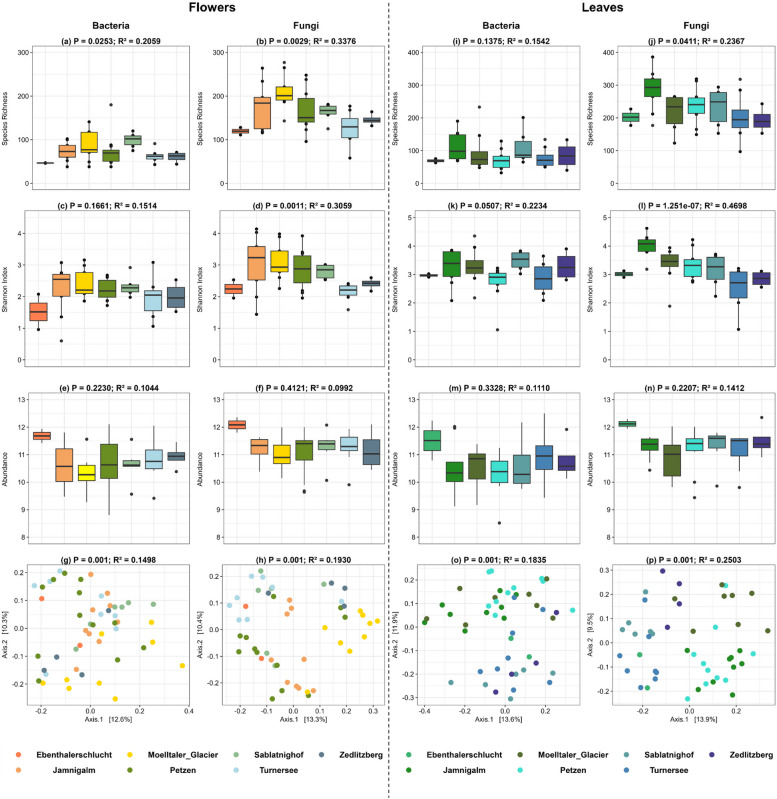
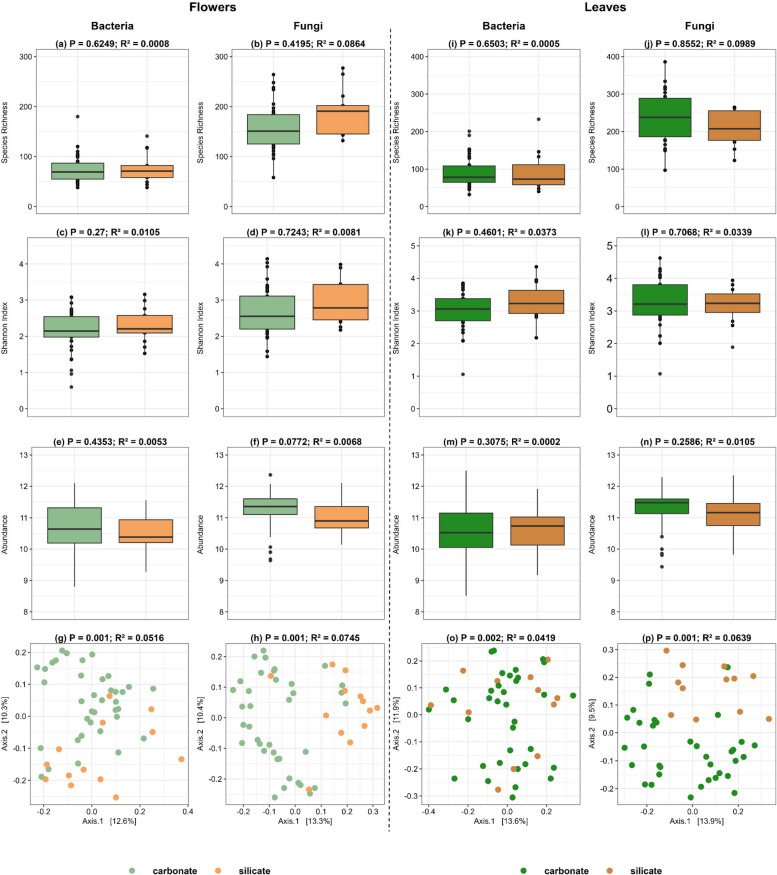
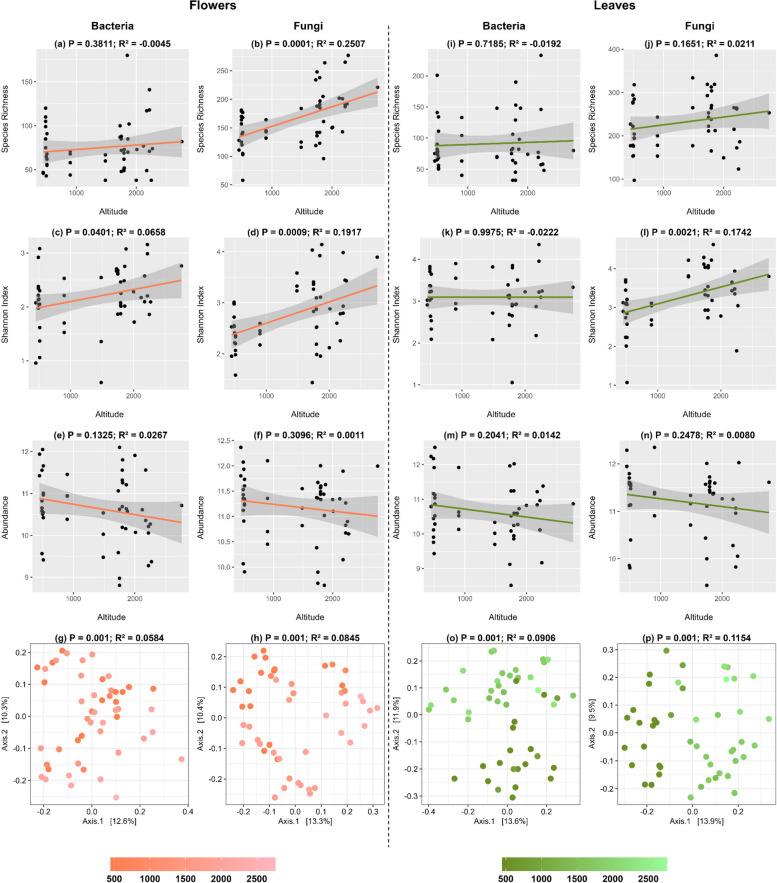
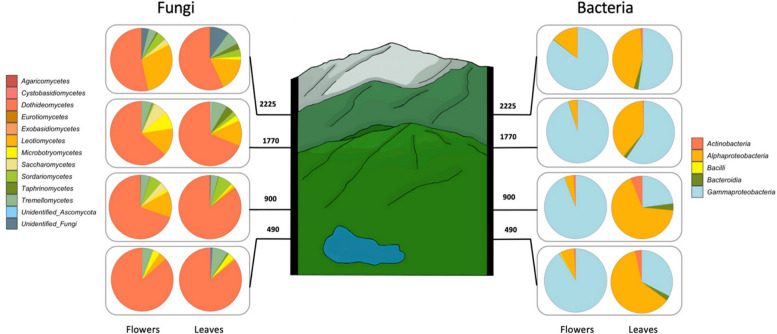
Our study revealed distinct bacterial and fungal communities on leaves and flowers, with higher diversity and richness on leaves (228 fungal and 91 bacterial ASVs) than on flowers (163 fungal and 55 bacterial ASVs). In addition, Gammaproteobacteria on flowers and Alphaproteobacteria on leaves suggests niche specialization for plant compartments. Location significantly shaped both community composition and fungal diversity on both plant parts. Notably, soil type influenced community composition but not diversity. Altitude was associated with increased fungal species diversity on leaves and flowers. Furthermore, significant effects of plant family identity emerged within a subset of seven families, impacting bacterial and fungal abundance, fungal Shannon diversity, and bacterial species richness, particularly on flowers.
This study provides novel insights into the specific microbiome of wild flowering plants, highlighting adaptations to local environments and plant-microbe coevolution. The observed specificity indicates a potential role in plant health and resilience, which is crucial for predicting how microbiomes respond to changing environments, ultimately aiding in the conservation of natural ecosystems facing climate change pressures.
虽然大量研究已经探索了根际和叶际微生物组,但对花微生物组的了解,尤其是在野生植物中,仍然有限。本研究探讨了在自然高山生境中,考虑到环境因素的影响,野生开花植物叶片和花朵上细菌和真菌群落的多样性、丰度和组成。
我们调查了奥地利 7 个地点的 22 个科的 50 种野生开花植物。采样地点包括不同的土壤类型(碳酸盐/硅酸盐)和海拔(450-2760 米)。应用扩增子测序来描述细菌和真菌群落,并用定量 PCR 来评估微生物丰度,并评估了生物和非生物因素的影响。
我们的研究揭示了叶片和花朵上存在明显不同的细菌和真菌群落,叶片上的多样性和丰富度(228 种真菌和 91 种细菌 ASVs)高于花朵(163 种真菌和 55 种细菌 ASVs)。此外,花朵上的 Gammaproteobacteria 和叶片上的 Alphaproteobacteria 表明了对植物部位的生态位特化。位置显著影响了两个植物部位的群落组成和真菌多样性。值得注意的是,土壤类型影响了群落组成但不影响多样性。海拔与叶片和花朵上的真菌物种多样性增加有关。此外,在七个科的一个子集内,植物科的身份出现了显著的影响,影响了细菌和真菌的丰度、真菌 Shannon 多样性和细菌物种丰富度,特别是在花朵上。
本研究为野生开花植物的特定微生物组提供了新的见解,突出了对当地环境和植物-微生物共同进化的适应。观察到的特异性表明,它可能在植物健康和恢复力方面发挥作用,这对于预测微生物组如何应对不断变化的环境至关重要,最终有助于保护面临气候变化压力的自然生态系统。