Institute for Neurodegenerative Diseases, University of California San Francisco, San Francisco, California, USA.
Mol Ther Nucleic Acids. 2012 Feb 7;1(2):e9. doi: 10.1038/mtna.2011.6.
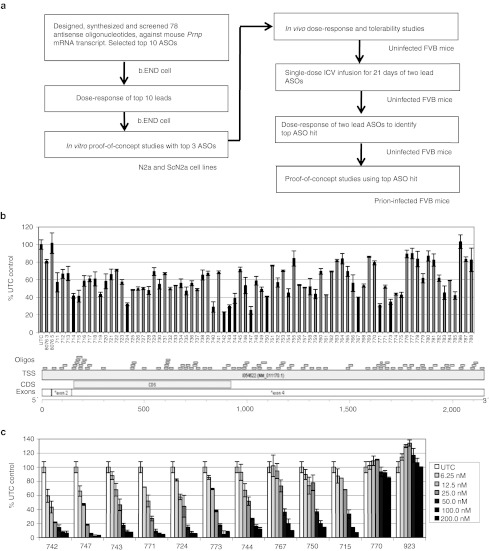
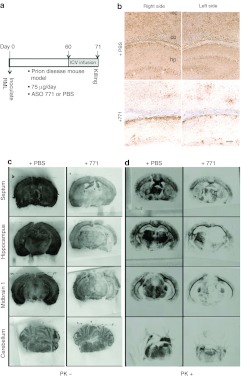
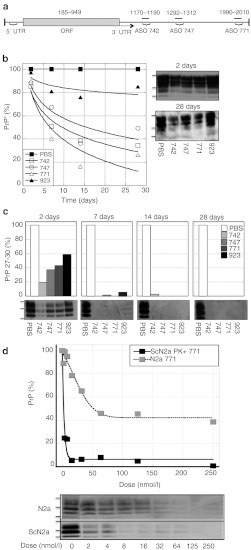
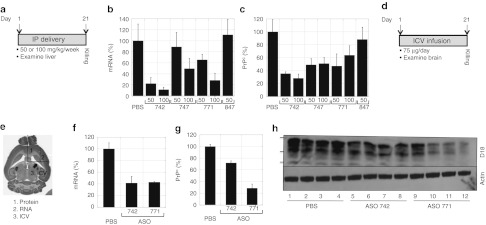
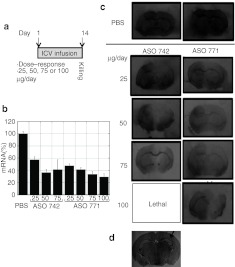
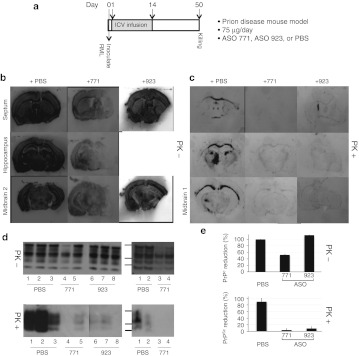
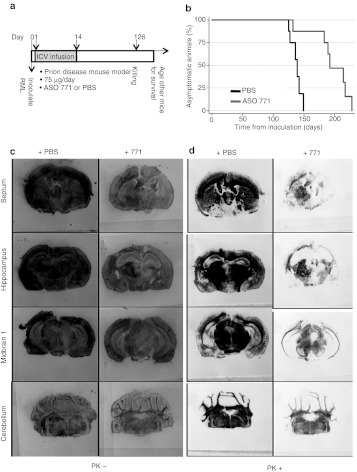
Mice deficient for the cellular prion protein (PrP(C)) do not develop prion disease; accordingly, gene-based strategies to diminish PrP(C) expression are of interest. We synthesized a series of chemically modified antisense oligonucleotides (ASOs) targeted against mouse Prnp messenger RNA (mRNA) and identified those that were most effective in decreasing PrP(C) expression. Those ASOs were also evaluated in scrapie-infected cultured cells (ScN2a) for their efficacy in diminishing the levels of the disease-causing prion protein (PrP(Sc)). When the optimal ASO was infused intracerebrally into FVB mice over a 14-day period beginning 1 day after infection with the Rocky Mountain Laboratory (RML) strain of mouse prions, a prolongation of the incubation period of almost 2 months was observed. Whether ASOs can be used to develop an effective therapy for patients dying of Creutzfeldt-Jakob disease remains to be established.
缺乏细胞朊病毒蛋白 (PrP(C)) 的小鼠不会患上朊病毒病;因此,基于基因的降低 PrP(C) 表达的策略引起了人们的兴趣。我们合成了一系列针对小鼠 Prnp 信使 RNA (mRNA) 的化学修饰反义寡核苷酸 (ASO),并确定了那些最有效地降低 PrP(C) 表达的 ASO。这些 ASO 还在感染朊病毒的培养细胞 (ScN2a) 中进行了评估,以评估它们降低致病朊病毒蛋白 (PrP(Sc)) 水平的效果。当最佳 ASO 在感染罗克山实验室 (RML) 株小鼠朊病毒后 1 天开始,通过脑内注射,在 14 天内连续注入 FVB 小鼠时,观察到潜伏期延长了近 2 个月。ASO 是否可用于开发治疗因克雅氏病而死亡的患者的有效疗法,还有待确定。