Department of Internal Medicine, Pusan National University School of Medicine, Yangsan, Korea.
Korean J Intern Med. 2013 Jan;28(1):8-18. doi: 10.3904/kjim.2013.28.1.8. Epub 2012 Dec 28.
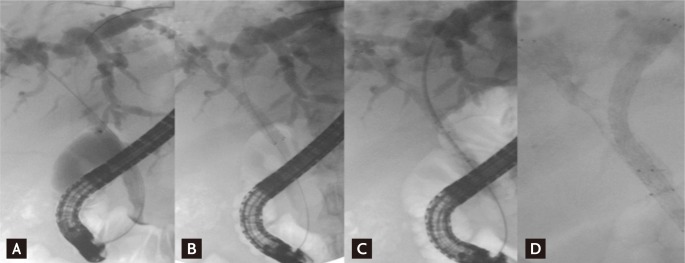
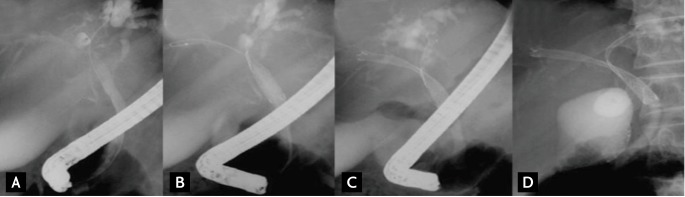
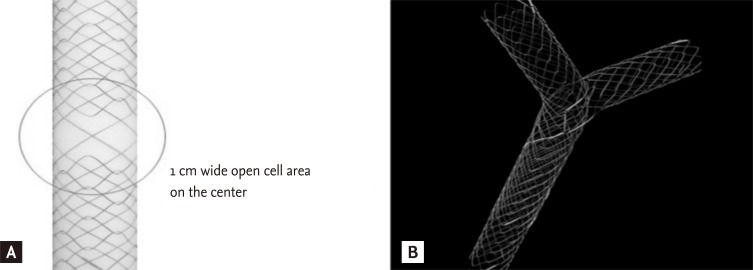
Hilar cholangiocarcinoma has an extremely poor prognosis and is usually diagnosed at an advanced stage. Palliative management plays an important role in the treatment of patients with inoperable hilar cholangiocarcinoma. Surgical, percutaneous, and endoscopic biliary drainage are three modalities available to resolve obstructive jaundice. Plastic stents were widely used in the past; however, self-expanding metal stents (SEMS) have become popular recently due to their long patency and reduced risk of side branch obstruction, and SEMS are now the accepted treatment of choice for hilar cholangiocarcinoma. Bilateral drainage provides more normal and physiological biliary flow through the biliary ductal system than that of unilateral drainage. Unilateral drainage was preferred until recently because of its technical simplicity. But, with advancements in technology, bilateral drainage now achieves a high success rate and is the preferred treatment modality in many centers. However, the choice of unilateral or bilateral drainage is still controversial, and more studies are needed. This review focuses on the endoscopic method and discusses stent materials and types of procedures for patients with a hilar cholangiocarcinoma.
肝门部胆管癌预后极差,通常在晚期诊断。对于不可切除的肝门部胆管癌患者,姑息治疗起着重要作用。解决梗阻性黄疸有三种方法,包括手术、经皮和内镜胆道引流。过去广泛使用塑料支架,但由于自膨式金属支架 (SEMS) 具有更长的通畅时间和减少侧支阻塞的风险,因此最近越来越受欢迎,SEMS 现已成为肝门部胆管癌的公认治疗选择。双侧引流通过胆管系统提供更正常和生理的胆汁流动,优于单侧引流。直到最近,由于其技术简单,单侧引流仍被优先选择。但是,随着技术的进步,双侧引流现在可以实现高成功率,并且在许多中心成为首选的治疗方式。然而,单侧或双侧引流的选择仍然存在争议,需要更多的研究。这篇综述重点介绍了内镜方法,并讨论了支架材料和手术类型,适用于肝门部胆管癌患者。