Department of Internal Medicine, Complejo Hospitalario Universitario, Santiago de Compostela, Spain.
PLoS One. 2013;8(1):e54600. doi: 10.1371/journal.pone.0054600. Epub 2013 Jan 22.
Assessment of serum concentration of lipopolysaccharide (LPS)-binding protein (LBP) has been suggested as a useful biomarker to indicate activation of innate immune responses to microbial products. We investigated LBP concentrations and associations with demographics, lifestyle factors, and common metabolic abnormalities in adults. We also examined if LBP concentrations were associated with common polymorphisms in genes coding for LBP (rs2232618), CD14 (rs2569190), and TLR4 (rs4986790), the molecules responsible for the innate immune response to LPS, or serum levels of soluble CD14 (sCD14) and proinflammatory cytokines.
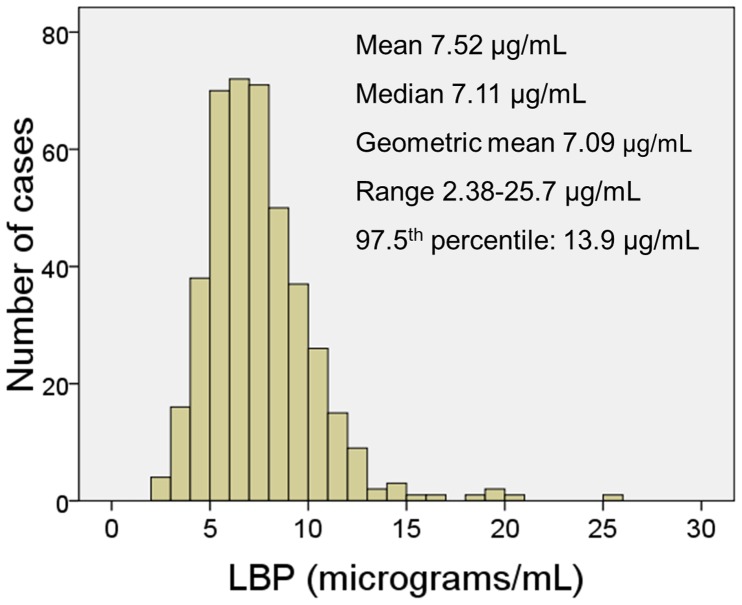
Serum LBP was measured with a commercial immunoassay in a random sample of the adult population (n = 420, 45% males, age 18-92 years) from a single municipality.
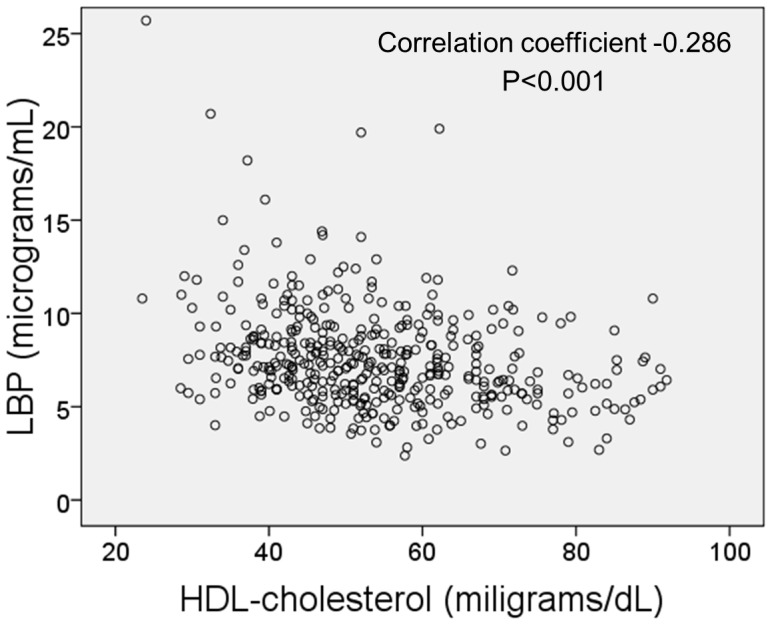
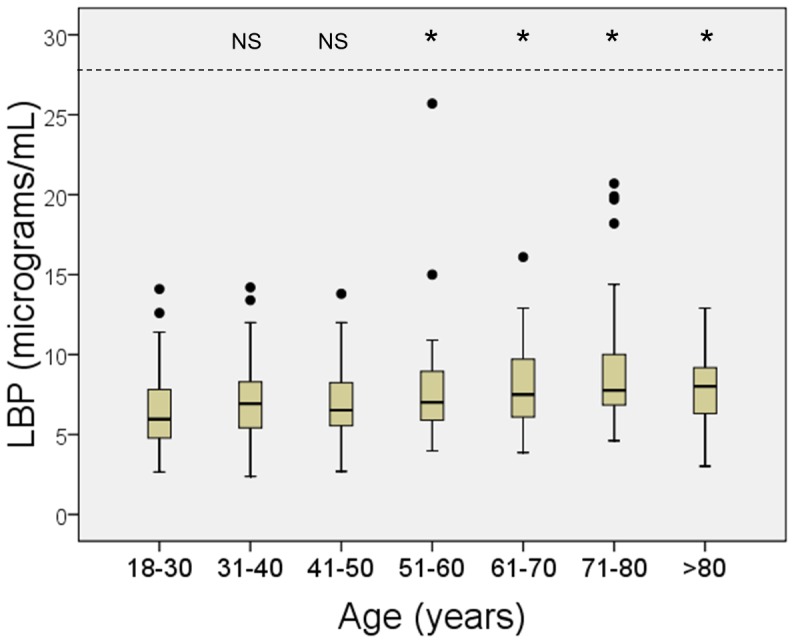
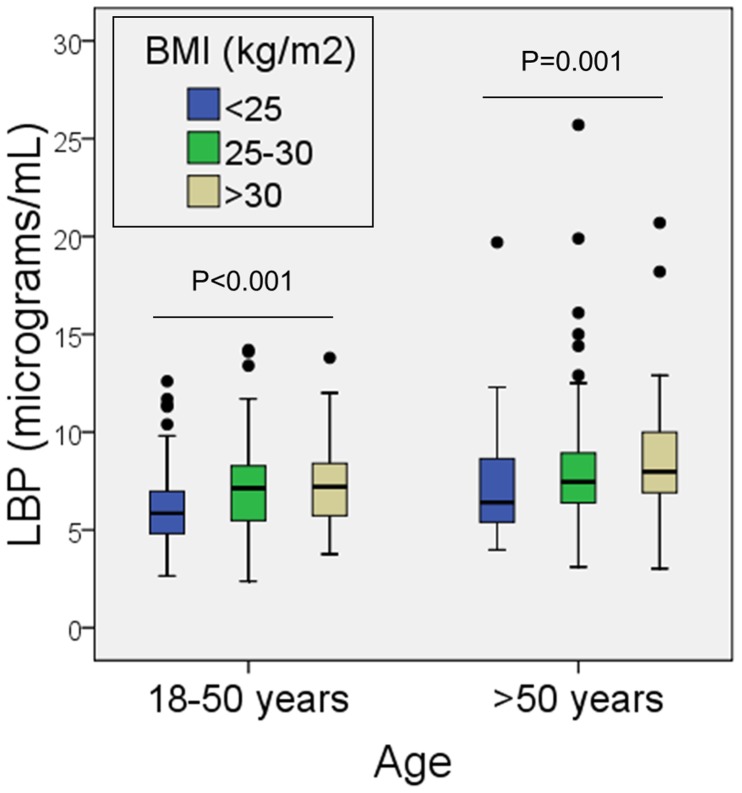
Serum LBP concentrations increased with age (P<0.001) and were higher in individuals who were overweight or obese than in normal-weight individuals (P<0.001). Similarly, LBP concentrations were higher in individuals with metabolic syndrome than in individuals without it (P<0.001). Among metabolic syndrome components, LBP concentrations were independently associated with abdominal obesity (P = 0.002) and low concentrations of HDL-cholesterol (P<0.001). Serum LBP concentrations tended to be independently associated with smoking (P = 0.05), but not with alcohol consumption. Likewise, there was not significant association between LBP concentrations and gene polymorphisms. Concentrations of LBP significantly correlated with serum levels of proinflammatory cytokines (IL-6 and IL-8), sCD14, and with liver enzymes.
Serum LBP concentrations increased with age. Overweight, obesity, and having metabolic syndrome (particularly, low HDL cholesterol levels) were associated with higher LBP concentrations. These findings are consistent with microbial exposure playing a role in these inflammatory, metabolic abnormalities.
脂多糖结合蛋白(LBP)的血清浓度评估已被认为是一种有用的生物标志物,可指示对微生物产物的固有免疫反应的激活。我们研究了 LBP 浓度,并将其与成年人的人口统计学、生活方式因素和常见代谢异常相关联。我们还检查了 LBP 浓度是否与负责 LPS 固有免疫反应的 LBP(rs2232618)、CD14(rs2569190)和 TLR4(rs4986790)基因编码的常见多态性或血清可溶性 CD14(sCD14)和促炎细胞因子相关。
我们在来自一个单一自治市的成年人群体(n=420,45%为男性,年龄 18-92 岁)的随机样本中使用商业免疫测定法测量血清 LBP。
血清 LBP 浓度随年龄增加而增加(P<0.001),且超重或肥胖个体高于正常体重个体(P<0.001)。同样,患有代谢综合征的个体的 LBP 浓度高于没有代谢综合征的个体(P<0.001)。在代谢综合征的组成部分中,LBP 浓度与腹型肥胖(P=0.002)和高密度脂蛋白胆固醇浓度降低(P<0.001)独立相关。血清 LBP 浓度与吸烟(P=0.05)呈独立趋势相关,但与饮酒无关。同样,LBP 浓度与基因多态性之间没有显著相关性。LBP 浓度与促炎细胞因子(IL-6 和 IL-8)、sCD14 以及肝酶的血清水平显著相关。
血清 LBP 浓度随年龄增加而增加。超重、肥胖和患有代谢综合征(特别是低水平的高密度脂蛋白胆固醇)与更高的 LBP 浓度相关。这些发现与微生物暴露在这些炎症和代谢异常中发挥作用一致。