Department of Anesthesiology, Washington University School of Medicine, Saint Louis, USA.
Clin Interv Aging. 2013;8:37-46. doi: 10.2147/CIA.S30165. Epub 2013 Jan 16.
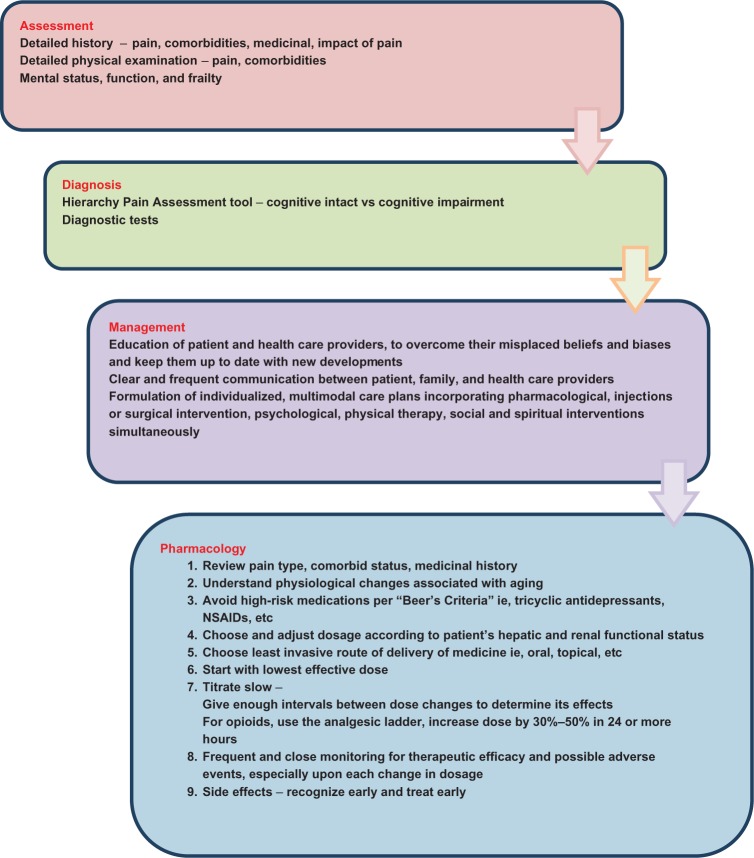
The elderly population is projected to make up 20% of the total United States population by the year 2030. In addition, epidemiological data suggests increasing prevalence of chronic pain and frailty with advancing age. Pain, being a subjective symptom, is challenging to manage effectively. This is more so in elderly populations with age-specific physiological changes that affect drug action and metabolism. Elderly patients are also more likely to have multiple chronic health pathologies, declining function, and frailty. The barriers present for patients, providers, and health systems also negatively impact efficient and effective pain control. These factors result in disproportionate utilization of health resources by the older population group. The scientific literature is lagging behind in age-specific studies for the elderly population. As a result, there is a lack of age-specific standardized management guidelines for various health problems, including chronic pain. Increasing efforts are now being directed to studies on pain control in the elderly. However, pain management remains inconsistent and suboptimal. This article is an attempt to suggest an informed, comprehensive guide to achieve effective pain control in the presence of these limitations.
到 2030 年,预计美国老年人口将占总人口的 20%。此外,流行病学数据表明,随着年龄的增长,慢性疼痛和虚弱的患病率也在增加。疼痛是一种主观症状,很难有效地进行管理。对于具有影响药物作用和代谢的特定年龄的生理变化的老年人群体来说,更是如此。老年患者也更有可能患有多种慢性健康疾病、功能下降和虚弱。患者、提供者和医疗系统面临的障碍也会对有效疼痛控制产生负面影响。这些因素导致老年人群体不成比例地利用卫生资源。老年人群体的特定年龄研究在科学文献中滞后。因此,针对各种健康问题(包括慢性疼痛),缺乏特定年龄的标准化管理指南。目前,越来越多的研究致力于老年人的疼痛控制。然而,疼痛管理仍然不一致和不理想。本文试图提出一个明智、全面的指南,以在存在这些限制的情况下实现有效的疼痛控制。