Department of Cell Biology, Key Laboratory of Cell Biology, Ministry of Public Health, and Key Laboratory of Medical Cell Biology, Ministry of Education, China Medical University, Shenyang, China.
PLoS One. 2013;8(1):e54510. doi: 10.1371/journal.pone.0054510. Epub 2013 Jan 23.
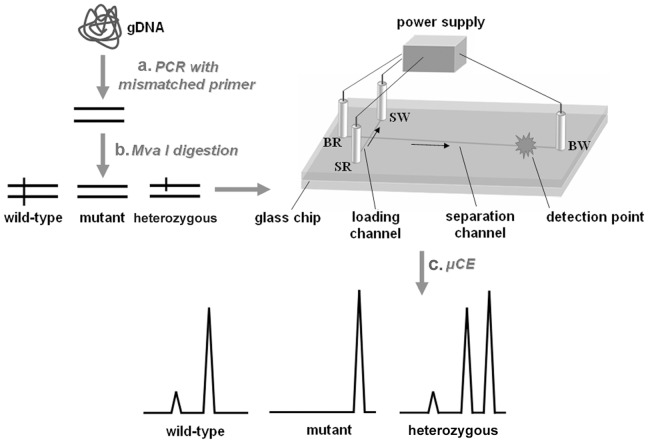
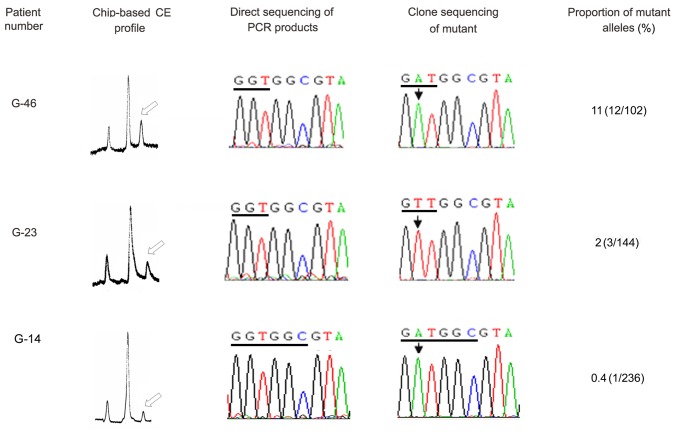
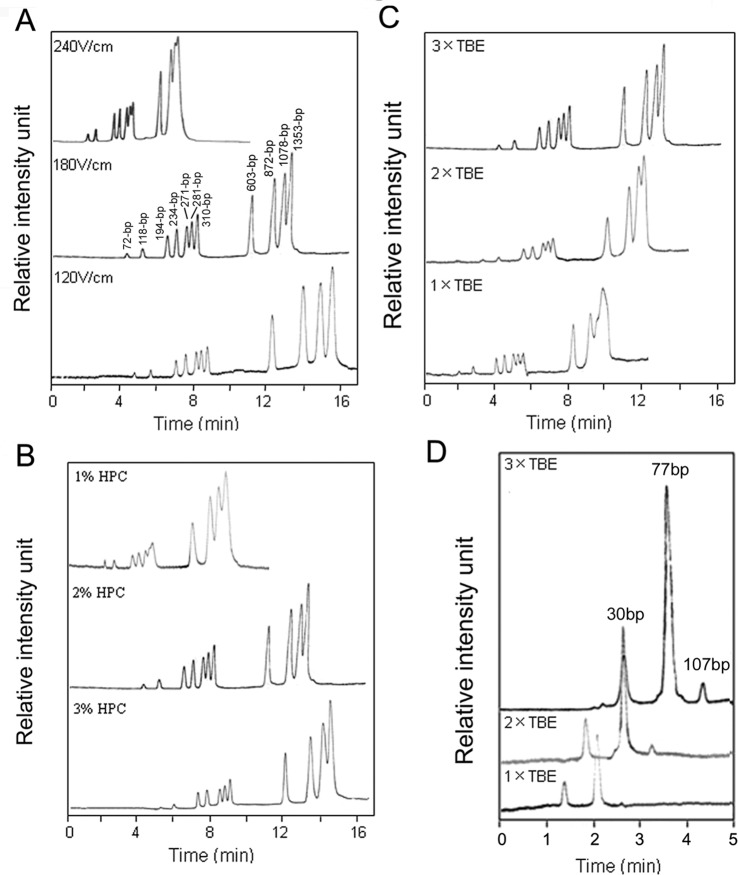
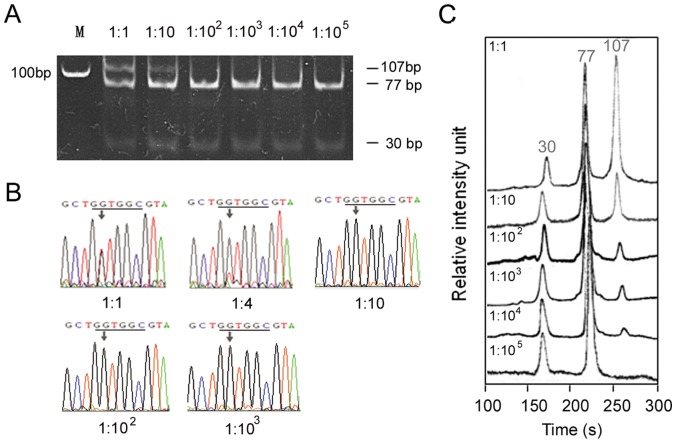
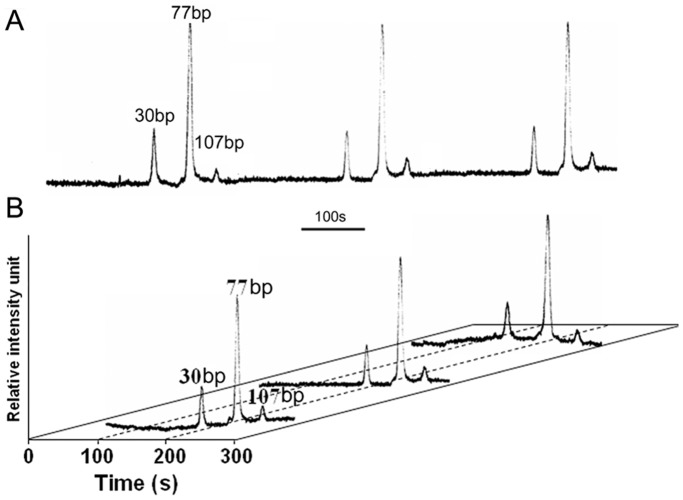
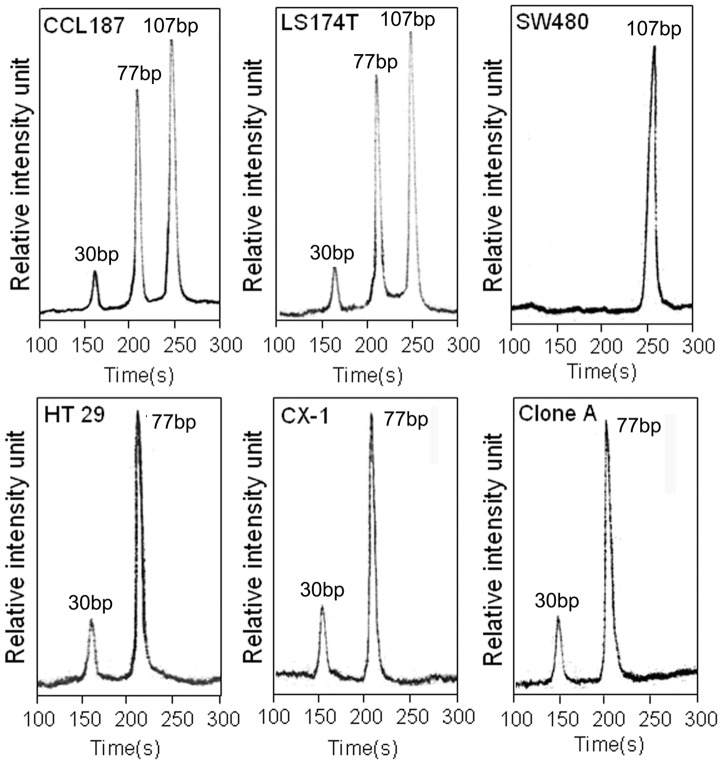
Constitutively active KRAS mutations have been found to be involved in various processes of cancer development, and render tumor cells resistant to EGFR-targeted therapies. Mutation detection methods with higher sensitivity will increase the possibility of choosing the correct individual therapy. Here, we established a highly sensitive and efficient microfluidic capillary electrophoresis-based restriction fragment length polymorphism (µCE-based RFLP) platform for low-abundance KRAS genotyping with the combination of µCE and RFLP techniques. By using our self-built sensitive laser induced fluorescence (LIF) detector and a new DNA intercalating dye YOYO-1, the separation conditions of µCE for ΦX174 HaeIII DNA marker were first optimized. Then, a Mav I digested 107-bp KRAS gene fragment was directly introduced into the microfluidic device and analyzed by µCE, in which field amplified sample stacking (FASS) technique was employed to obtain the enrichment of the RFLP digestion products and extremely improved the sensitivity. The accurate analysis of KRAS statuses in HT29, LS174T, CCL187, SW480, Clone A, and CX-1 colorectal cancer (CRC) cell lines by µCE-based RFLP were achieved in 5 min with picoliter-scale sample consumption, and as low as 0.01% of mutant KRAS could be identified from a large excess of wild-type genomic DNA (gDNA). In 98 paraffin-embedded CRC tissues, KRAS codon 12 mutations were discovered in 28 (28.6%), significantly higher than that obtained by direct sequencing (13, 13.3%). Clone sequencing confirmed these results and showed this system could detect at least 0.4% of the mutant KRAS in CRC tissue slides. Compared with direct sequencing, the new finding of the µCE-based RFLP platform was that KRAS mutations in codon 12 were correlated with the patient's age. In conclusion, we established a sensitive, fast, and cost-effective screening method for KRAS mutations, and successfully detected low-abundance KRAS mutations in clinical samples, which will allow provision of more precise individualized cancer therapy.
已发现组成性激活的 KRAS 突变参与了癌症发展的各个过程,并使肿瘤细胞对 EGFR 靶向治疗产生抗性。具有更高灵敏度的突变检测方法将增加选择正确个体化治疗的可能性。在这里,我们结合毛细管电泳和限制酶切片段长度多态性(RFLP)技术,建立了一种用于低丰度 KRAS 基因分型的高灵敏度和高效微流控毛细管电泳 RFLP(µCE-based RFLP)平台。通过使用我们自建的灵敏激光诱导荧光(LIF)检测器和新型 DNA 嵌入染料 YOYO-1,首先优化了µCE 对 ΦX174 HaeIII DNA 标记的分离条件。然后,将 Mav I 酶切的 107-bp KRAS 基因片段直接引入微流控装置中,并通过 µCE 进行分析,其中采用场放大样品堆积(FASS)技术对 RFLP 酶切产物进行富集,从而极大地提高了检测的灵敏度。该方法能够在 5 分钟内以皮升级样本消耗的方式对 HT29、LS174T、CCL187、SW480、Clone A 和 CX-1 结直肠癌细胞系中的 KRAS 状态进行准确分析,并且能够从大量野生型基因组 DNA(gDNA)中识别出低至 0.01%的突变 KRAS。在 98 例石蜡包埋的结直肠肿瘤组织中,通过µCE-based RFLP 发现 28 例(28.6%)存在 KRAS 密码子 12 突变,明显高于直接测序法(13 例,13.3%)的检测结果。克隆测序证实了这些结果,表明该系统可以检测结直肠组织切片中至少 0.4%的突变 KRAS。与直接测序相比,µCE-based RFLP 平台的新发现是,KRAS 密码子 12 中的突变与患者的年龄有关。总之,我们建立了一种灵敏、快速且具有成本效益的 KRAS 突变筛选方法,并成功地在临床样本中检测到低丰度 KRAS 突变,这将为提供更精确的个体化癌症治疗提供可能。