Faculty of Biology, University of Freiburg, Freiburg, Germany.
PLoS One. 2013;8(1):e54658. doi: 10.1371/journal.pone.0054658. Epub 2013 Jan 24.
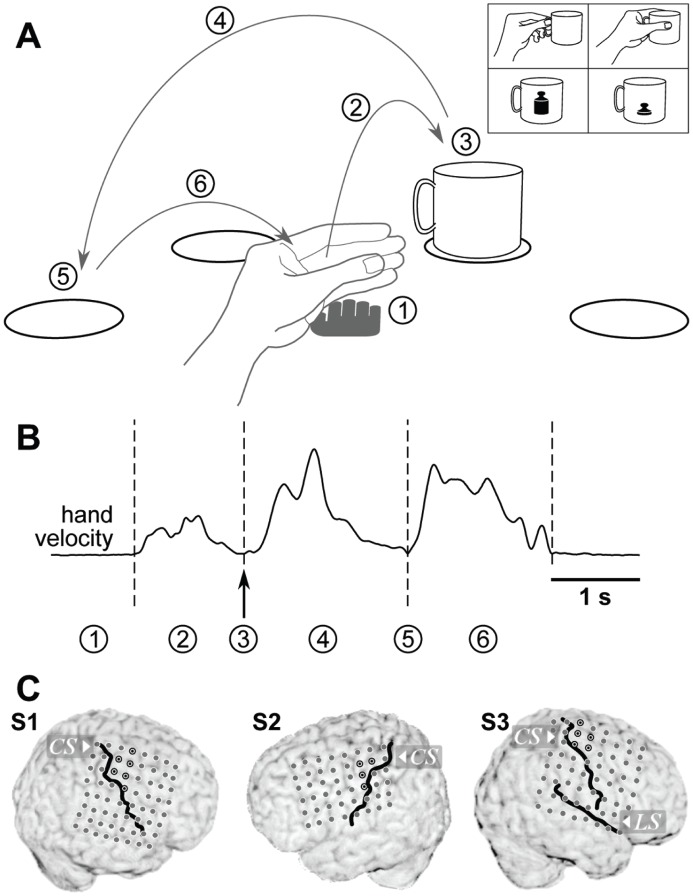
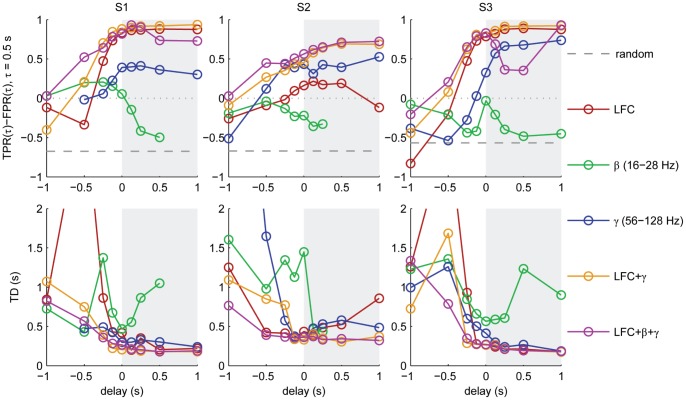
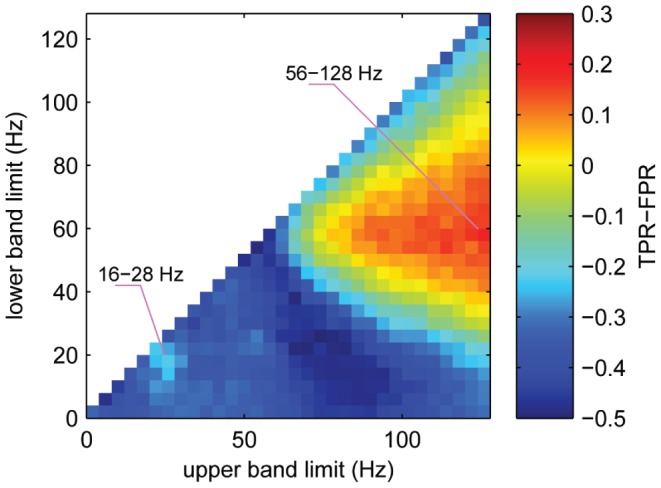
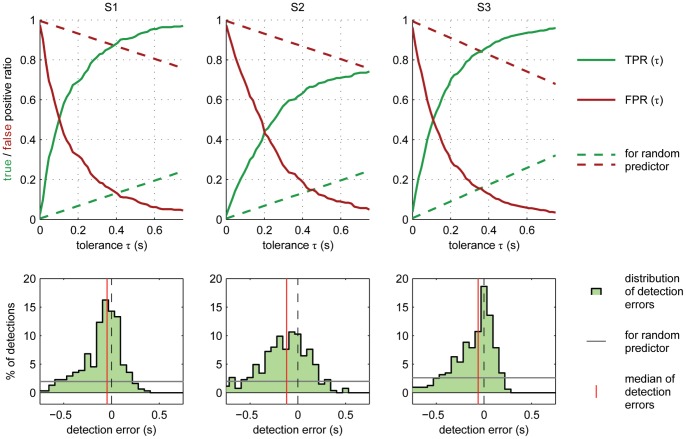
Various movement parameters of grasping movements, like velocity or type of the grasp, have been successfully decoded from neural activity. However, the question of movement event detection from brain activity, that is, decoding the time at which an event occurred (e.g. movement onset), has been addressed less often. Yet, this may be a topic of key importance, as a brain-machine interface (BMI) that controls a grasping prosthesis could be realized by detecting the time of grasp, together with an optional decoding of which type of grasp to apply. We, therefore, studied the detection of time of grasps from human ECoG recordings during a sequence of natural and continuous reach-to-grasp movements. Using signals recorded from the motor cortex, a detector based on regularized linear discriminant analysis was able to retrieve the time-point of grasp with high reliability and only few false detections. Best performance was achieved using a combination of signal components from time and frequency domains. Sensitivity, measured by the amount of correct detections, and specificity, represented by the amount of false detections, depended strongly on the imposed restrictions on temporal precision of detection and on the delay between event detection and the time the event occurred. Including neural data from after the event into the decoding analysis, slightly increased accuracy, however, reasonable performance could also be obtained when grasping events were detected 125 ms in advance. In summary, our results provide a good basis for using detection of grasping movements from ECoG to control a grasping prosthesis.
各种抓握动作的运动参数,如速度或抓握类型,已经可以从神经活动中成功解码。然而,从大脑活动中检测运动事件的问题,即解码事件发生的时间(例如,运动开始),则较少被涉及。然而,这可能是一个关键的重要主题,因为可以通过检测抓握的时间,以及可选地解码要应用的抓握类型,来实现控制抓握假肢的脑机接口 (BMI)。因此,我们研究了在一系列自然和连续的伸手抓握运动过程中,从人类 ECoG 记录中检测抓握时间的问题。使用从运动皮层记录的信号,基于正则化线性判别分析的检测器能够以高可靠性和很少的误报来检索抓握时间点。使用时频域信号成分的组合可以获得最佳性能。通过正确检测的数量来衡量的灵敏度,以及通过误报的数量来衡量的特异性,强烈依赖于检测的时间精度的限制以及事件检测和事件发生之间的延迟。将事件后的神经数据纳入解码分析中,略微提高了准确性,但是当抓握事件提前 125 毫秒检测到时,也可以获得合理的性能。总之,我们的结果为使用 ECoG 检测抓握运动来控制抓握假肢提供了良好的基础。