Pantelides Nicholas M, Mondal Debabrata, Wishart Gordon C, Malata Charles M
Department of Plastic and Reconstructive Surgery.
Eplasty. 2013;13:e2. Epub 2013 Jan 14.
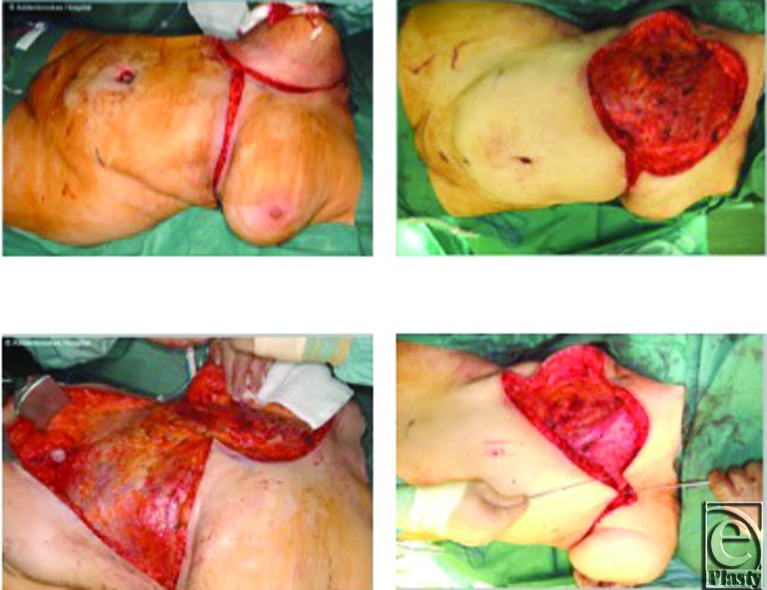
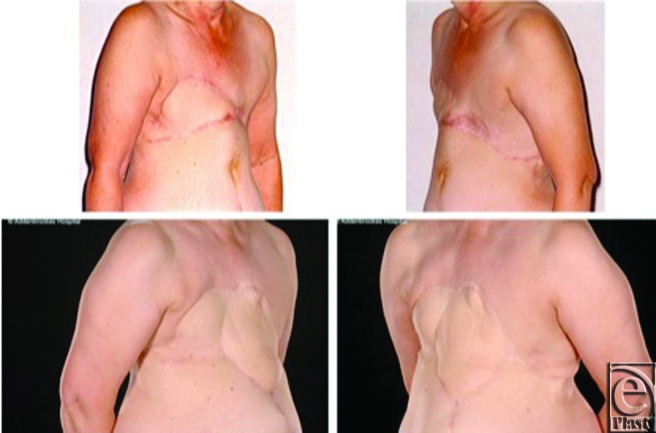
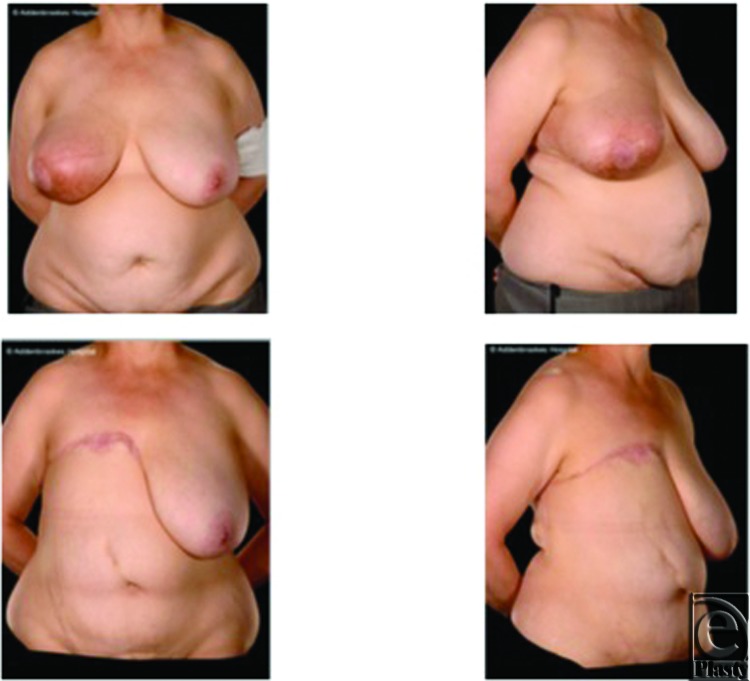
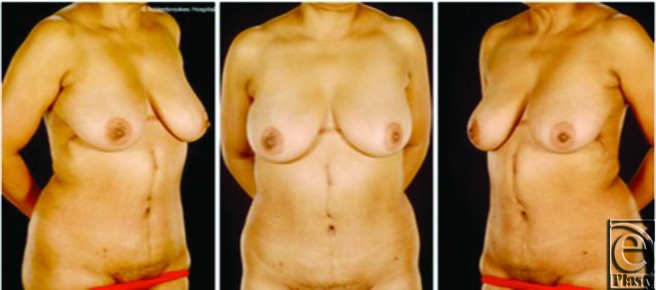
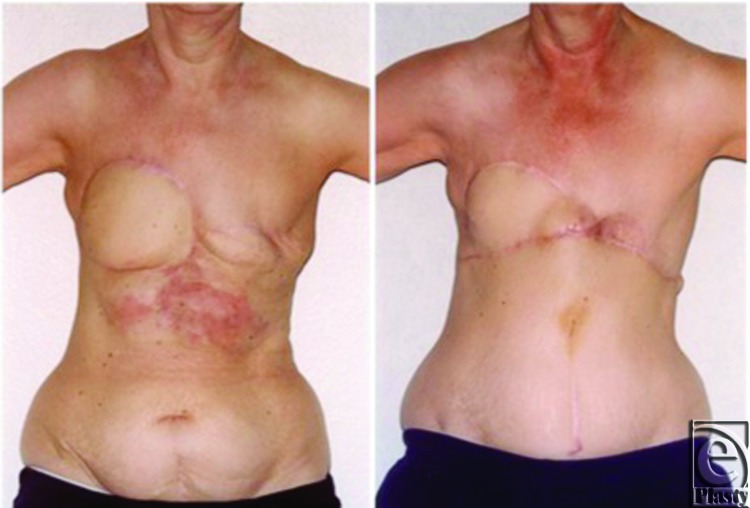
Following radical oncological resection, full-thickness upper central trunk defects present a significant challenge. Common reconstructive options include pedicled flaps, such as pectoralis major, rectus abdominis, and latissimus dorsi. In complex cases, free tissue transfer may be required. Reverse abdominoplasty, although initially described for cosmetic body contouring, can be used to reconstruct upper central trunk defects following radical tumour ablation. We present 4 such applications in the management of advanced or recurrent malignancies and review the relative indications for this approach.
Four consecutive cases (2004-2010) were reviewed with respect to indication, operative procedure, and complications.
There were no cases of complete flap loss. One patient underwent revision for marginal flap necrosis while another developed local recurrence, requiring re-excision and reconstruction with flap advancement.
Where pedicled flaps are unavailable or insufficient, adjacent abdominal tissue can be recruited into chest wall defects, avoiding microsurgical free tissue transfer. The authors feel that the reverse abdominoplasty is currently underused in this context and offers an excellent alternative in complex cases where other reconstructive options are unavailable, or where comorbidities preclude free-tissue transfer. The technique is versatile, simple to perform and affords an acceptable cosmetic outcome, yet is not widely reported in the literature. It has particular merit in cases with a high chance of disease recurrence, in the management of recurrent breast cancer, and in patients with multiple comorbidities. The reverse abdominoplasty should therefore be considered when evaluating patients for oncological trunk reconstruction.
在肿瘤根治性切除术后,上中躯干全层缺损是一项重大挑战。常见的重建选择包括带蒂皮瓣,如胸大肌、腹直肌和背阔肌。在复杂病例中,可能需要游离组织移植。尽管最初描述的反向腹壁成形术是用于身体塑形,但可用于肿瘤根治性切除术后上中躯干缺损的重建。我们介绍4例该方法在晚期或复发性恶性肿瘤治疗中的应用,并回顾这种方法的相关适应证。
回顾了连续4例(2004 - 2010年)病例的适应证、手术操作及并发症情况。
无皮瓣完全坏死病例。1例患者因皮瓣边缘坏死接受修复,另1例出现局部复发,需再次切除并采用皮瓣推进进行重建。
当无法使用带蒂皮瓣或其不足时,可利用邻近腹部组织修复胸壁缺损,避免显微外科游离组织移植。作者认为反向腹壁成形术目前在这种情况下未得到充分应用,在其他重建选择不可用或合并症排除游离组织移植的复杂病例中,它提供了一个很好的替代方案。该技术用途广泛,操作简单,美容效果可接受,但在文献中报道较少。在疾病复发可能性高的病例、复发性乳腺癌的治疗以及有多种合并症的患者中,它具有特别的优势。因此,在评估肿瘤患者躯干重建时应考虑反向腹壁成形术。