Department of Gastrointestinal Sciences, Christian Medical College, Vellore, Tamil Nadu 632004, India.
BMC Public Health. 2013 Jan 30;13:87. doi: 10.1186/1471-2458-13-87.
India has seen rapid unorganized urbanization in the past few decades. However, the burden of childhood diseases and malnutrition in such populations is difficult to quantify. The morbidity experience of children living in semi-urban slums of a southern Indian city is described.
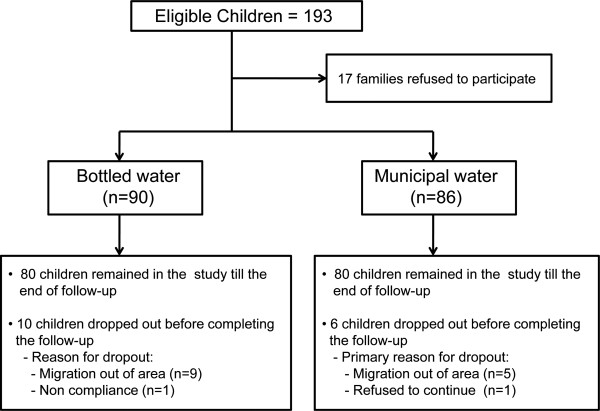
A total of 176 children were recruited pre-weaning from four geographically adjacent, semi-urban slums located in the western outskirts of Vellore, Tamil Nadu for a study on water safety and enteric infections and received either bottled or municipal drinking water based on their area of residence. Children were visited weekly at home and had anthropometry measured monthly until their second birthday.
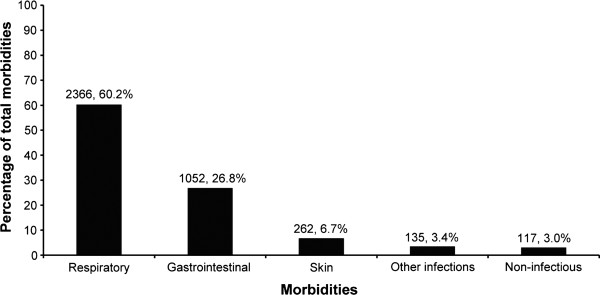
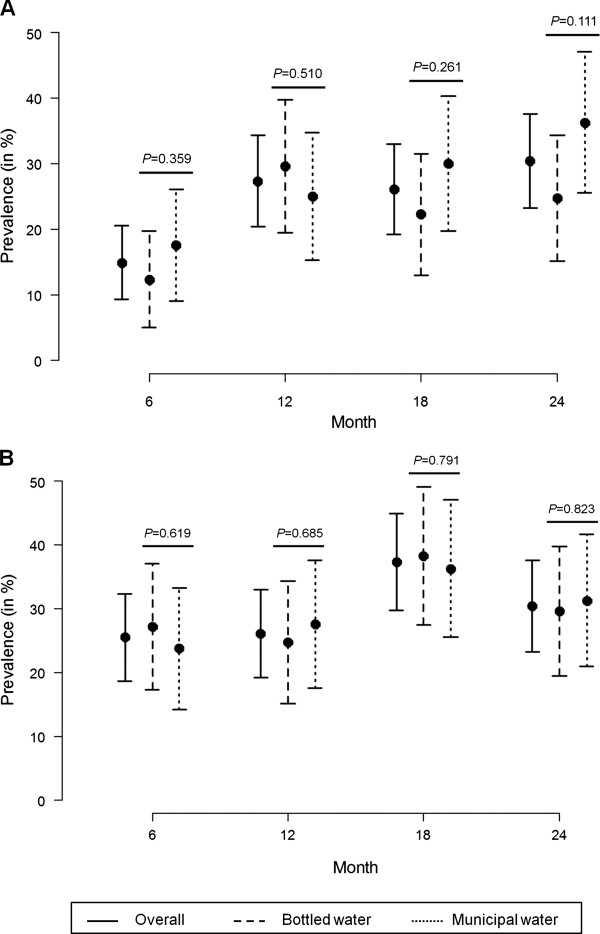
A total of 3932 episodes of illness were recorded during the follow-up period, resulting in an incidence of 12.5 illnesses/child-year, with more illness during infancy than in the second year of life. Respiratory, mostly upper respiratory infections, and gastrointestinal illnesses were most common. Approximately one-third of children were stunted at two years of age, and two-thirds had at least one episode of growth failure during the two years of follow up. No differences in morbidity were seen between children who received bottled and municipal water.
Our study found a high burden of childhood diseases and malnutrition among urban slum dwellers in southern India. Frequent illnesses may adversely impact children's health and development, besides placing an additional burden on families who need to seek healthcare and find resources to manage illness.
在过去几十年中,印度经历了快速的非组织城市化。然而,这种人群中的儿童疾病和营养不良负担难以量化。本文描述了印度南部一个城市半城市贫民窟中儿童的发病经历。
总共从泰米尔纳德邦维洛尔市西郊的四个地理上相邻的半城市贫民窟中招募了 176 名在断奶前的儿童,进行了一项关于水安全和肠内感染的研究,并根据他们的居住区域提供瓶装或市政饮用水。儿童在家中每周接受一次家访,并在第二个生日前每月进行一次人体测量。
在随访期间共记录了 3932 次疾病发作,发病率为 12.5 次/儿童/年,婴儿期的发病率高于第二年。呼吸道疾病,主要是上呼吸道感染和胃肠道疾病最常见。大约三分之一的儿童在两岁时发育迟缓,三分之二的儿童在两年的随访期间至少有一次生长发育不良的情况。接受瓶装水和市政用水的儿童之间在发病率方面没有差异。
我们的研究发现,印度南部城市贫民窟居民的儿童疾病和营养不良负担沉重。频繁的疾病可能会对儿童的健康和发育产生不利影响,除了给需要寻求医疗保健和寻找资源来管理疾病的家庭带来额外的负担。