Department of Pathology, Oslo University Hospital - Norwegian Radium Hospital, Montebello, 0310 Oslo, Norway.
BMC Genomics. 2013 Jan 31;14:70. doi: 10.1186/1471-2164-14-70.
An emerging Hi-C protocol has the ability to probe three-dimensional (3D) architecture and capture chromatin interactions in a genome-wide scale. It provides informative results to address how chromatin organization changes contribute to disease/tumor occurrence and progression in response to stimulation of environmental chemicals or hormones.
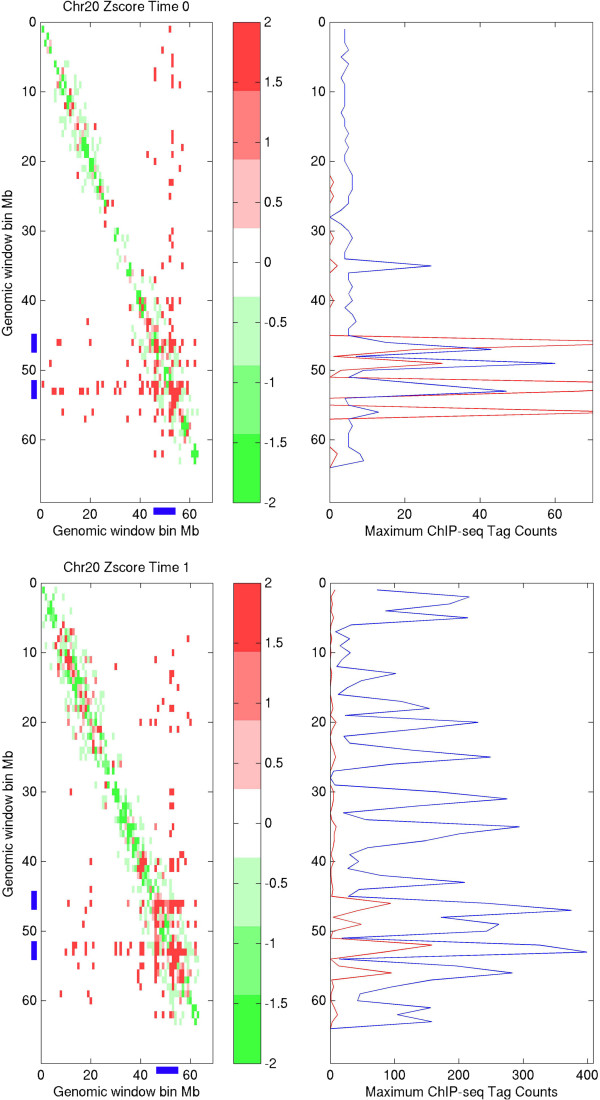
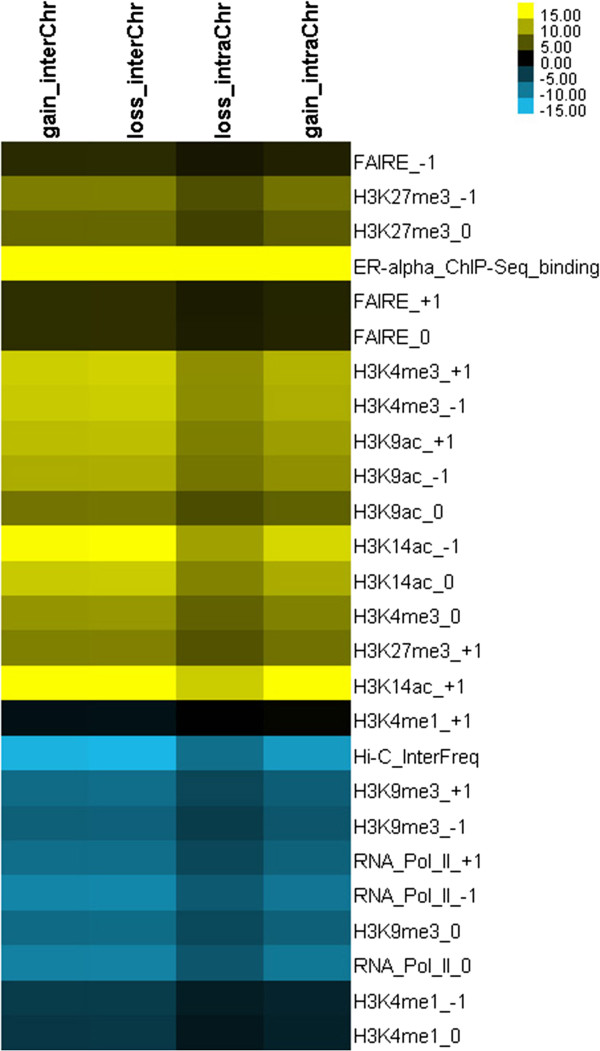
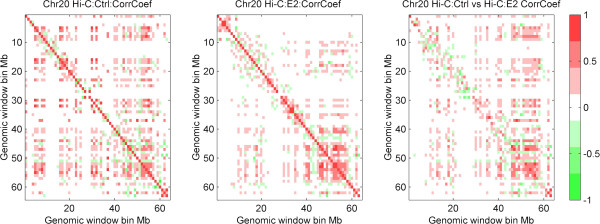
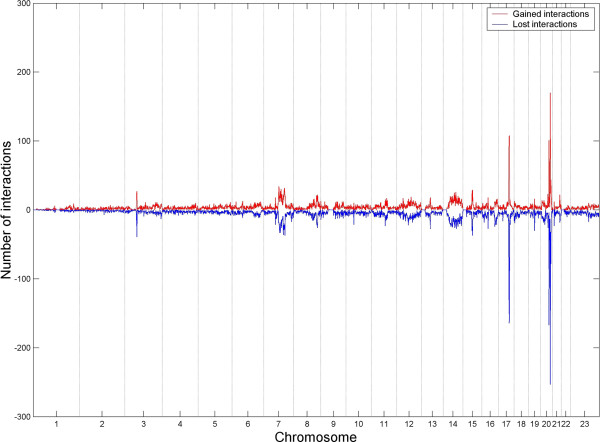
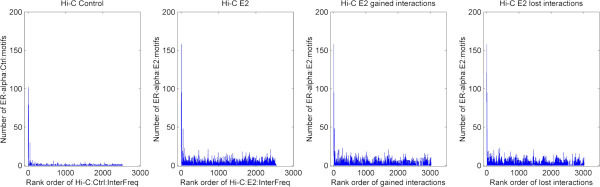
In this study, using MCF7 cells as a model system, we found estrogen stimulation significantly impact chromatin interactions, leading to alteration of gene regulation and the associated histone modification states. Many chromosomal interaction regions at different levels of interaction frequency were identified. In particular, the top 10 hot regions with the highest interaction frequency are enriched with breast cancer specific genes. Furthermore, four types of E2-mediated strong differential (gain- or loss-) chromosomal (intra- or inter-) interactions were classified, in which the number of gain-chromosomal interactions is less than the number of loss-chromosomal interactions upon E2 stimulation. Finally, by integrating with eight histone modification marks, DNA methylation, regulatory elements regions, ERα and Pol-II binding activities, associations between epigenetic patterns and high chromosomal interaction frequency were revealed in E2-mediated gene regulation.
The work provides insight into the effect of chromatin interaction on E2/ERα regulated downstream genes in breast cancer cells.
一种新兴的 Hi-C 技术能够在全基因组范围内探测三维(3D)结构并捕获染色质相互作用。它提供了有价值的结果,以解决染色质组织的变化如何导致疾病/肿瘤的发生和发展,以及对环境化学物质或激素刺激的反应。
在这项研究中,我们使用 MCF7 细胞作为模型系统,发现雌激素刺激显著影响染色质相互作用,导致基因调控和相关组蛋白修饰状态的改变。在不同相互作用频率水平上鉴定出许多染色体相互作用区域。特别是,具有最高相互作用频率的前 10 个热点区域富含乳腺癌特异性基因。此外,我们将 E2 介导的四种强差异(增益或缺失)染色体(内或间)相互作用进行了分类,其中 E2 刺激后增益染色体相互作用的数量少于缺失染色体相互作用的数量。最后,通过与八种组蛋白修饰标记、DNA 甲基化、调控元件区域、ERα 和 Pol-II 结合活性整合,揭示了 E2 介导的基因调控中表观遗传模式与高染色体相互作用频率之间的关联。
这项工作深入了解了染色质相互作用对乳腺癌细胞中 E2/ERα 调控下游基因的影响。