Mourad Raphaël, Hsu Pei-Yin, Juan Liran, Shen Changyu, Koneru Prasad, Lin Hai, Liu Yunlong, Nephew Kenneth, Huang Tim H, Li Lang
Department of Medical and Molecular Genetics, Center for Computational Biology and Bioinformatics, Indiana School of Medicine, Indiana University, Indianapolis, IN, 46202, United States of America.
Departments of Molecular Medicine/Institute of Biotechnology, University of Texas Health Science Center, San Antonio, TX, 78245, United States of America.
PLoS One. 2014 Dec 3;9(12):e113354. doi: 10.1371/journal.pone.0113354. eCollection 2014.
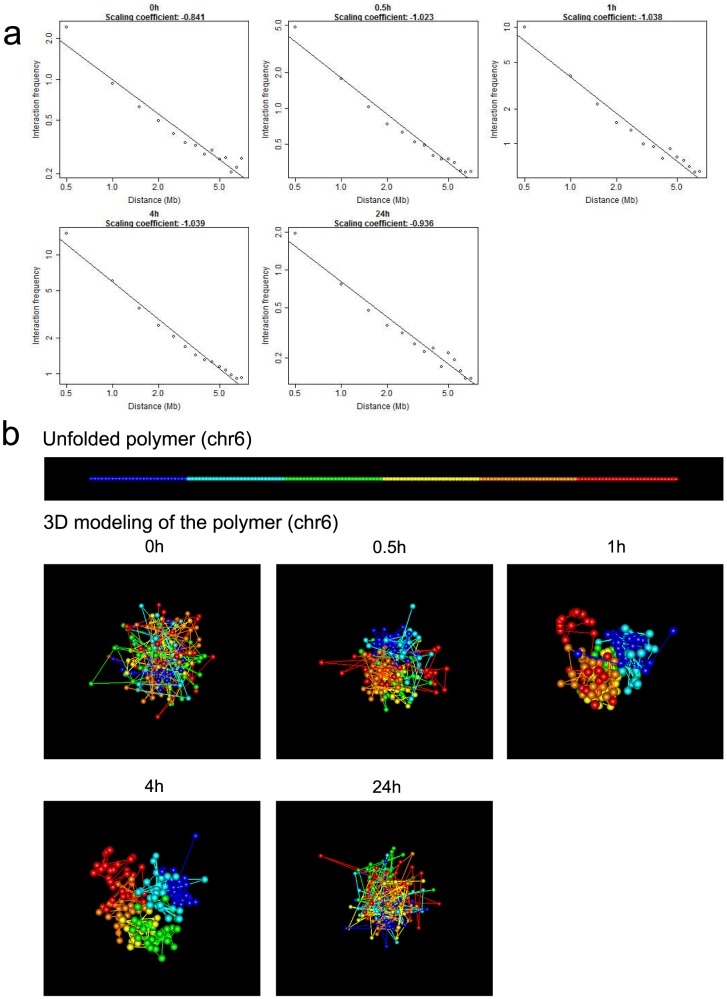
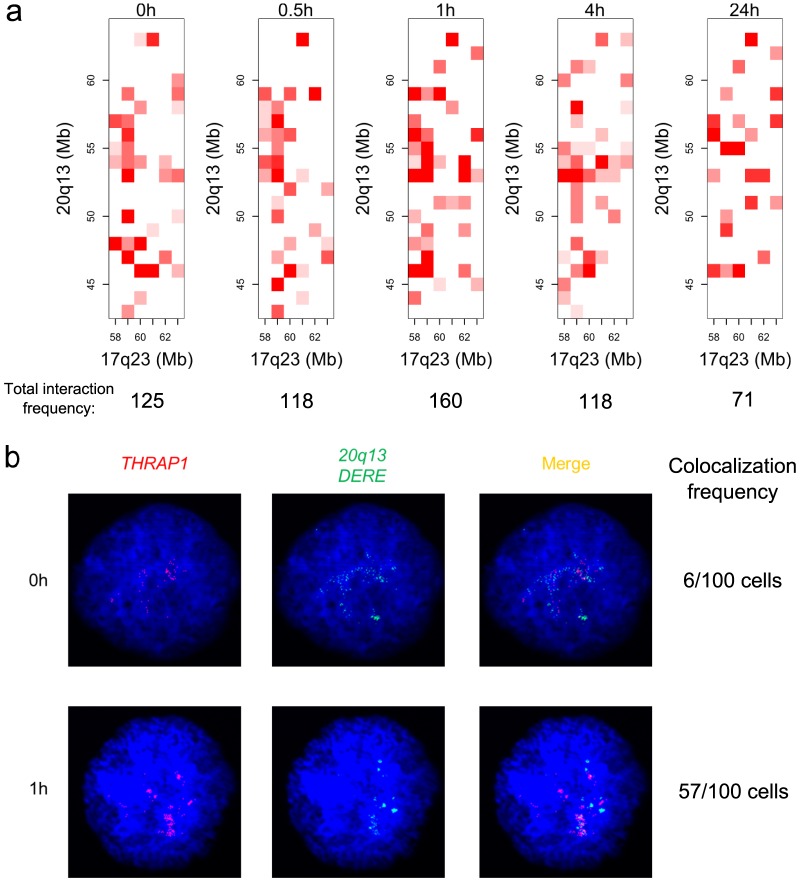
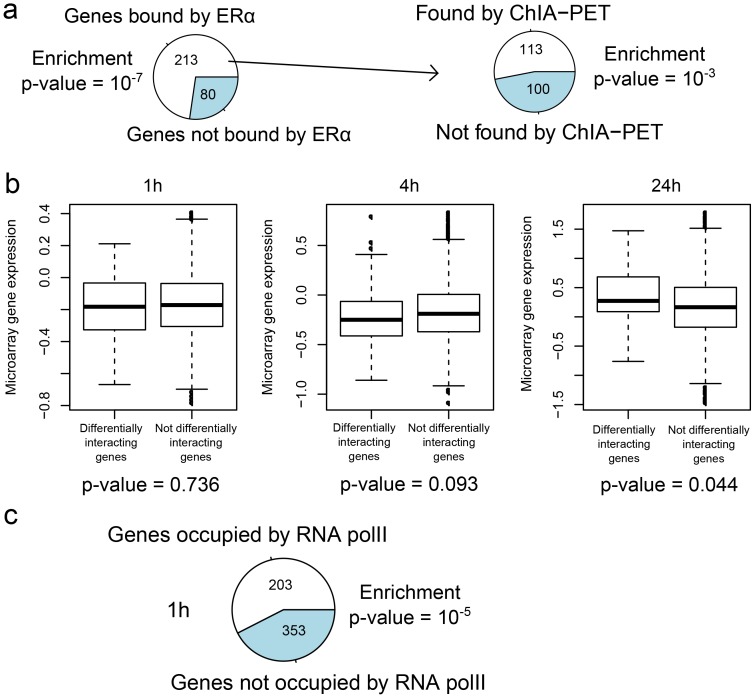
In the cell nucleus, each chromosome is confined to a chromosome territory. This spatial organization of chromosomes plays a crucial role in gene regulation and genome stability. An additional level of organization has been discovered at the chromosome scale: the spatial segregation into open and closed chromatins to form two genome-wide compartments. Although considerable progress has been made in our knowledge of chromatin organization, a fundamental issue remains the understanding of its dynamics, especially in cancer. To address this issue, we performed genome-wide mapping of chromatin interactions (Hi-C) over the time after estrogen stimulation of breast cancer cells. To biologically interpret these interactions, we integrated with estrogen receptor α (ERα) binding events, gene expression and epigenetic marks. We show that gene-rich chromosomes as well as areas of open and highly transcribed chromatins are rearranged to greater spatial proximity, thus enabling genes to share transcriptional machinery and regulatory elements. At a smaller scale, differentially interacting loci are enriched for cancer proliferation and estrogen-related genes. Moreover, these loci are correlated with higher ERα binding events and gene expression. Taken together these results reveal the role of a hormone--estrogen--on genome organization, and its effect on gene regulation in cancer.
在细胞核中,每条染色体都局限于一个染色体区域。染色体的这种空间组织在基因调控和基因组稳定性中起着至关重要的作用。在染色体尺度上还发现了另一种组织水平:空间分隔为开放和封闭染色质,形成两个全基因组范围的区室。尽管我们在染色质组织知识方面取得了相当大的进展,但一个基本问题仍然是对其动态变化的理解,尤其是在癌症中。为了解决这个问题,我们在雌激素刺激乳腺癌细胞后的一段时间内进行了全基因组染色质相互作用图谱绘制(Hi-C)。为了从生物学角度解释这些相互作用,我们整合了雌激素受体α(ERα)结合事件、基因表达和表观遗传标记。我们发现富含基因的染色体以及开放和高度转录的染色质区域会重新排列到更大的空间邻近度,从而使基因能够共享转录机制和调控元件。在较小尺度上,差异相互作用的位点富含癌症增殖和雌激素相关基因。此外,这些位点与更高的ERα结合事件和基因表达相关。综合这些结果揭示了一种激素——雌激素——对基因组组织的作用及其对癌症基因调控的影响。