Department of Information Media Systems, University of Electro-Communications, Tokyo, Japan.
PLoS One. 2013;8(2):e55801. doi: 10.1371/journal.pone.0055801. Epub 2013 Feb 5.
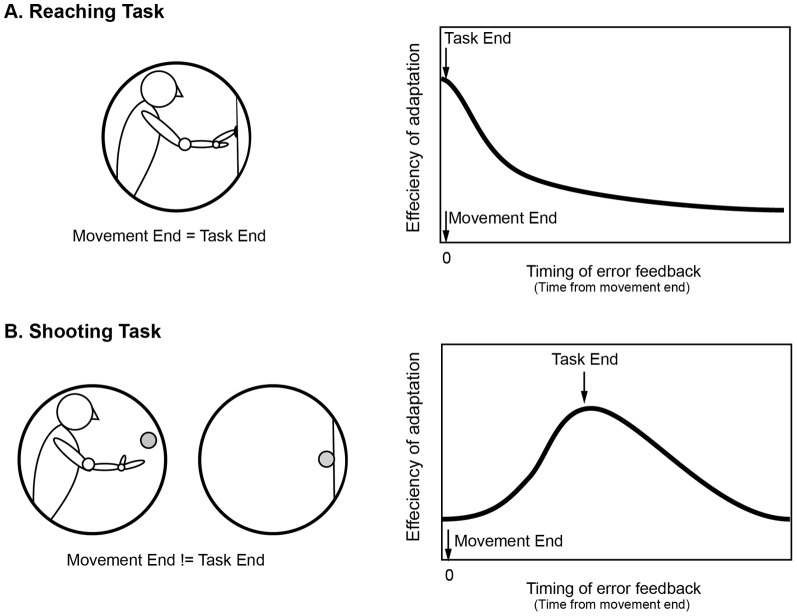
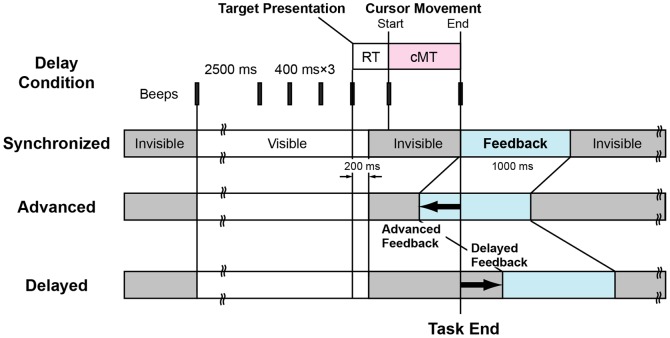
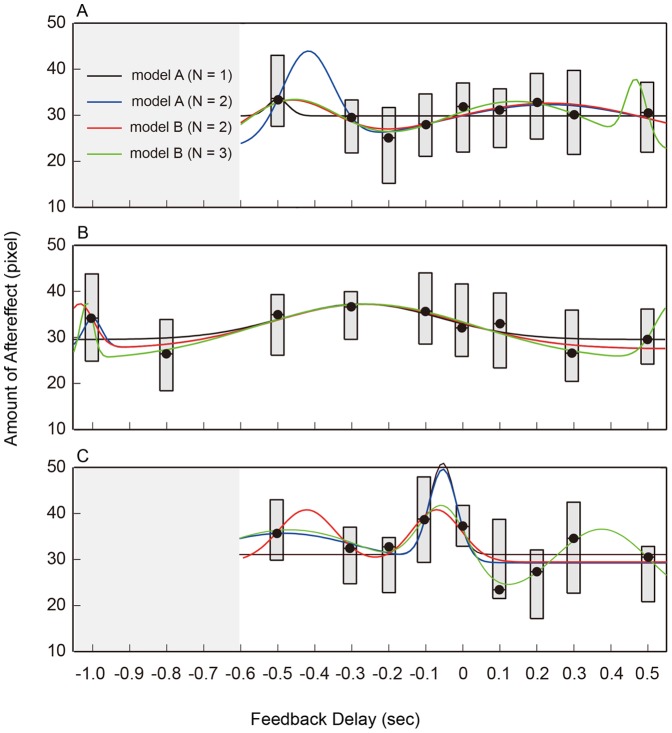
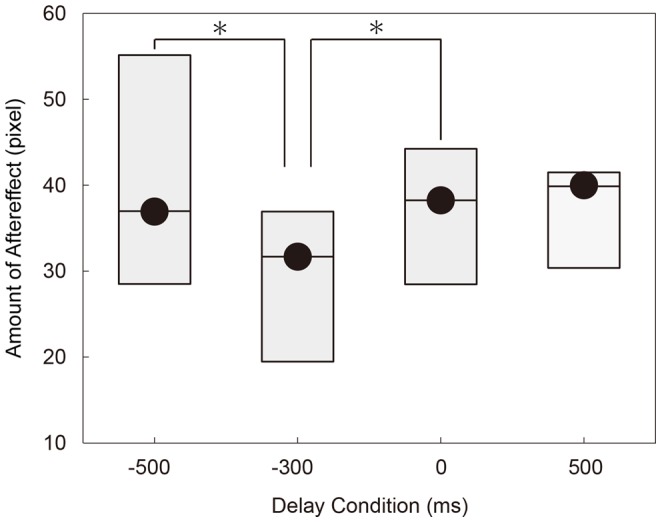
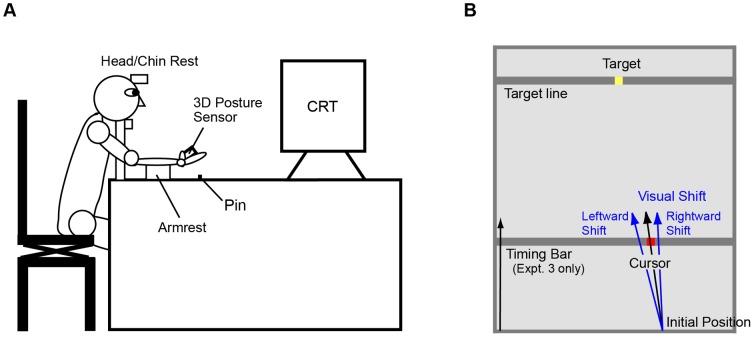
An important issue in motor learning/adaptation research is how the brain accepts the error information necessary for maintaining and improving task performance in a changing environment. The present study focuses on the effect of timing of error feedback. Previous research has demonstrated that adaptation to displacement of the visual field by prisms in a manual reaching task is significantly slowed by delayed visual feedback of the endpoint, suggesting that error feedback is most effective when given at the end of a movement. To further elucidate the brain mechanism by which error information is accepted in visuomotor adaptation, we tested whether error acceptance is linked to the end of a given task or to the end of an executed movement. We conducted a behavioral experiment using a virtual shooting task in which subjects controlled their wrist movements to meet a target with a cursor as accurately as possible. We manipulated the timing of visual feedback of the impact position so that it occurred either ahead of or behind the true time of impact. In another condition, the impact timing was explicitly indicated by an additional cue. The magnitude of the aftereffect significantly varied depending on the timing of feedback (p < 0.05, Friedman's Test). Interestingly, two distinct peaks of aftereffect were observed around movement-end and around task-end, irrespective of the existence of the timing cue. However, the peak around task-end was sharper when the timing cue was given. Our results demonstrate that the brain efficiently accepts error information at both movement-end and task-end, suggesting that two different learning mechanisms may underlie visuomotor transformation.
在运动学习/适应研究中,一个重要的问题是大脑如何接受在不断变化的环境中维持和提高任务表现所需的错误信息。本研究侧重于错误反馈的时间问题。以前的研究表明,在手动到达任务中通过棱镜对视野的位移进行适应时,末端的视觉反馈延迟会显著减慢适应速度,这表明在运动结束时提供错误反馈最为有效。为了进一步阐明大脑接受视觉运动适应中错误信息的机制,我们测试了错误接受是否与给定任务的结束或执行运动的结束有关。我们使用虚拟射击任务进行了一项行为实验,在该实验中,被试者控制手腕运动,以尽可能准确地用光标击中目标。我们操纵了冲击位置的视觉反馈时间,以便它在实际冲击时间之前或之后发生。在另一种情况下,通过附加线索明确指示冲击时间。后效的幅度明显取决于反馈的时间(p<0.05,Friedman 检验)。有趣的是,无论是否存在时间提示,都在运动结束和任务结束时观察到两个明显的后效峰值。然而,当给出时间提示时,任务结束时的峰值更尖锐。我们的结果表明,大脑在运动结束和任务结束时都能有效地接受错误信息,这表明两种不同的学习机制可能是视觉运动转换的基础。