Drug Discovery Department, H Lee Moffitt Cancer Center and Research Institute, Tampa, FL, USA.
1] Drug Discovery Department, H Lee Moffitt Cancer Center and Research Institute, Tampa, FL, USA [2] Departments of Oncologic Sciences and Molecular Medicine, University of South Florida, Tampa, FL, USA.
Oncogene. 2014 Jan 30;33(5):550-5. doi: 10.1038/onc.2012.634. Epub 2013 Feb 11.
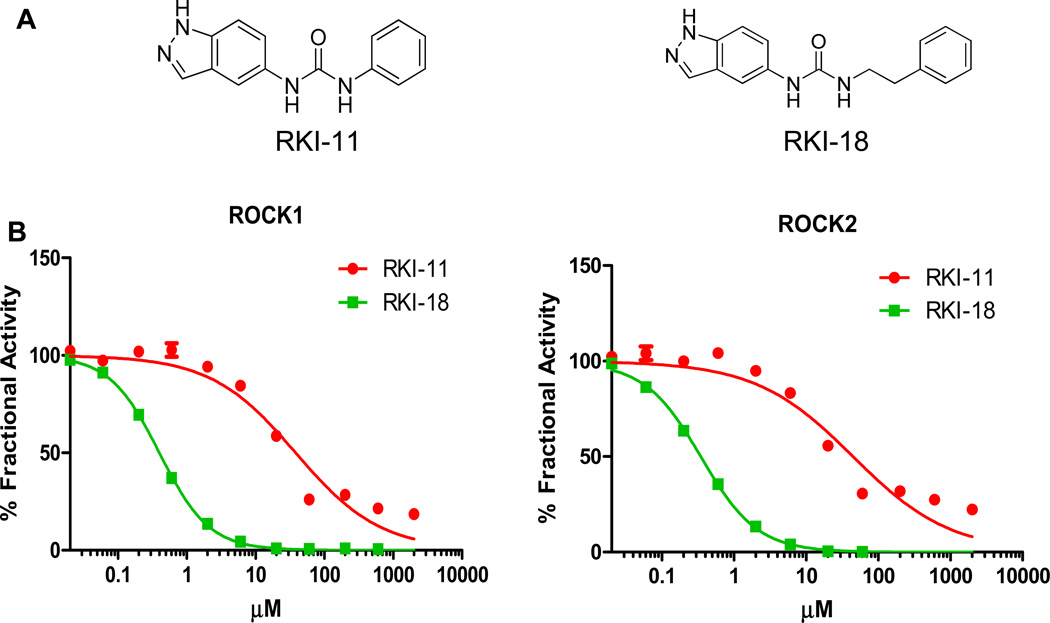
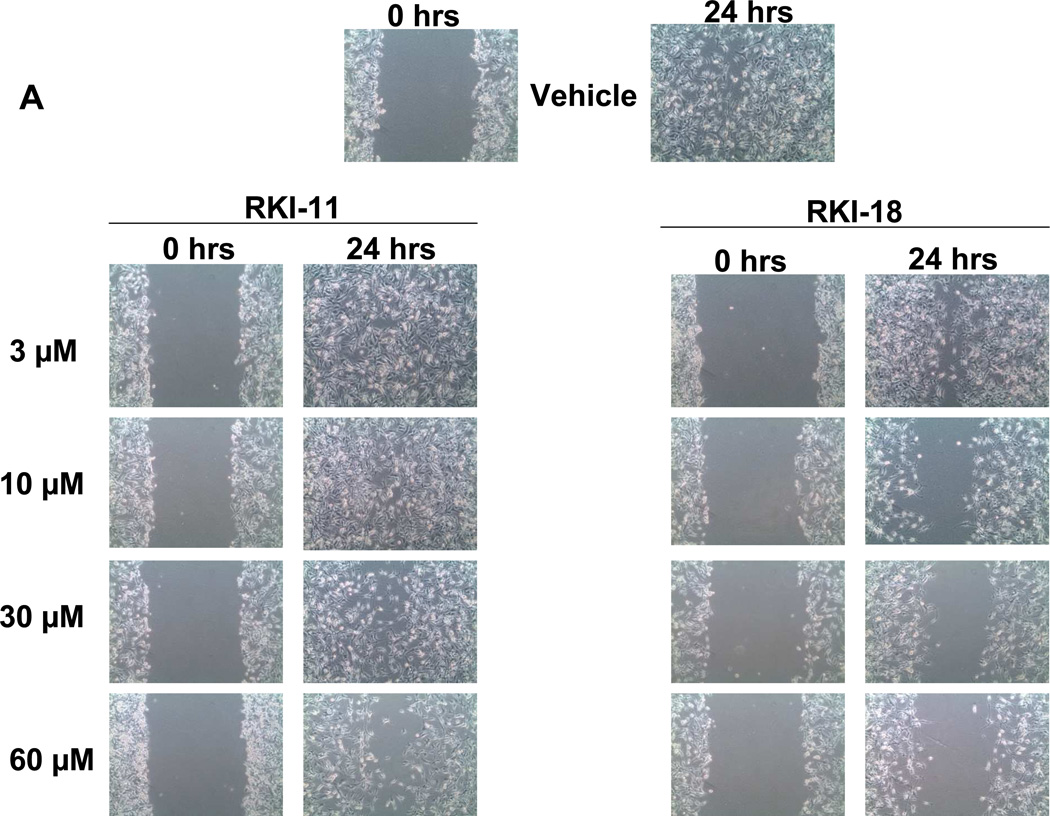
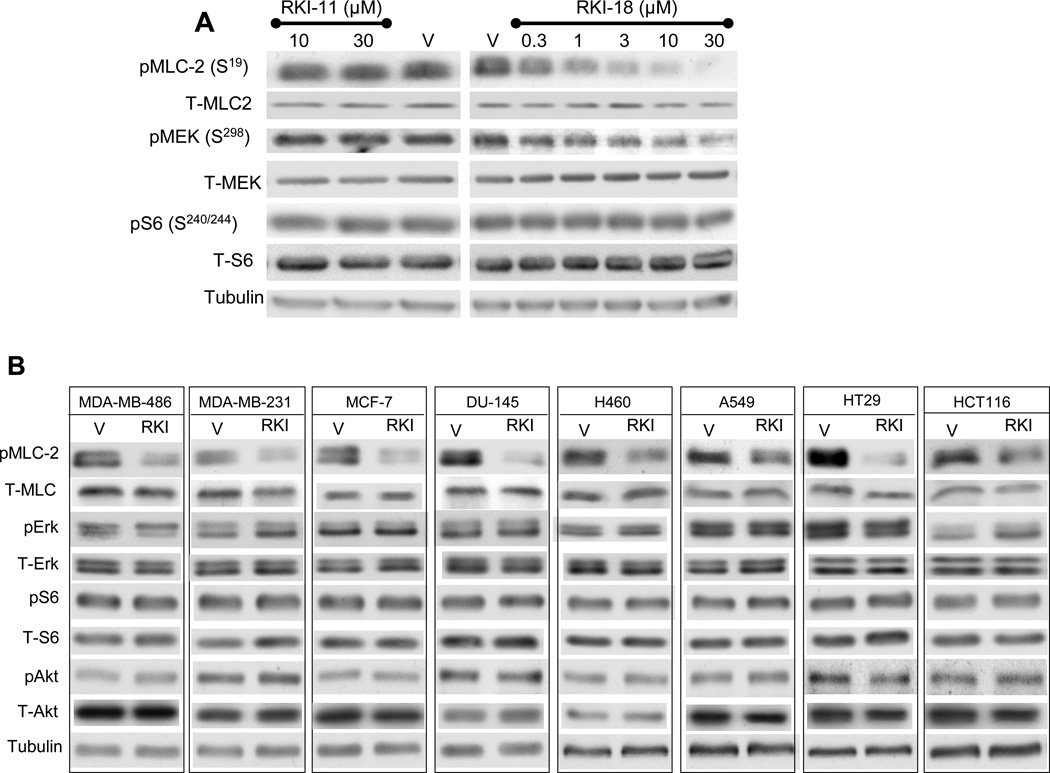
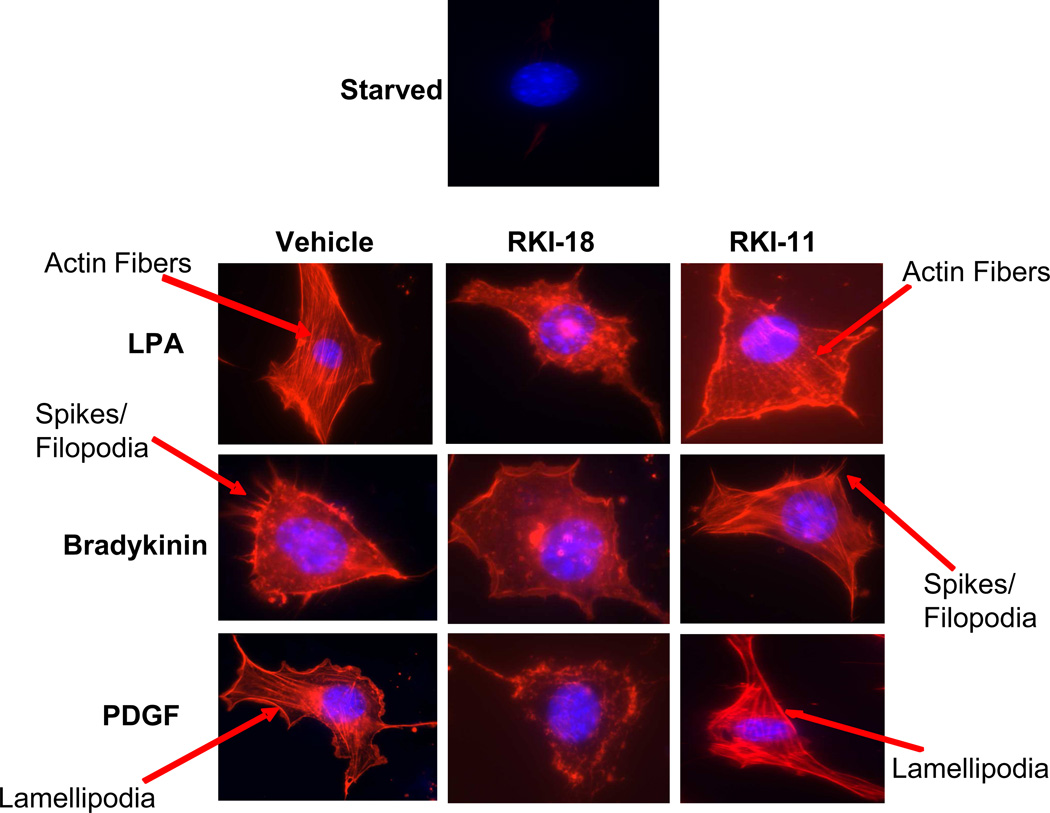
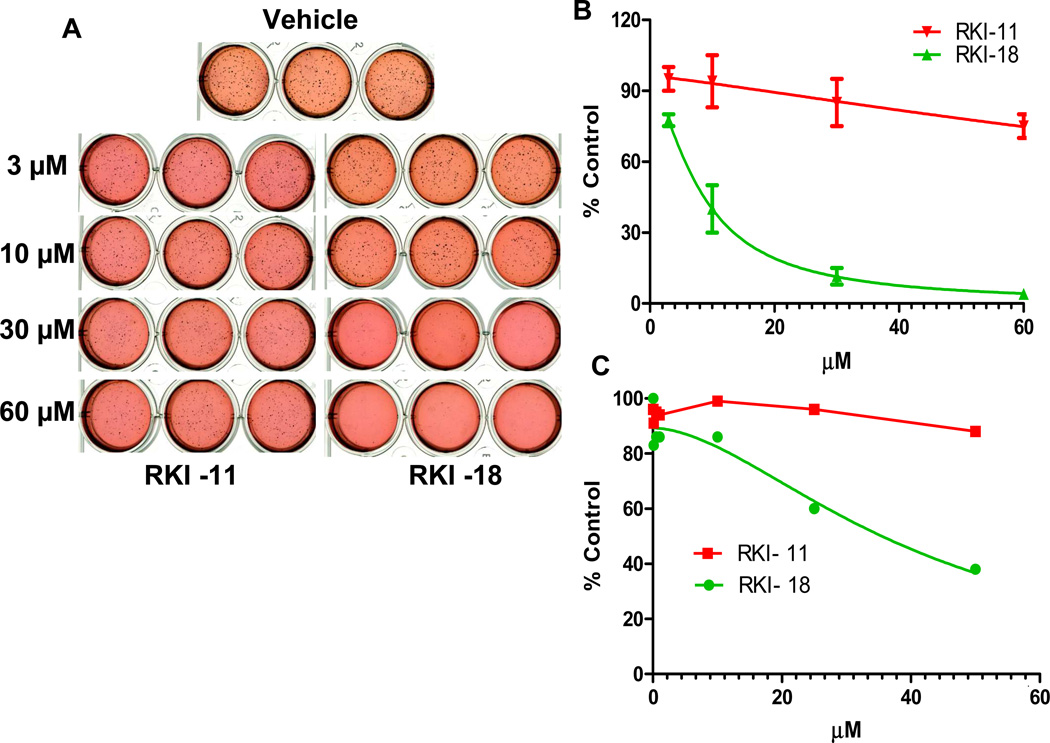
ROCK1 and ROCK2 mediate important processes such as cell migration, invasion and metastasis, making them good targets for the development of antitumor agents. Recently, using a fragment-based approach and X-ray crystallography, we reported on the design and synthesis of novel Rho-kinase inhibitors (RKIs). Here, we selected a pair of RKIs, the closely related structural analogs RKI-18 (potent; IC50 values of 397 nM (ROCK1) and 349 nM (ROCK2)) and RKI-11 (weak/inactive; IC50 values of 38 μM (ROCK1) and 45 μM (ROCK2)), as chemical probes and determined their effects on cytoskeleton organization, signaling, apoptosis, anchorage-dependent and independent growth, migration and invasion. RKI-18 but not RKI-11 suppresses potently the phosphorylation of the ROCK substrate myosin light chain 2 (MLC2) in intact human breast, lung, colon and prostate cancer cells. Furthermore, RKI-18 is highly selective at decreasing the levels of P-MLC2 over those of P-Akt, P-S6 and P-Erk ½. RKI-18 suppresses ROCK-mediated actin fiber formation, following stimulation with LPA as well as p21-activated kinase (PAK)-mediated lamellipodia and filopodia formation following bradykinin or PDGF stimulation. Furthermore, RKI-18 but not RKI-11 inhibits migration, invasion and anchorage-independent growth of human breast cancer cells. The fact that the active ROCK inhibitor RKI-18, but not the inactive closely related structural analog RKI-11 is effective at suppressing malignant transformation suggests that inhibition of ROCK with RKI-18 results in preventing migration, invasion and anchorage-independent growth. The potential of this class of RKIs as anti-tumor agents warrants further advanced preclinical studies.
ROCK1 和 ROCK2 介导细胞迁移、侵袭和转移等重要过程,因此成为抗肿瘤药物开发的良好靶点。最近,我们使用基于片段的方法和 X 射线晶体学,设计并合成了新型 Rho-kinase 抑制剂(RKIs)。在这里,我们选择了一对 RKIs,即密切相关的结构类似物 RKI-18(有效;ROCK1 的 IC50 值为 397 nM,ROCK2 的 IC50 值为 349 nM)和 RKI-11(无效/无活性;ROCK1 的 IC50 值为 38 μM,ROCK2 的 IC50 值为 45 μM),作为化学探针,并确定了它们对细胞骨架组织、信号转导、细胞凋亡、锚定依赖性和非依赖性生长、迁移和侵袭的影响。RKI-18 而非 RKI-11 可有效抑制完整的人乳腺癌、肺癌、结肠癌和前列腺癌细胞中 ROCK 底物肌球蛋白轻链 2(MLC2)的磷酸化。此外,RKI-18 高度选择性地降低 P-MLC2 的水平,而不降低 P-Akt、P-S6 和 P-Erk ½ 的水平。RKI-18 可抑制 LPA 刺激以及 PAK 介导的 bradykinin 或 PDGF 刺激下的片状伪足和丝状伪足形成后 ROCK 介导的肌动蛋白纤维形成。此外,RKI-18 而非 RKI-11 可抑制人乳腺癌细胞的迁移、侵袭和锚定非依赖性生长。活性 ROCK 抑制剂 RKI-18 而非无活性的密切相关结构类似物 RKI-11 有效抑制恶性转化的事实表明,RKI-18 抑制 ROCK 可防止迁移、侵袭和锚定非依赖性生长。此类 RKIs 作为抗肿瘤药物的潜力值得进一步进行先进的临床前研究。