Department of Pediatrics, University of Texas, Southwestern Medical Center, Dallas, Texas 75390-9063, USA.
Curr Opin Pediatr. 2013 Apr;25(2):209-15. doi: 10.1097/MOP.0b013e32835df48a.
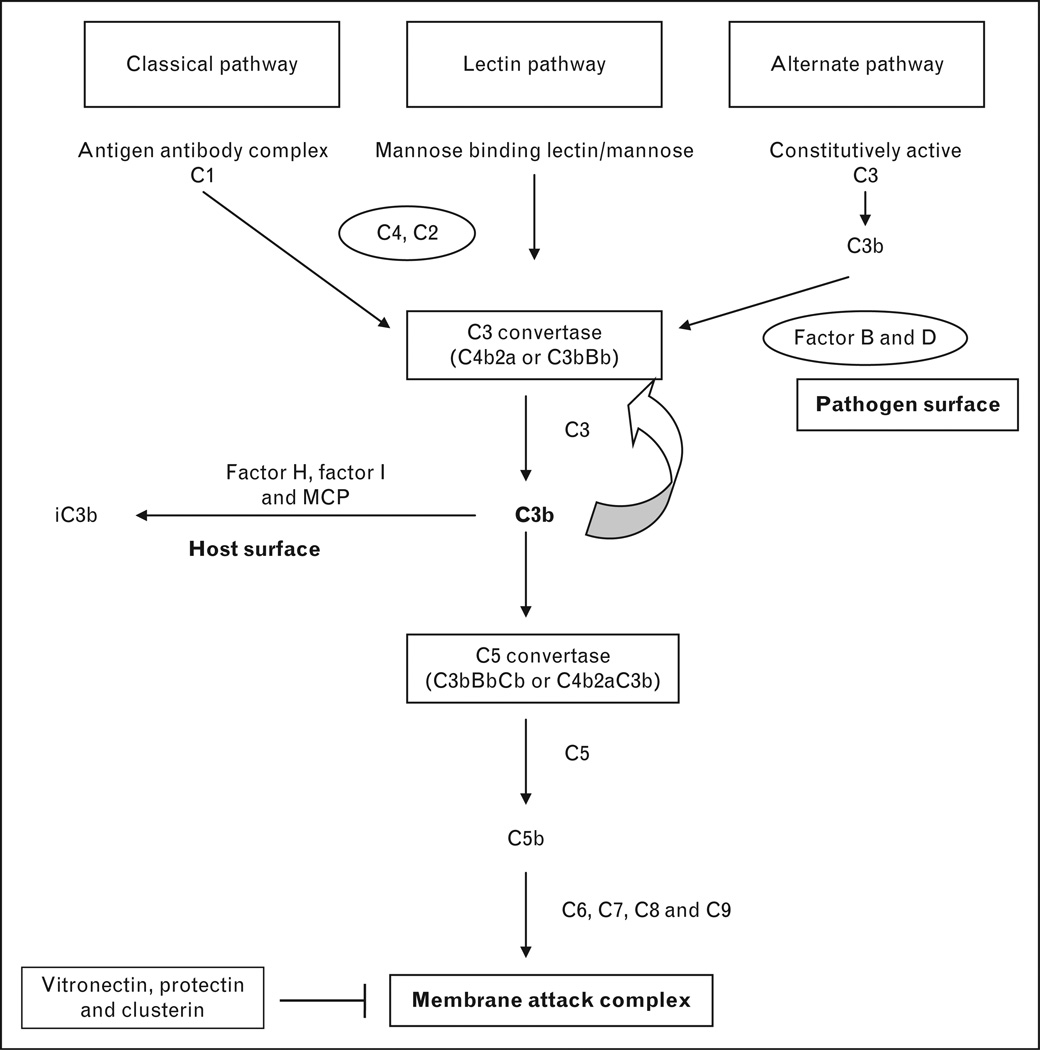
Complement mediated hemolytic uremic syndrome (aHUS) accounts for a significant proportion of non-shiga toxin HUS. The purpose of this review is to outline the pathophysiology, clinical features and therapeutic options for aHUS.
In the last decade, strides have been made in identifying several new disease-causing mutations in complement-regulating proteins.
Complement mediated HUS (aHUS) has a worse prognosis compared with shiga toxin mediated HUS, often resulting in end stage renal disease. Early identification of aHUS is crucial so that plasma therapy can be initiated. After renal transplantation, there is very high risk of disease recurrence and graft loss. Eculizumab and combined liver-kidney transplantation offer promise for improved prognosis.
补体介导的溶血尿毒症综合征(aHUS)占非志贺毒素 HUS 的很大比例。本文旨在概述 aHUS 的病理生理学、临床特征和治疗选择。
在过去十年中,人们在鉴定补体调节蛋白中的几种新致病突变方面取得了进展。
与志贺毒素介导的 HUS 相比,补体介导的 HUS(aHUS)预后更差,常导致终末期肾病。早期识别 aHUS 至关重要,以便可以开始血浆治疗。肾移植后,疾病复发和移植物丢失的风险非常高。依库珠单抗和肝肾联合移植为改善预后提供了希望。