Christiana Albertina University of Kiel, Otto Diels Institute of Organic Chemistry, Otto-Hahn-Platz 3/4, D-24098 Kiel, Germany.
Beilstein J Org Chem. 2013;9:223-33. doi: 10.3762/bjoc.9.26. Epub 2013 Feb 1.
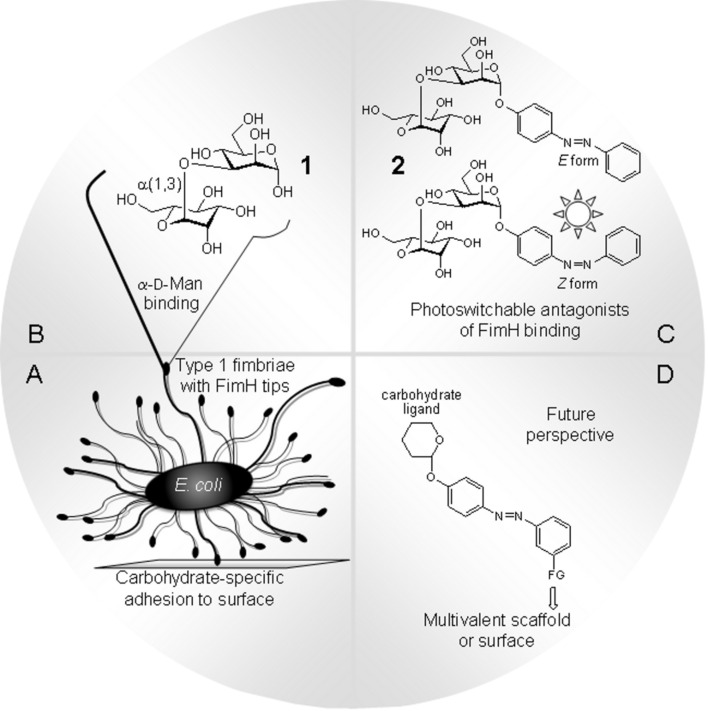
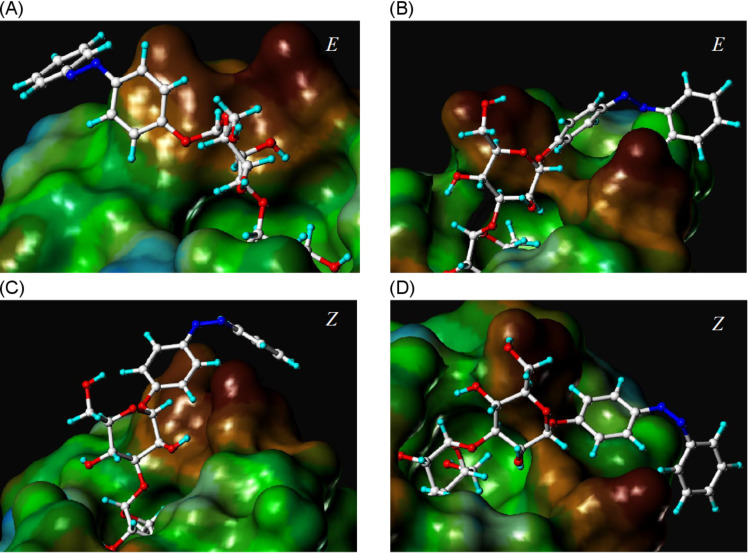
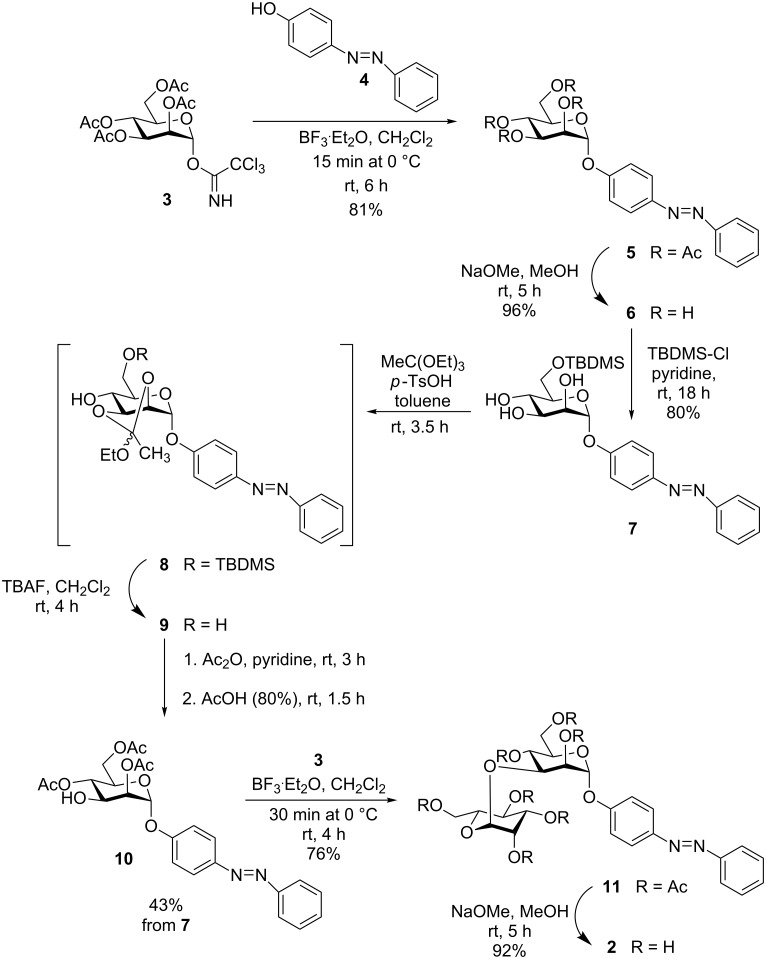
In order to allow spatial and temporal control of carbohydrate-specific bacterial adhesion, it has become our goal to synthesise azobenzene mannosides as photoswitchable inhibitors of type 1 fimbriae-mediated adhesion of E. coli. An azobenzene mannobioside 2 was prepared and its photochromic properties were investigated. The E→Z isomerisation was found to be highly effective, yielding a long-lived (Z)-isomer. Both isomers, E and Z, show excellent water solubility and were tested as inhibitors of mannoside-specific bacterial adhesion in solution. Their inhibitory potency was found to be equal and almost two orders of magnitude higher than that of the standard inhibitor methyl mannoside. These findings could be rationalised on the basis of computer-aided docking studies. The properties of the new azobenzene mannobioside have qualified this glycoside to be eventually employed on solid support, in order to fabricate photoswitchable adhesive surfaces.
为了能够对碳水化合物特异性细菌黏附进行时空控制,我们的目标是合成偶氮苯甘露糖苷作为光致变色的 1 型菌毛介导的大肠杆菌黏附抑制剂。我们制备了一个偶氮苯甘露糖苷 2,并对其光致变色性质进行了研究。发现 E→Z 异构化非常有效,生成了一种长寿命的(Z)-异构体。两种异构体,E 和 Z,都具有极好的水溶性,并在溶液中作为甘露糖苷特异性细菌黏附的抑制剂进行了测试。它们的抑制效力相等,比标准抑制剂甲基甘露糖苷高两个数量级。这些发现可以基于计算机辅助对接研究来解释。新的偶氮苯甘露糖苷的性质使这种糖苷有资格最终被应用于固体载体上,以便制造光致变色的黏附表面。