Norwegian Institute of Public Health, PO Box 4404, Nydalen, N-0403 Oslo, Norway.
JAMA. 2013 Feb 13;309(6):570-7. doi: 10.1001/jama.2012.155925.
Prenatal folic acid supplements reduce the risk of neural tube defects in children, but it has not been determined whether they protect against other neurodevelopmental disorders.
To examine the association between maternal use of prenatal folic acid supplements and subsequent risk of autism spectrum disorders (ASDs) (autistic disorder, Asperger syndrome, pervasive developmental disorder-not otherwise specified [PDD-NOS]) in children.
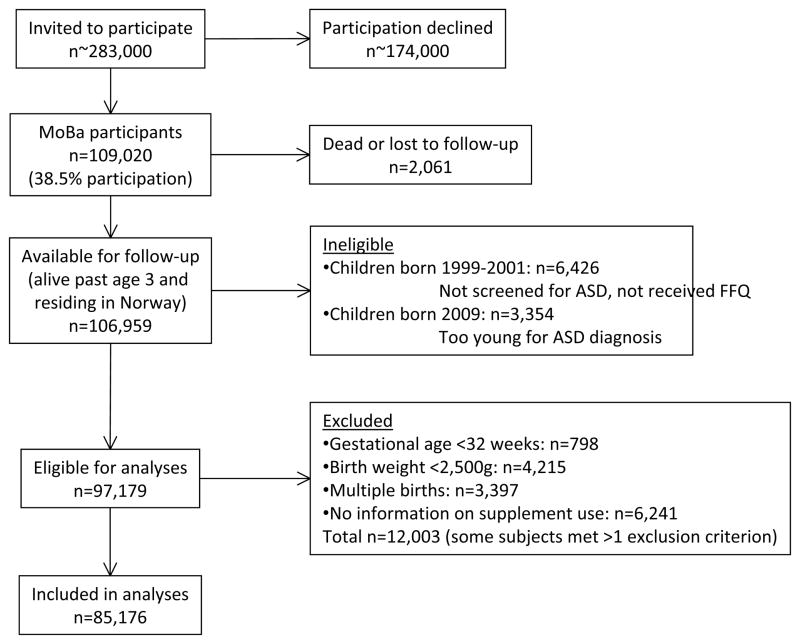
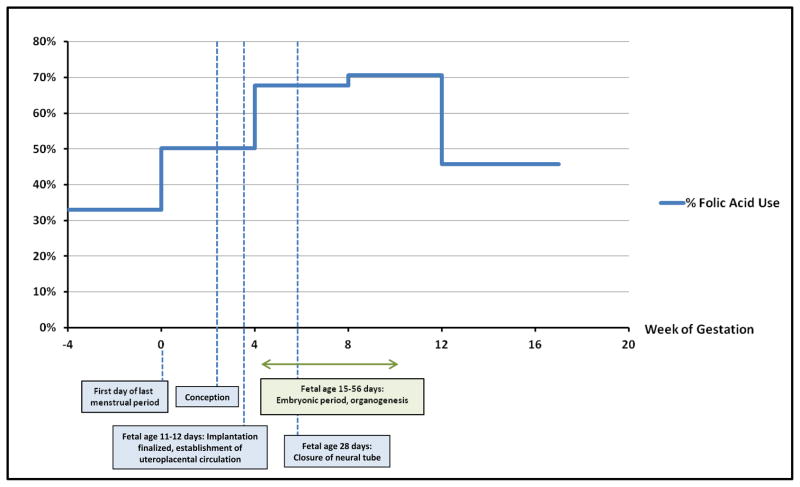
DESIGN, SETTING, AND PATIENTS: The study sample of 85,176 children was derived from the population-based, prospective Norwegian Mother and Child Cohort Study (MoBa). The children were born in 2002-2008; by the end of follow-up on March 31, 2012, the age range was 3.3 through 10.2 years (mean, 6.4 years). The exposure of primary interest was use of folic acid from 4 weeks before to 8 weeks after the start of pregnancy, defined as the first day of the last menstrual period before conception. Relative risks of ASDs were estimated by odds ratios (ORs) with 95% CIs in a logistic regression analysis. Analyses were adjusted for maternal education level, year of birth, and parity.
Specialist-confirmed diagnosis of ASDs.
At the end of follow-up, 270 children in the study sample had been diagnosed with ASDs: 114 with autistic disorder, 56 with Asperger syndrome, and 100 with PDD-NOS. In children whose mothers took folic acid, 0.10% (64/61,042) had autistic disorder, compared with 0.21% (50/24,134) in those unexposed to folic acid. The adjusted OR for autistic disorder in children of folic acid users was 0.61 (95% CI, 0.41-0.90). No association was found with Asperger syndrome or PDD-NOS, but power was limited. Similar analyses for prenatal fish oil supplements showed no such association with autistic disorder, even though fish oil use was associated with the same maternal characteristics as folic acid use.
Use of prenatal folic acid supplements around the time of conception was associated with a lower risk of autistic disorder in the MoBa cohort. Although these findings cannot establish causality, they do support prenatal folic acid supplementation.
产前叶酸补充剂可降低儿童神经管缺陷的风险,但尚未确定其是否可预防其他神经发育障碍。
研究母亲在怀孕期间使用叶酸补充剂与儿童自闭症谱系障碍(ASD)(自闭症、阿斯伯格综合征、广泛性发育障碍未特定[PDD-NOS])发生风险之间的关联。
设计、地点和患者:本研究的 85176 名儿童样本来源于基于人群的前瞻性挪威母亲和儿童队列研究(MoBa)。这些儿童出生于 2002-2008 年;截至 2012 年 3 月 31 日的随访结束时,年龄范围为 3.3 至 10.2 岁(平均 6.4 岁)。主要关注的暴露因素是在受孕前 4 周至受孕后 8 周使用叶酸,定义为受孕前最后一次月经的第一天。通过逻辑回归分析中的比值比(OR)估计 ASD 的相对风险。分析调整了母亲的教育水平、出生年份和产次。
经专家确诊的 ASD 诊断。
在随访结束时,研究样本中有 270 名儿童被诊断为 ASD:114 名患有自闭症,56 名患有阿斯伯格综合征,100 名患有 PDD-NOS。在母亲服用叶酸的儿童中,0.10%(64/61042)患有自闭症,而未服用叶酸的儿童中这一比例为 0.21%(50/24134)。叶酸使用者儿童自闭症的调整 OR 为 0.61(95%CI,0.41-0.90)。与阿斯伯格综合征或 PDD-NOS 无关,但效力有限。对产前鱼油补充剂的类似分析也没有发现与自闭症有关,尽管鱼油的使用与叶酸的使用具有相同的母体特征。
在受孕时使用产前叶酸补充剂与 MoBa 队列中自闭症的风险降低相关。尽管这些发现不能确定因果关系,但它们确实支持产前叶酸补充。